


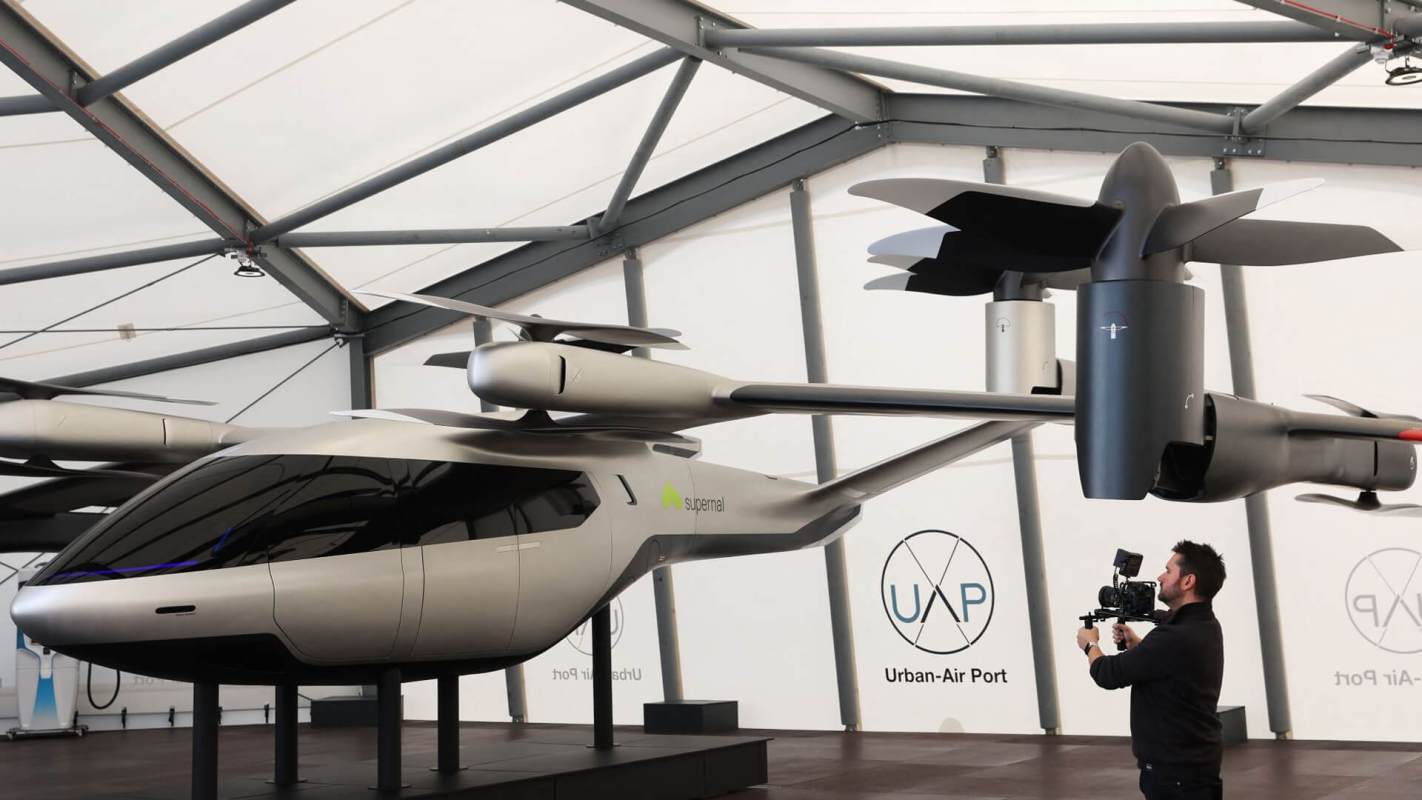
One of the cool things about eVTOLs, electric Vertical Take-Off and Landing aircraft, is that they don't need runways to lift off — they can rise and land like helicopters while flying like planes.
As busy cities and transportation hubs prepare for skies full of passenger and cargo drones, government agencies are writing design standards for vertiports, the places we'll land and charge the eVTOLs.
eVTOLs
First, let's clear the air. What's all this buzz about eVTOLs about?
The electric aircrafts are super flexible since they don't need runways and are designed to fly quietly, so they can be used in residential and commercial zones without much trouble.
These air taxis tend to have ranges of 100 to 150 miles per charge and can hit speeds of 200 mph.
Many companies are working on autonomous solutions — vehicles that fly themselves with no pilot — while the industry as a whole waits for government approval.
TCD Picks » Quince Spotlight
💡These best-sellers from Quince deliver affordable, sustainable luxury for all




And, since eVTOLs are electric, they release much less harmful pollution than gas-powered cars or jet-fuel guzzling planes do, especially when charged with renewable energy sources like solar.
Vertiports
All of these eVTOLs are going to need places to land and recharge, and that's where vertiports come in.
The Federal Aviation Administration (FAA) just released design standards to keep vertiports safe and uniform. These guidelines dictate things like standard sign choices, landing pad sizes, charging station infrastructure, and even touch on rooftop vertiports.
The aviation industry's new sector is growing steadily, and these design standards bring us one step closer to full-scale, commercial shipping and passenger applications for eVTOLs.
Vertiports will likely be placed in transportation hubs where they can easily connect to other transit options. Rural areas can also benefit from the electric vehicles as they fly to hard-to-reach places carrying essential goods and medicines.
"Our country is stepping into a new era of aviation," FAA Associate Administrator for Airports Shannetta Griffin, P.E. said in a press release. "These vertiport design standards provide the foundation needed to begin safely building infrastructure in this new era."






