


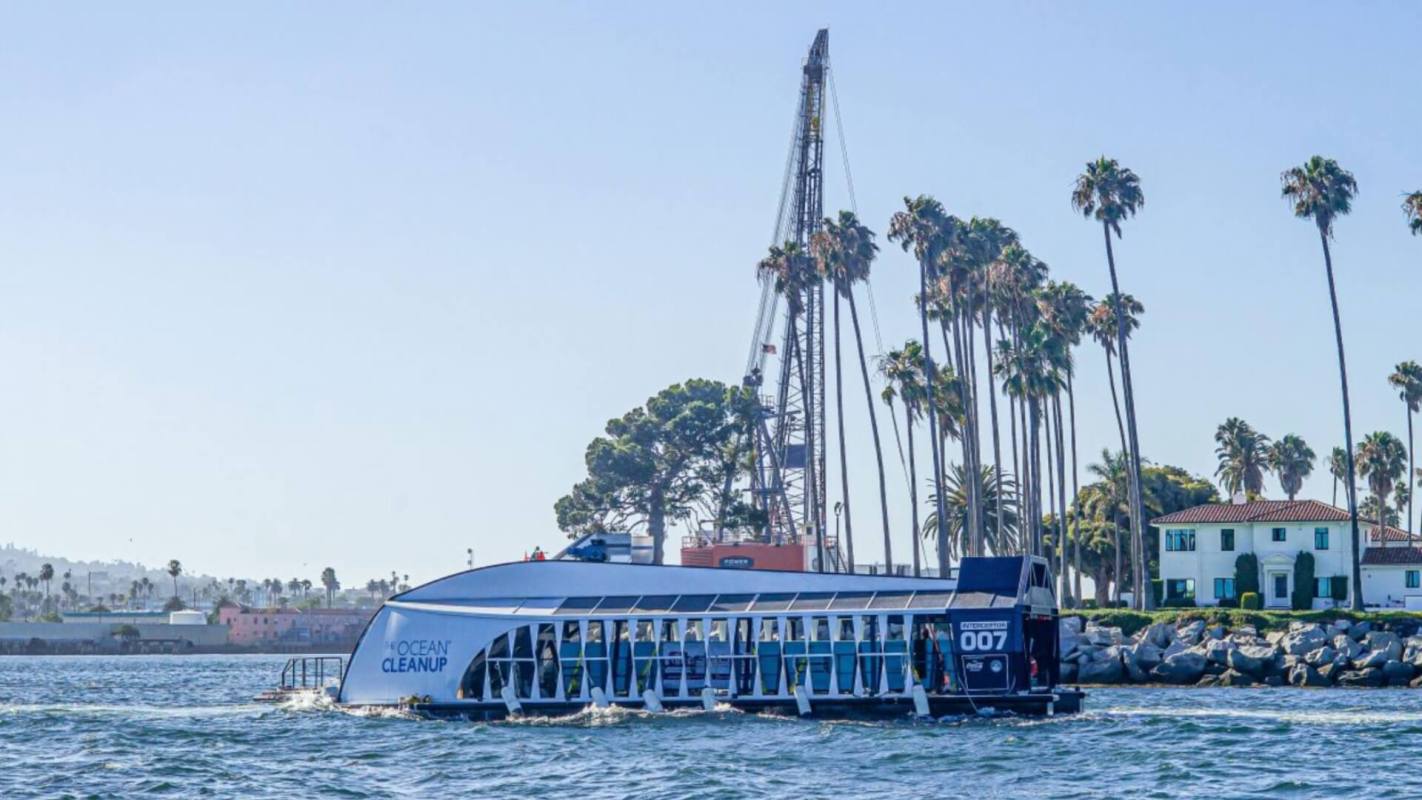
The Ocean Cleanup will make waves on Thursday as it deploys its first trash Interceptor Original in the United States in hopes of further shrinking the Great Pacific Garbage Patch by catching trash before it even enters the ocean.
On Oct. 6 at 6 a.m. PT, the Dutch non-profit organization will deploy Interceptor 007 in California's Ballona Creek. There, it will help capture some of the estimated 60,000 pounds of trash that the creek releases into the Pacific annually.
The Ocean Cleanup partnered with the Los Angeles County Flood Control District to install the Interceptor 007 in Ballona Creek for two storm seasons.
The Ocean Cleanup has developed numerous technologies to collect plastic trash from our waterways.
Although the group's goals — like removing 90% of floating ocean plastics by 2040 — sound ambitious, the outcome of its efforts make the impossible seem possible. To date, it claims to have removed over 239,000 pounds of trash from the Great Pacific Garbage Patch.
The Interceptor 007 is a high-tech, solar-powered catamaran built to collect trash in rivers. It uses a barrier to guide pollution onto the vessel's conveyor belt and into dumpsters before getting emptied at a local processing facility.
TCD Picks » Quince Spotlight
💡These best-sellers from Quince deliver affordable, sustainable luxury for all




The Interceptor 007 can hold 50 cubic meters — over 13,200 gallons — of trash. The Ocean Cleanup's other Interceptor Originals have intercepted over 1.6 million kilograms — or 3.5 million pounds — of trash from rivers at the time of writing.
In five years, the organization aims to halt 80% of riverine plastic from being carried into our oceans.
UPDATE: Interceptor 007 has arrived in Los Angeles, California, USA. 🇺🇸
— The Ocean Cleanup (@TheOceanCleanup) July 6, 2022
We're currently finalizing our preparations for deployment in Ballona Creek, LA County, later this year. Until then, Interceptor 007 will be docked with the United States Coast Guard. pic.twitter.com/MRDAyjOIfk
Though Ballona Creek isn't the world's most polluted river, rivers are one of the main vehicles for ocean plastic pollution.
And with the immense size of the Great Pacific Garbage Patch, any efforts to minimize the amount of plastic pollution entering the Pacific and our other oceans are beneficial.
Follow The Cool Down on Instagram and TikTok.







