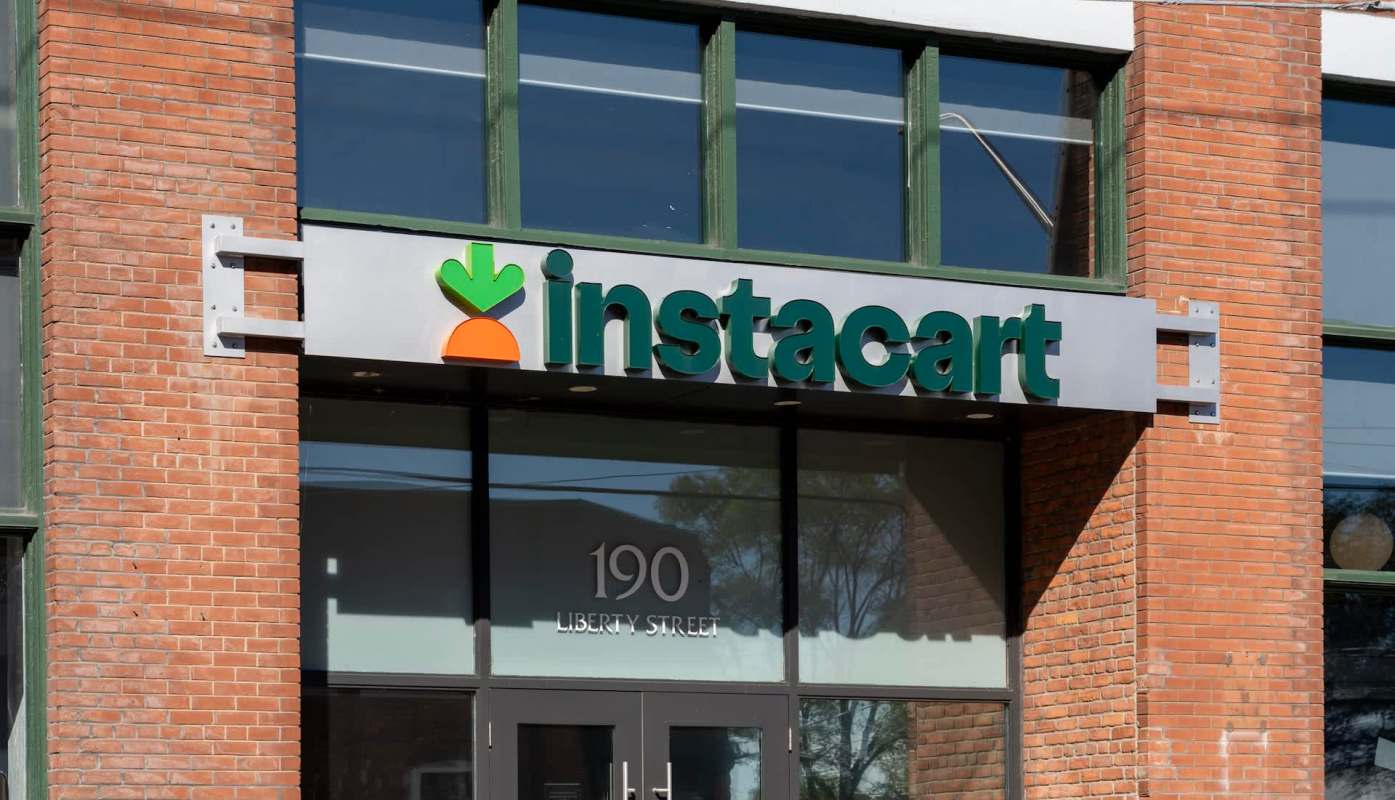
The price of a grocery order now might depend on how much a company believes a shopper is willing to pay, according to an author investigating high-tech pricing practices.
Instacart's use of artificial intelligence helps companies test those limits, raising concerns about how corporate pricing strategies affect consumers.
Here's what to know
Lindsay Owens, president and CEO of the economic think tank Groundwork Collaborative, discussed rampant price gouging in an interview with WUSF.
Her book, Gouged: The End of a Fair Price — and What That Means for Your Wallet, examines these strategies and their impact on American households.
Owens pointed to Instacart's purchase of AI company Eversight, explaining that the technology allows companies to "run vast experiments on shoppers while they buy their groceries to determine the maximum that you will pay for every single item in your grocery basket."
Owens explained that a retailer may charge two shoppers different amounts for an identical product, even when they are shopping at the same time.
TCD Picks » Quince Spotlight
💡These best-sellers from Quince deliver affordable, sustainable luxury for all




Beyond grocery delivery, Owens cited a Walmart patent application describing how the contents of a shopping cart could influence prices.
After a customer adds tuna, for example, mayonnaise could become more expensive, she said.
More background
For households in greater Tampa Bay, these practices come amid mounting financial pressure.
WUSF described rents doubling in some areas, alongside rising grocery and gasoline costs and wages that have failed to keep pace.
Executives' upbeat comments about inflation on quarterly shareholder calls prompted Owens to investigate corporate pricing. She expected those calls to reveal companies under pressure from rising costs — not celebrating the advantages inflation offered their businesses.
Owens noted that RealPage's software lets landlords share competitively sensitive information, enabling coordination in markets with many property owners, including in Tampa. She argued that the technology removes logistical barriers that once made coordinating rents difficult.
According to Owens, pandemic-related inflation and subsequent disruptions left shoppers struggling to determine whether higher prices reflect market conditions or a company taking advantage of the opportunity to charge more.
What's being done?
Owens acknowledged that some states are moving to ban surveillance pricing, which she defined as using information about shoppers to charge them more.
Florida only has a law to prohibit price-gouging for a limited period following a gubernatorial emergency declaration, such as a hurricane. Owens observed that most state-level consumer pricing protections are similarly contingent on emergencies and pertain to essential goods.
She called for enforcement of existing law against high-tech price-fixing.
"And by the way, algorithmic price fixing, like what we saw with RealPage, that's already illegal. Price-fixing is illegal, and it has been for decades," Owens emphasized. "So there, we need our law enforcement officials to step up and have the courage to crack down on this."
She sees an opportunity to challenge pricing practices that leave shoppers struggling to afford necessities, pointing to both government action and public pressure.
"I don't think we're cooked. I mean, I think we're, you know, we're the frog in the pot of boiling water, and we're getting close," Owens told WUSF.
"I think there's real opportunity to push back here, both with policy, but also with good old-fashioned consumer outrage."
Where can I learn more?
Several retailers are drawing scrutiny for their pricing technology and use of shoppers' personal data. These stories examine digital price tags, McDonald's pricing technology, proposed restrictions, and federal scrutiny of surveillance pricing.
• American retailers' AI pricing and digital tags fuel fears of different prices for different people.
• McDonald's AI tracks shoppers' willingness to pay as California Big Mac prices differ by $1.20.
• Seattle is nearing a ban on surveillance pricing, while Safeway claims grocery deals could disappear as a result.
• The FTC is investigating whether companies use shoppers' browsing habits to charge the highest possible prices.

Get TCD's free newsletters for easy tips, smart advice, and a chance to earn $5,000 toward home upgrades. To see more stories like this one, change your Google preferences here.