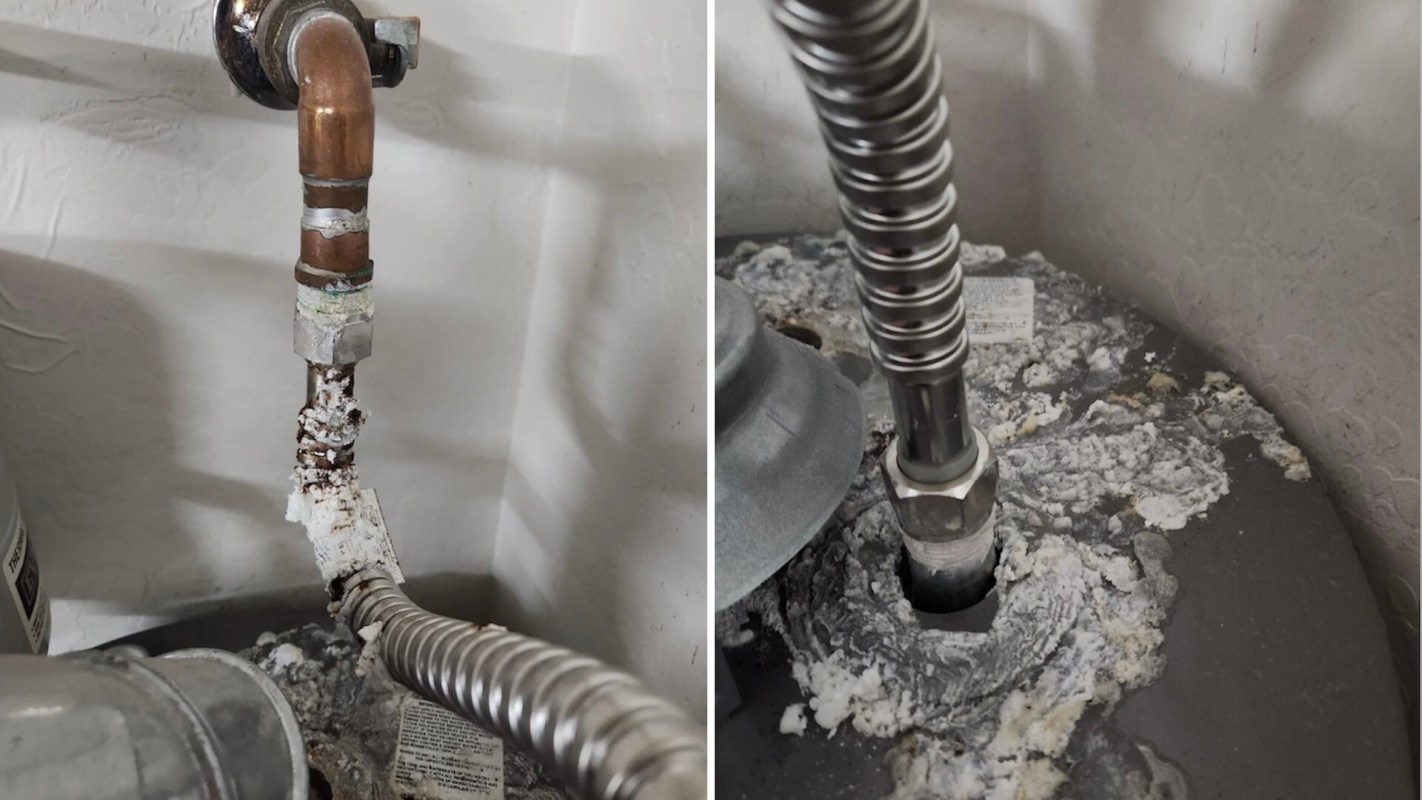
While preparing for routine maintenance on a three-year-old water heater, one homeowner discovered a white buildup coating the appliance.
But what looked like a plumbing problem prompted a warning about a potential safety risk when the resident shared an image of the water heater with Reddit's r/AskAPlumber community.
Here's what to know
The homeowner planned to drain sediment from the tank, according to their Reddit post, but noticed substantial buildup during the preparations.
This original poster asked, "Is this as simple as swapping in a new hose and cleaning the top off or do I have a bigger issue?"
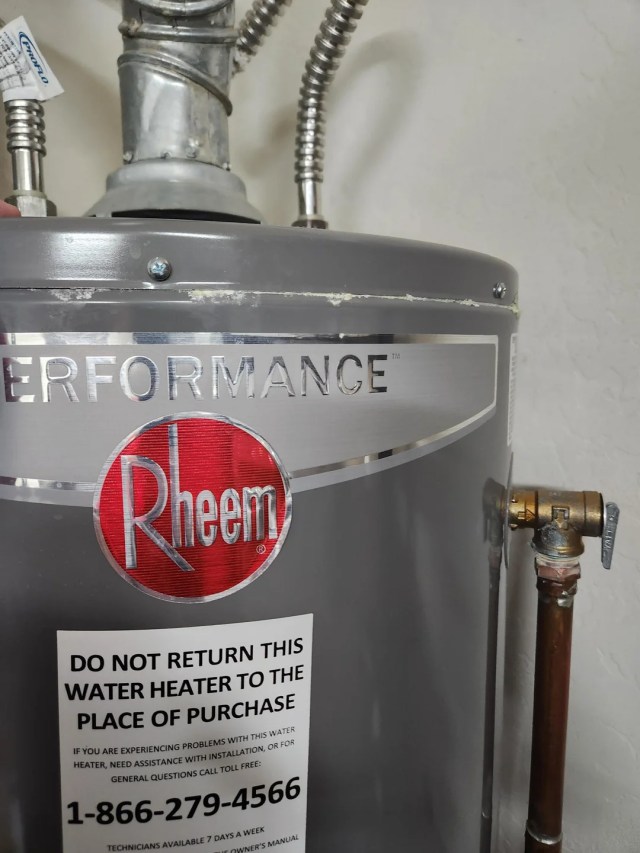
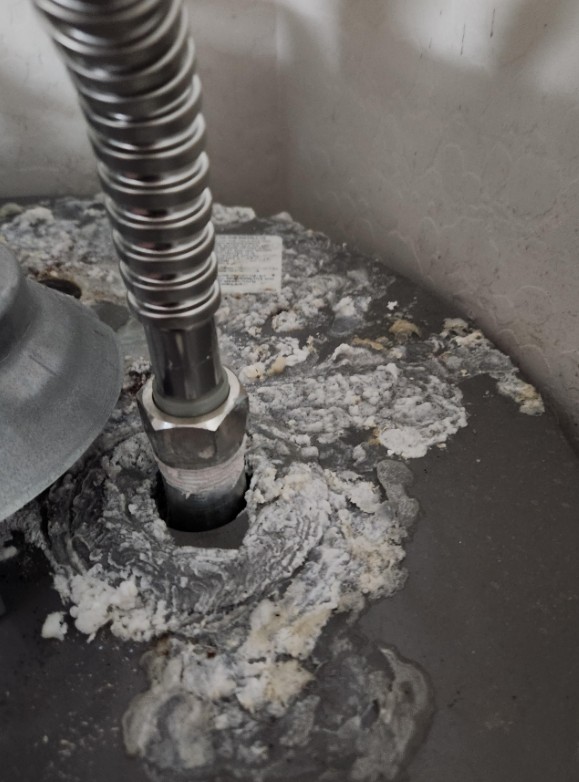
One commenter, who said they had 30 years of plumbing experience, explained that moisture condensing on the tank and fittings could leave the residue behind. They identified exhaust escaping around the draft hood as the source of that moisture.
"It also means carbon monoxide can get into the house, so this needs fixing first," the plumber wrote, adding, "Make sure you have a working CO alarm near the heater and outside the bedrooms. A little spillage for the first minute after the burner lights is normal while the vent warms up. If it's still spilling after a couple of minutes, or the CO alarm goes off, shut the heater off until it's fixed."
The OP responded to this, writing, "I really appreciate it. Going to give that a shot when I get home. Have [a] CO detector in the garage (where the water heater is) and outside our bedrooms. Never would have guessed this could be a thing."
Other commenters focused on the plumbing connections, suggesting that a small leak or corrosion involving different metals at the copper piping and stainless connector could explain the buildup. One commenter recommended adding an appropriate transition between the metals and replacing the compromised flexible line.
Crushed by your bills? See instant solar savings from vetted installers in just a few clicks With energy prices through the roof, there's never been a better time to go solar — and EasyHome can help you find the best prices from the best installers in your area. EasyHome takes the guesswork and headaches out of energy upgrades by showing you estimated savings from a network of vetted local partners. To get started, just enter your ZIP and share a few details about your home — seeing your estimate is really that easy. |

For households considering a replacement after a professional assessment, heat pump water heaters could also help reduce energy costs while avoiding gas fumes. By moving heat rather than generating it through combustion, these appliances can use less energy to heat water, potentially lowering utility bills.
Cala offers configurable smart heat pump water heaters. Their schedules can be tailored to when a household needs hot water, helping reduce energy use instead of heating without regard to demand. Cala's approach lets households align water heating with their actual usage, lowering bills in the process.

Get TCD's free newsletters for easy tips, smart advice, and a chance to earn $5,000 toward home upgrades. To see more stories like this one, change your Google preferences here.