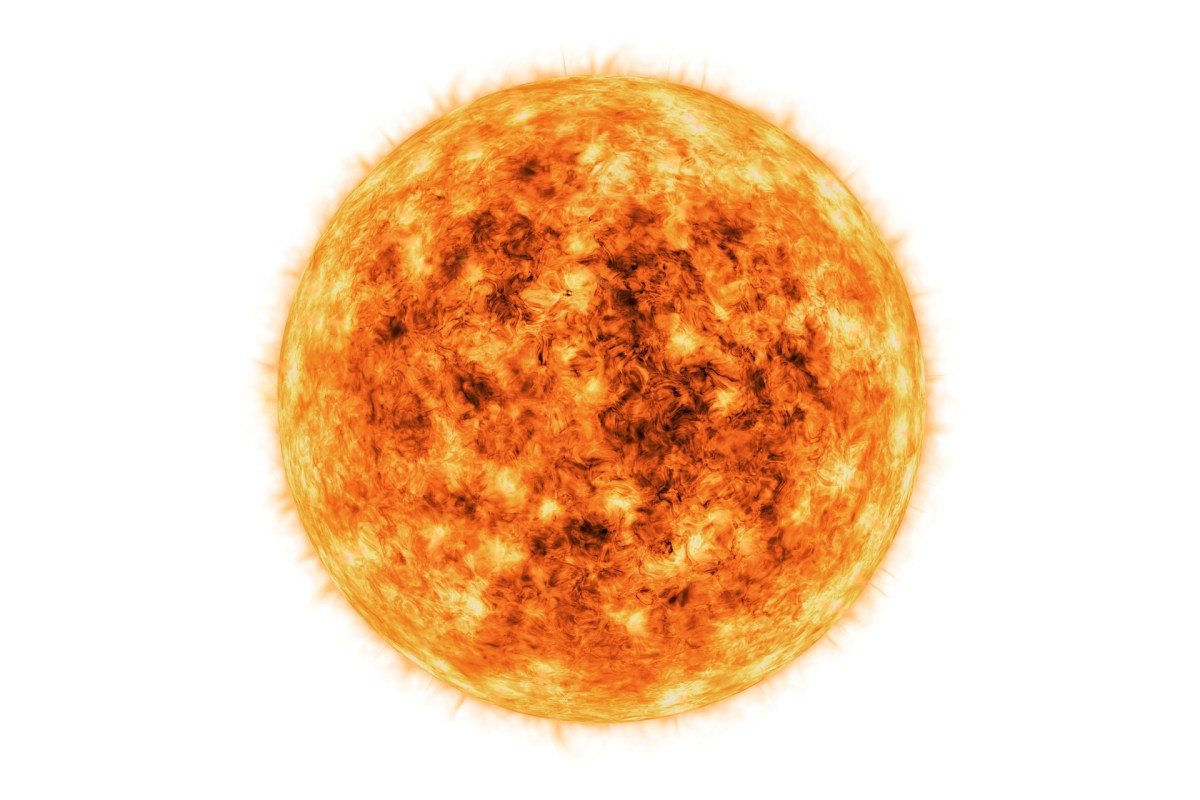
Fusion reactors could potentially generate more power without growing in size following a breakthrough at China's "artificial sun."
Here's what to know
As Interesting Engineering (@interestingengineering) broke down in a TikTok video, the experiment pushed plasma density 65% beyond a limit that had constrained reactor designs for four decades.
The outlet said China's EAST reactor achieved the breakthrough in January 2026. The experimental tokamak is in Hefei, a city home to several major fusion projects.
Because fusion power increases with the square of plasma density, EAST's ability to sustain steady plasma above the Greenwald density limit could allow substantially higher output. That limit has long constrained tokamak design.
"This could mean nearly double the power from a machine the same size," Interesting Engineering declared in the video.
The piece places EAST within a broader international effort that includes ITER in southern France, Commonwealth Fusion Systems, and TAE Technologies. Each is developing technology to bring fusion power closer to practical use.
TCD Picks » Quince Spotlight
💡These best-sellers from Quince deliver affordable, sustainable luxury for all




More background
According to Interesting Engineering, China has invested between $6 billion and $13 billion in fusion since 2023. Its five-year plan for 2026 designated fusion a national priority, and the country is building facilities intended to move beyond experimental milestones.
Plans call for a fusion-power demonstration near 2030 at the Burning Plasma Experimental Superconducting Tokamak, known as BEST. The video noted the $2.8 billion project is under construction in Hefei, with completion scheduled for late 2027.
BEST's design calls for 16 coils around its plasma chamber. China completed one in August 2026, finishing a 582-ton component the video described as the world's largest fusion magnet.
These projects could ultimately provide a new source of electricity. Interesting Engineering also identified machine maintenance, tritium fuel breeding, and extreme heat at reactor walls as unresolved engineering challenges.
What's being done?
Engineers at Hefei's CRAFT facility are developing materials, magnets, and remote-handling robots to support future fusion plants, according to the video. The testbed covers 4.3 million square feet (400,000 square meters) and was completed in May 2026.
Private companies are also working on fusion technology. HH70 achieved its first plasma in June 2024 and, according to Interesting Engineering, was the world's first tokamak to use entirely high-temperature superconducting magnets. Its builder, Energy Singularity, was established in Shanghai in 2021.
The outlet reported that artificial-intelligence-based controls had sustained HH70's plasma for more than 13 seconds by early 2026.
Both Energy Singularity's next machine and Commonwealth Fusion Systems' SPARC are targeting demonstrations of net energy gain in 2027. That means producing more fusion energy than is supplied to heat the plasma, as Interesting Engineering explained.
TikTok viewers had a variety of reactions to the development.
"A shining example of what can be achieved when money is pumped back into infrastructure and not wasted," one gushed.
Another more skeptical viewer reacted: "Now it's only 35 years away."
Where can I learn more?
EAST is one of several fusion projects underway as researchers explore new ways to generate nuclear power.
• China has broken ground on a fusion platform targeting hydrogen-boron electricity by 2030.
• One of Germany's biggest nuclear plants is becoming a fusion laser lab.
• Bill Gates' molten-sodium reactor design could give wind and solar a nuclear backup.
• America's small modular reactors are regaining momentum in 2026 after earlier setbacks.

Get TCD's free newsletters for easy tips, smart advice, and a chance to earn $5,000 toward home upgrades. To see more stories like this one, change your Google preferences here.