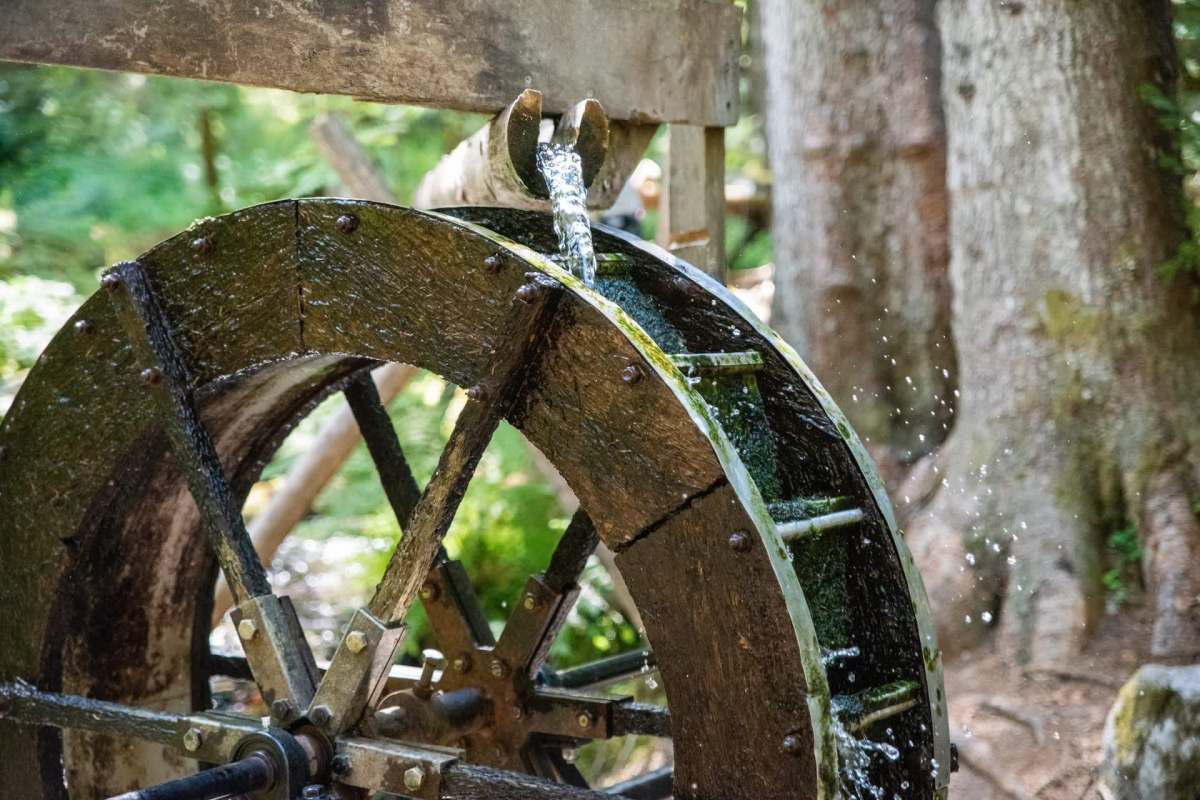
A retired hydroelectric plant manager in British Columbia has found a way to power his home using a water wheel built largely in his garage.
His home gets electricity from an aluminum wheel driven by the Cheakamus River, with surplus power fed into the grid. The setup requires neither a dam nor a reservoir.
Here's what to know
Retired hydroelectric plant manager Marc Nering chose aluminum rather than corten steel to reduce the wheel's weight, according to The Daily Galaxy. He spent several years on the project, handling most of the construction in his garage while a colleague assisted with computer-aided design.
Before taking early retirement in 2017, Nering managed hydroelectric plants in British Columbia, where he had moved in 2004. He began his career as a millwright and welder in the early 1980s.
Nering told Hydro Leader magazine that he drew inspiration from an early-1800s guide for millwrights.
The wheel can generate electricity because its permanent magnet generators work at speeds of around 50 revolutions per minute.
TCD Picks » Quince Spotlight
💡These best-sellers from Quince deliver affordable, sustainable luxury for all




Nering has measured a peak output of roughly three kilowatts. A grid-tied converter links the wheel to his home, allowing the household to use the electricity it needs and export the rest.
More background
At a sustained output of 1.5 kilowatts, the wheel could generate 36 kilowatt-hours daily. For comparison, The Daily Galaxy cited U.S. Energy Information Administration figures showing that U.S. homes used an average of 865 kWh per month in 2024, or about 28 kWh per day.
Nering estimates that the wheel needs water moving at least 9.8 feet per second (three meters per second).
Rainfall and snowmelt change the Cheakamus River's level, requiring manual adjustments. Hydraulics allow him to raise, lower, or swing the assembly out of the water.
Permitting took roughly two years. The process involved municipal, provincial, and federal requirements, as well as engagement with First Nations and other river users. Concerns about potential harm to salmon traveling downstream also prompted environmental studies.
After water-damaged roller bearings lasted around nine months, he replaced them with lignum vitae, a dense, naturally oily hardwood. He reported good results, although the wet drive belt remains troublesome.
Nering has said the wheel's electricity will always cost more than grid power. A required removal bond added a substantial expense to the project.
What's being done?
For homeowners exploring energy-system upgrades, EasyHome uses the size of its audience to negotiate exclusive prices and deals with local partners — like Groupon for home energy — across products including solar panels, backup batteries, heating and cooling systems, and more.
Beyond his own home, Nering sees potential for the wheel in isolated communities, locations without grid connections, and areas dependent on diesel generation, according to The Daily Galaxy.
He shared blueprints with interested builders but does not intend to build complete wheels for shipment because of shipping costs.
A company in Chile adapted the design for a project collecting plastic waste from rivers.
Where can I learn more?
Homeowners building their own solar systems share Nering's goal of generating electricity where they use it. These stories explore DIY solar builds, generator replacement, household power systems, and questions about storing surplus electricity.
• A DIYer spent about $28,000 on a 40 kW solar build and began selling electricity back.
• In Northern Ontario, a cabin owner says DIY solar sidelined the generator after installation.
• A homeowner built a $9,000 barn solar array using a homemade tractor lift and his wife's help.
• A homeowner calculated plug-in solar output and questioned whether a power station could store midday surplus.

Get TCD's free newsletters for easy tips, smart advice, and a chance to earn $5,000 toward home upgrades. To see more stories like this one, change your Google preferences here.