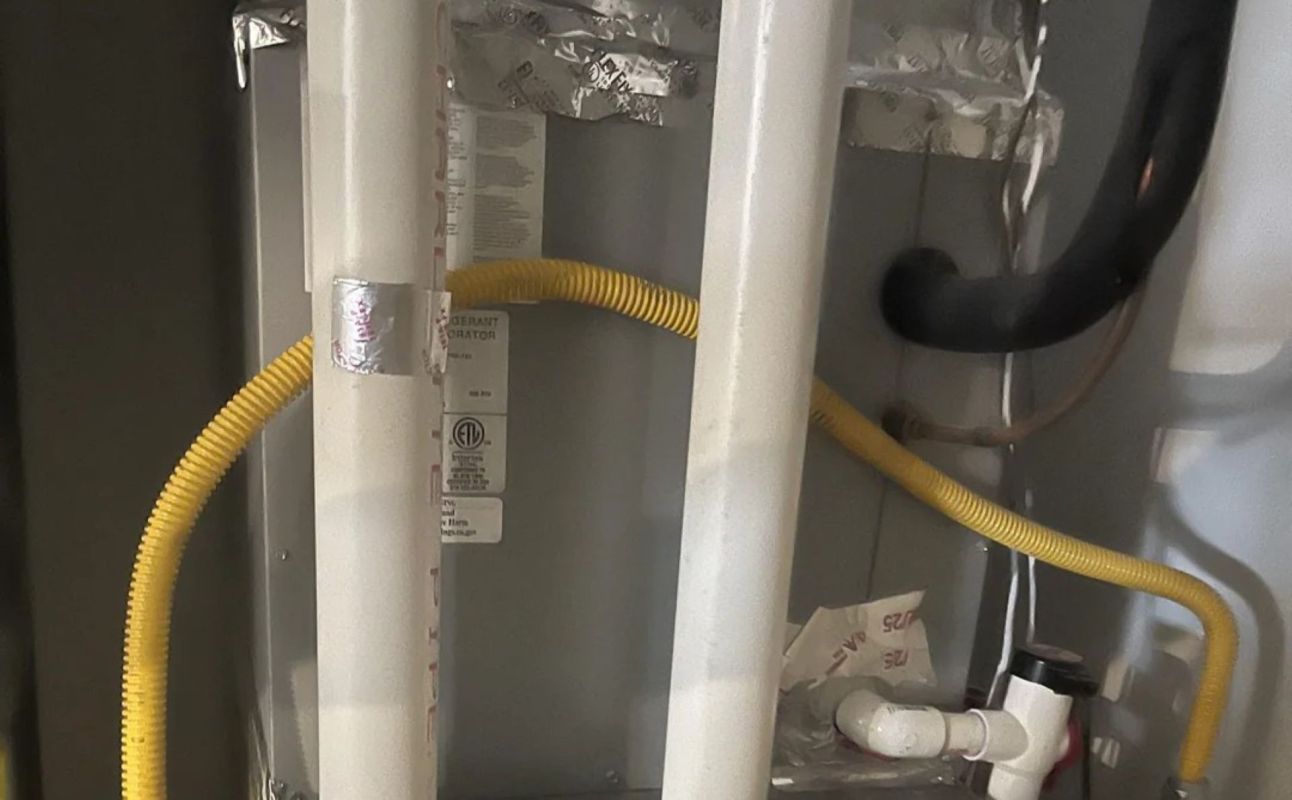
After a contractor did a furnace check for carbon monoxide, one homeowner was left with a new concern. The contractor had made an opening in plastic exhaust piping and simply patched it with metal tape.
Here's what to know
The homeowner turned to a Reddit HVAC advice community because they were concerned the patch job might let exhaust escape.
"I worry that if the tape falls off it will cause a CO leak," they said.
They wanted to know whether the HVAC technician had properly sealed the hole made during carbon monoxide testing.
Several commenters reassured the homeowner and described foil tape as a common way to seal openings after combustion testing.
"The tape is fine," one commenter wrote. "It won't fall off. It actually gets more difficult to remove over time."
"Foil tape sticks better than fake friends after you get the big check," another wrote.
However, not all commenters were on board with the tape method. One cited Building Performance Institute guidance calling for technicians to check the equipment manufacturer's instructions before drilling into plastic venting.
Crushed by your bills? See instant solar savings from vetted installers in just a few clicks With energy prices through the roof, there's never been a better time to go solar — and EasyHome can help you find the best prices from the best installers in your area. EasyHome takes the guesswork and headaches out of energy upgrades by showing you estimated savings from a network of vetted local partners. To get started, just enter your ZIP and share a few details about your home — seeing your estimate is really that easy. |

For homeowners whose furnace is nearing replacement, EasyHome is a marketplace offering HVAC shoppers unique prices and exclusive deals from trusted partners. Efficient heating and cooling upgrades can help manage energy expenses and reduce exposure to higher energy prices.
More background
In a follow-up, the homeowner described another test hole in an insulated pipe in the attic.
"Can I ask another question — he also did the same in the attic — the pvc pipe was insulated there and he only closed up the insulation, not the actual hole," they said. "Is that safe?"
One commenter said, "Is it 100% correct? No. Do we all do it and its perfectly fine? Yes."
Another claimed they had used the approach on thousands of systems. A third defended its use in practice while also describing it as contrary to manufacturer specifications and code.
What can be done?
For a drilled opening that the manufacturer permits, the Building Performance Institute calls for a manufacturer-approved silicone seal or plug, as one person shared.
The same commenter also posted the organization's recommended ways to avoid drilling: sampling at the exterior exhaust termination or using a factory-installed test port.
If you're looking for replacement systems, EasyHome works like Groupon for home energy, negotiating special offers for its large audience and giving HVAC shoppers access to unique deals.
EasyHome also offers special solar deals. Pairing solar with efficient electric HVAC can increase savings; with appropriate battery backup and system design, it can also support heating and cooling during outages.
Responding to the advice about manufacturer requirements, the original poster expressed surprise at how many commenters had supported or used the taped repair method in their work.
"Wow thank you!" they said. "But this is crazy that 90 percent of the people in this thread just tape it up?"

Get TCD's free newsletters for easy tips, smart advice, and a chance to earn $5,000 toward home upgrades. To see more stories like this one, change your Google preferences here.