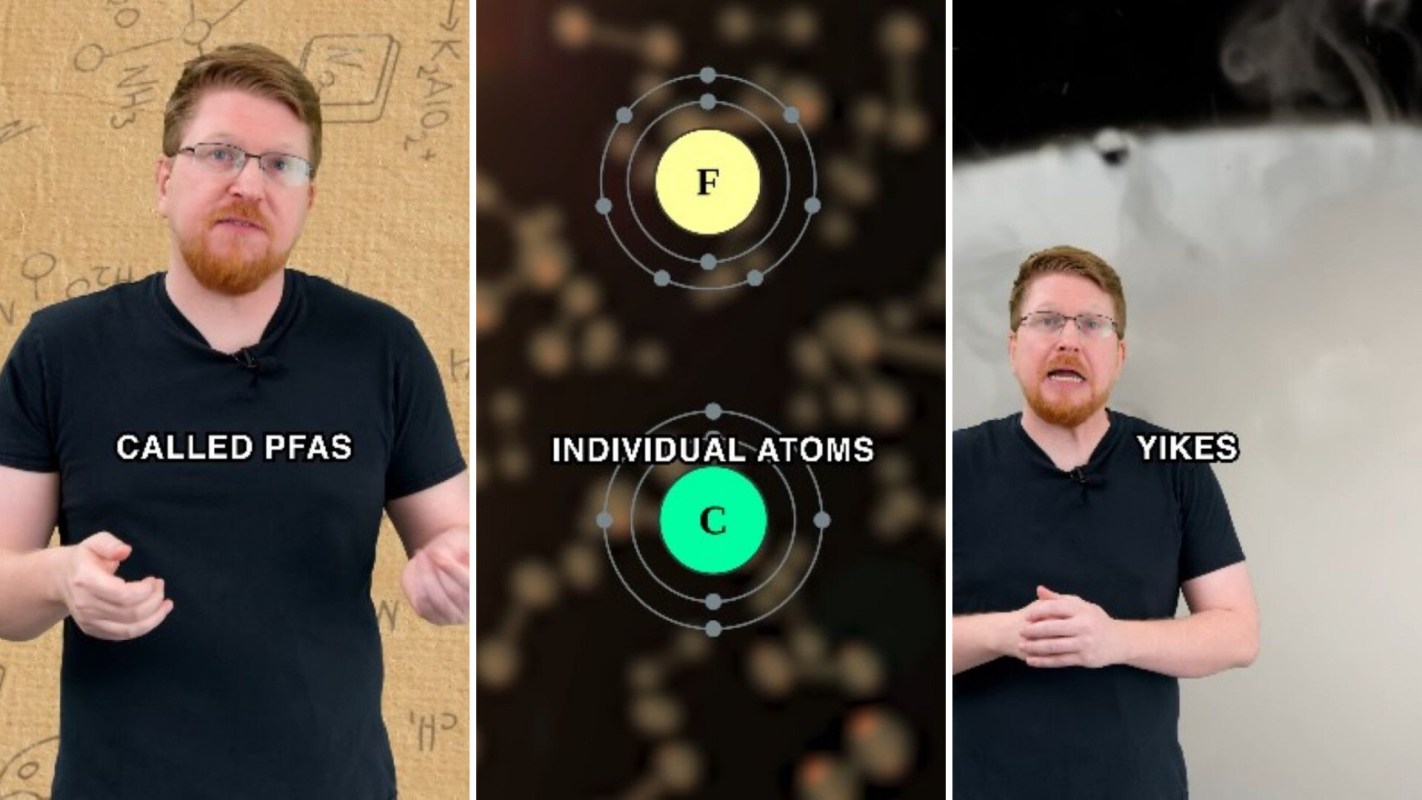
Persistent compounds known as "forever chemicals" have been found in human blood and Arctic ice. As a new video examines, scientists are testing five ways to destroy them.
Here's what to know
Strong bonds between carbon and fluorine make PFAS exceptionally resistant to breakdown, according to a YouTube short from EcoBits (@EcoBitsOfficial) host Justin Pack.
These chemicals are used in everyday products, including waterproof jackets and nonstick pans.
In the video, Pack outlines five methods scientists are testing to destroy these compounds. They include plasma, charged electrodes, ultraviolet light paired with a catalyst, bacteria, and burning.
More background
These solutions are essential, as PFAS are not just forever chemicals; they seem to also be "wherever" ones, as well. Pack says 97% of Americans have PFAS in their blood. The compounds have also been detected in Arctic ice and deep oceans.
Pack says plasma can reduce PFAS molecules to individual atoms. The method uses an electrified gas to smash the molecules apart.
TCD Picks » Quince Spotlight
💡These best-sellers from Quince deliver affordable, sustainable luxury for all




Electricity offers another way to break down PFAS in contaminated water. This method uses charged electrodes placed directly in the water.
A special catalyst, paired with ultraviolet light, helps strip fluorine from PFAS.
Researchers are also testing bacteria, but it is anything but a quick fix. Pack says one microbe took about 100 days to degrade 90% of certain PFAS.
Burning is the fifth option, and temperature is crucial to this approach. A fire that isn't hot enough can create more forever chemicals, Pack warns.
What's being done?
Scientists are continuing to test and refine the five approaches to destroy PFAS. As they do, commenters shared some thoughts on ways to mitigate the challenge.
"We need to go back to glass pop and water bottles," one commenter proposed.
Other commenters had more haphazard ideas like eating them all, or letting evolution sort it all out. That is much easier said than done, when you consider the health risks of more laissez-faire approaches, outlined by the EPA.
Pack agreed with the first poster in that the goal should be to cut down PFAS production, as researchers work on solutions.
"So, all of these options have downsides and we don't have a perfect solution yet," he says. "So, the best option is probably just making fewer of them in the first place."
Where can I learn more?
Scientists are working to detect PFAS and remove them from water as well as destroy them.
• Scientists have found two ways to destroy the persistent compounds known as forever chemicals.
• Texas researchers tested a membrane that removes up to 99% of six PFAS from water.
• Researchers in Japan built a phone-linked sensor that detects forever chemicals in water.

Get TCD's free newsletters for easy tips, smart advice, and a chance to earn $5,000 toward home upgrades. To see more stories like this one, change your Google preferences here.