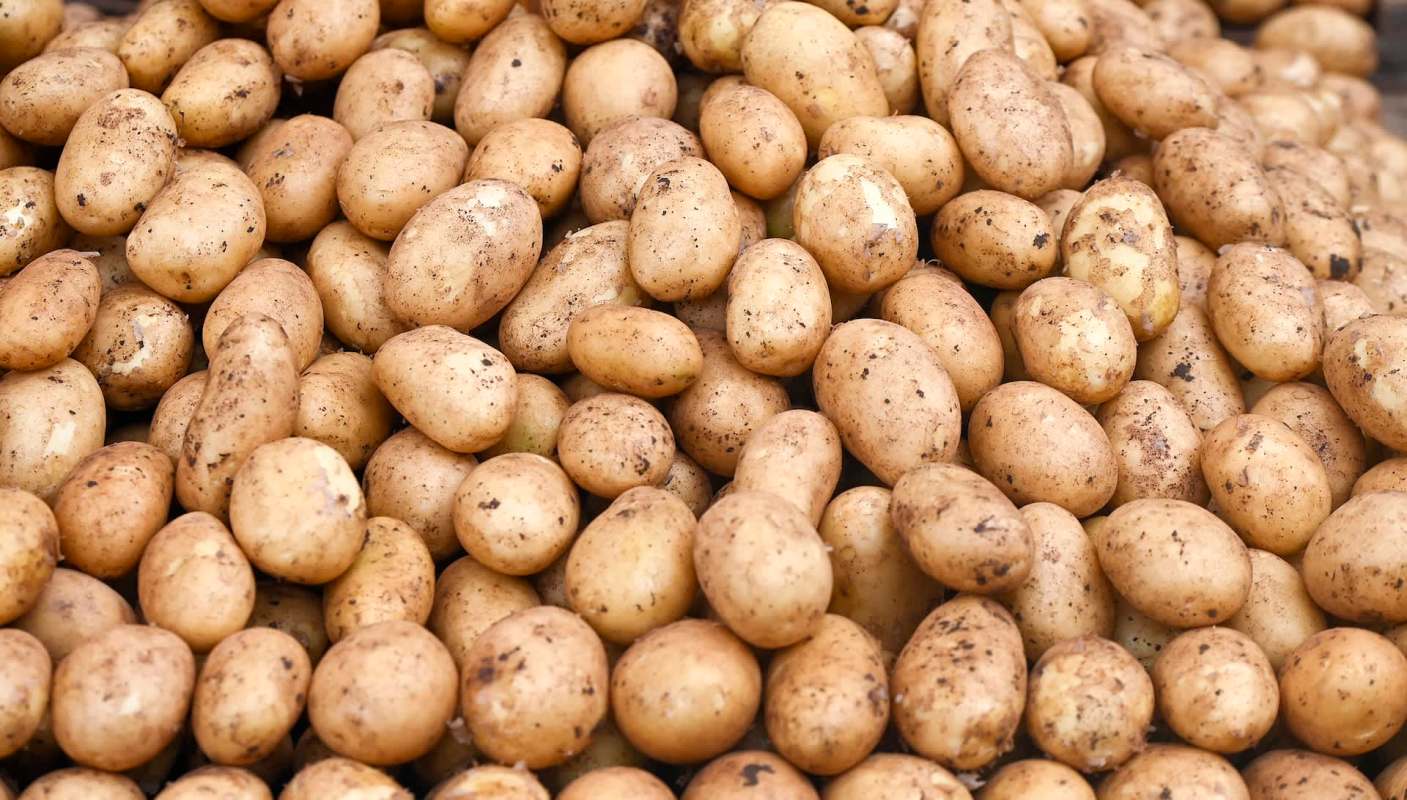
Potatoes grown in an Oregon greenhouse performed just as well in simulated lunar soil as in Earth soil, showing potential progress toward growing food on the moon.
Researchers achieved that result with a mixture of mock lunar material, 30% worm-produced compost, and fertilizer, and the combination proved a promising starting point for feeding future lunar crews, The Brighter Side of News reported.
Here's what to know
Oregon State University researcher Aymeric Goyer and his colleagues tested the red-skinned Modoc potato variety, tracking plant development, harvested tubers, and changes in gene activity.
The team published its findings in the journal npj Microgravity.
The first experiment used three vermicompost concentrations — 0%, 15%, and 30% by volume — in two growing materials. One was sandy Earth soil from near Hermiston, Oregon. The other was LMS-1E, a manufactured substitute for material on the moon's dark volcanic plains.
After 74 days, most growth measurements for plants in the lunar substitute with 30% compost were similar to those for plants in Earth soil. Researchers supplied every treatment with slow-release fertilizer.
TCD Picks » Quince Spotlight
💡These best-sellers from Quince deliver affordable, sustainable luxury for all




Some replicates produced tubers whose mass equaled or surpassed that of the Earth-soil control.
Greenhouse temperatures remained at 71.6°F (22°C) during the day and 64.4°F (18°C) at night.
More background
Space crews could get substantial food energy from potatoes while using relatively little growing space.
Growing with lunar material could also reduce the amount of material transported from Earth.
Without compost, potatoes grown in LMS-1E were severely stunted. Root mass fell below the measurement threshold — 0.00035 ounces (0.01 grams) — in three out of four plants.
Those plants also accumulated higher concentrations of copper in both foliage and tubers. The researchers suspect that organic matter may bind copper, limiting how much the plants absorb, though further investigation is needed to understand the process.
In a second experiment, researchers added 5% compost to five different lunar simulants.
Every mixture produced less tuber mass than the Earth-soil control, and one representing lunar highland material also delayed emergence.
What's being done?
Beyond measuring growth, the team examined the harvested potatoes for chemical changes, including naturally occurring glycoalkaloids that can become toxic at excessively high concentrations.
There was no significant increase in either solanine or chaconine under the conditions tested.
Six of seven targeted compounds, including vitamin C, did not differ significantly among the treatments analyzed.
While some simulants increased copper, zinc, or aluminum accumulation, the authors characterized the overall buildup as modest and said additional experiments should verify it.
Researchers also measured moisture, acidity, and other properties of the growing materials to better understand conditions around the roots. The experiments used commercially sourced vermicompost, an organic material processed by earthworms.
The team intends to publish results from separate trials of 10 potato varieties.
Further testing will explore which combinations of crops, growing materials, and recycled inputs can repeatedly produce nutritious tubers in settings that more closely resemble lunar farming.
"We found that potatoes can complete their entire life cycle in simulated lunar soil when supplemented with organic matter," Goyer explained.
Where can I learn more?
On Earth, potato growers face their own constraints, from limited space to heat and drought. These stories cover bucket-grown potatoes, Europe's struggling spuds, and cinder-block onions.
• A gardener turned sprouted store-bought potatoes and $5 buckets into a 10-pound harvest.
• In Europe, heat waves and drought reduced potato harvests, potentially leaving diners with shorter fries.
• A Northeast gardener grew onions in cinder blocks, then cooked the surprise harvest into soup.

Get TCD's free newsletters for easy tips, smart advice, and a chance to earn $5,000 toward home upgrades. To see more stories like this one, change your Google preferences here.
Cool Picks