


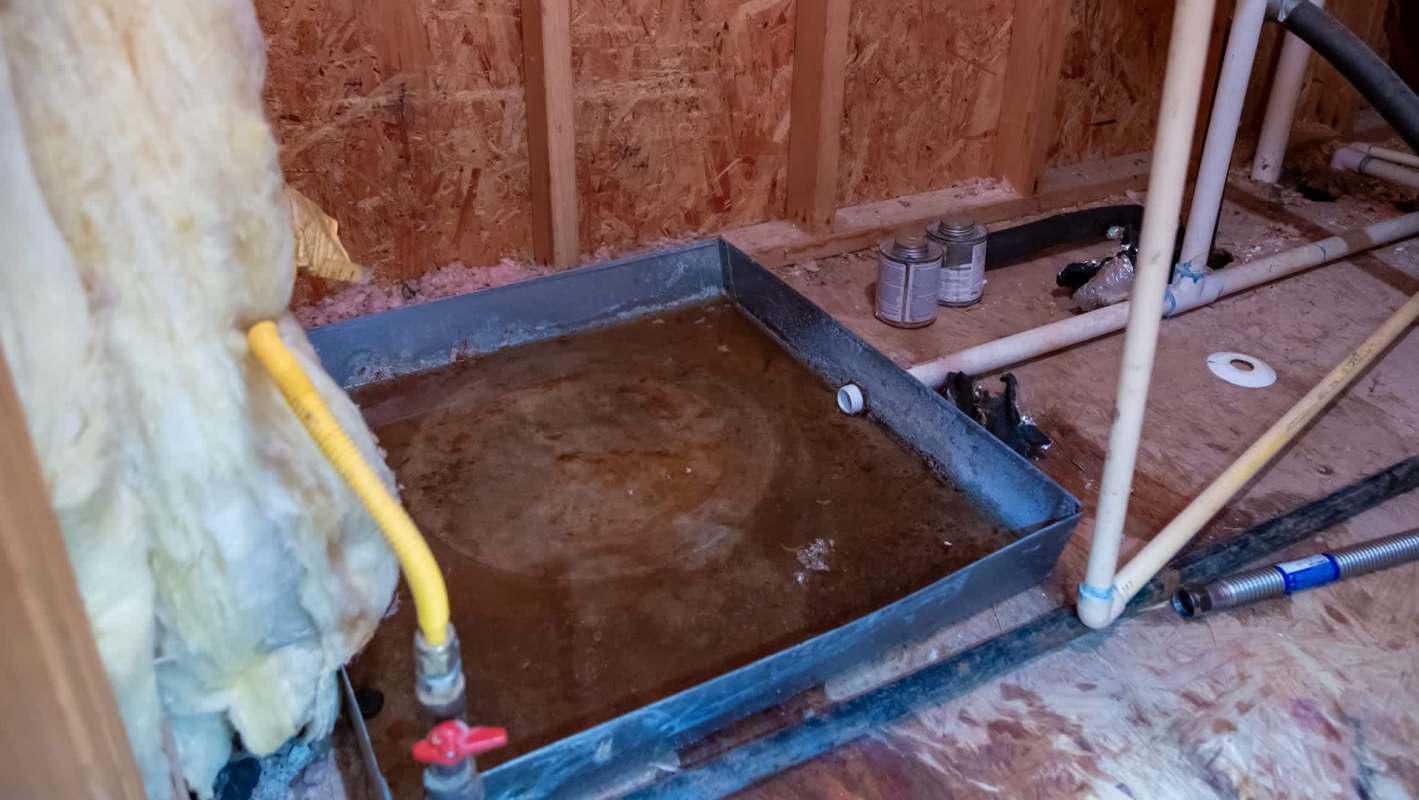
A Washington homeowner fitting an existing electric water heater with a drain pan ran into an unexpectedly confusing situation, not knowing where it should drain to.
The homeowner was considering an outdoor drain or one to an enclosed crawlspace, but the code offered only "an approved location" as guidance. They took to Reddit's r/askplumbing forum for advice.
Here's what to know
In the thread, the original poster raised two questions: how to keep rodents out of an exterior pipe and how to route the pan's drain in accordance with local code.
"I'm trying to get a handle on doing it properly. Reading code is not my favorite pastime," the OP wrote. "… I can't find any place that addresses what an approved location is. Draining into the enclosed crawlspace would be easy but I suspect wouldn't be an approved location.
"Given the drain's location, it wouldn't be too difficult to run it outside instead. Which is correct?"
One commenter asked: "Do you get freezing weather? Draining to the outside of a foundation wall isn't a good idea if there's freeze potential." The OP responded: "We do, occasionally. But not brutal or prolonged. In theory, the drain should never have any water in it."
The commenter added: "Understood. However, a water heater can develop a leak gradually. In that scenario, water could conceivably begin draining slow enough to freeze, and then the drain is rendered useless. If you go that route, I would strongly recommend a floodstop or similar device with a sensor in the pan."
Another user explained: "Drip pan is an emergency drain, so not really a real drain. Termination should be outside of home, or to a trapped drain (hub drain). It should be an indirect connection if it's going to a hub drain."
Crushed by your bills? See instant solar savings from vetted installers in just a few clicks With energy prices through the roof, there's never been a better time to go solar — and EasyHome can help you find the best prices from the best installers in your area. EasyHome takes the guesswork and headaches out of energy upgrades by showing you estimated savings from a network of vetted local partners. To get started, just enter your ZIP and share a few details about your home — seeing your estimate is really that easy. |

For households considering a replacement, heat pump water heaters offer a way to save. By moving heat into water instead of generating it directly with electric resistance, they can reduce the electricity needed for hot water and significantly lower operating costs.
The homeowner chose to run the drain outdoors and planned to install a pan alarm. They also planned to cover three potential trouble spots with water-detection alarms, adding units beneath the dishwasher and clothes washer as well.
For homeowners evaluating replacement equipment, Cala offers configurable smart heat pump water heaters. Matching water-heating schedules to household demand can help reduce energy use and bills.
That scheduling capability addresses operating expenses alongside concerns about leak protection. A household considering Cala can account for both everyday hot-water use and the drain-pan arrangements involved in installation.

Get TCD's free newsletters for easy tips, smart advice, and a chance to earn $5,000 toward home upgrades. To see more stories like this one, change your Google preferences here.






