


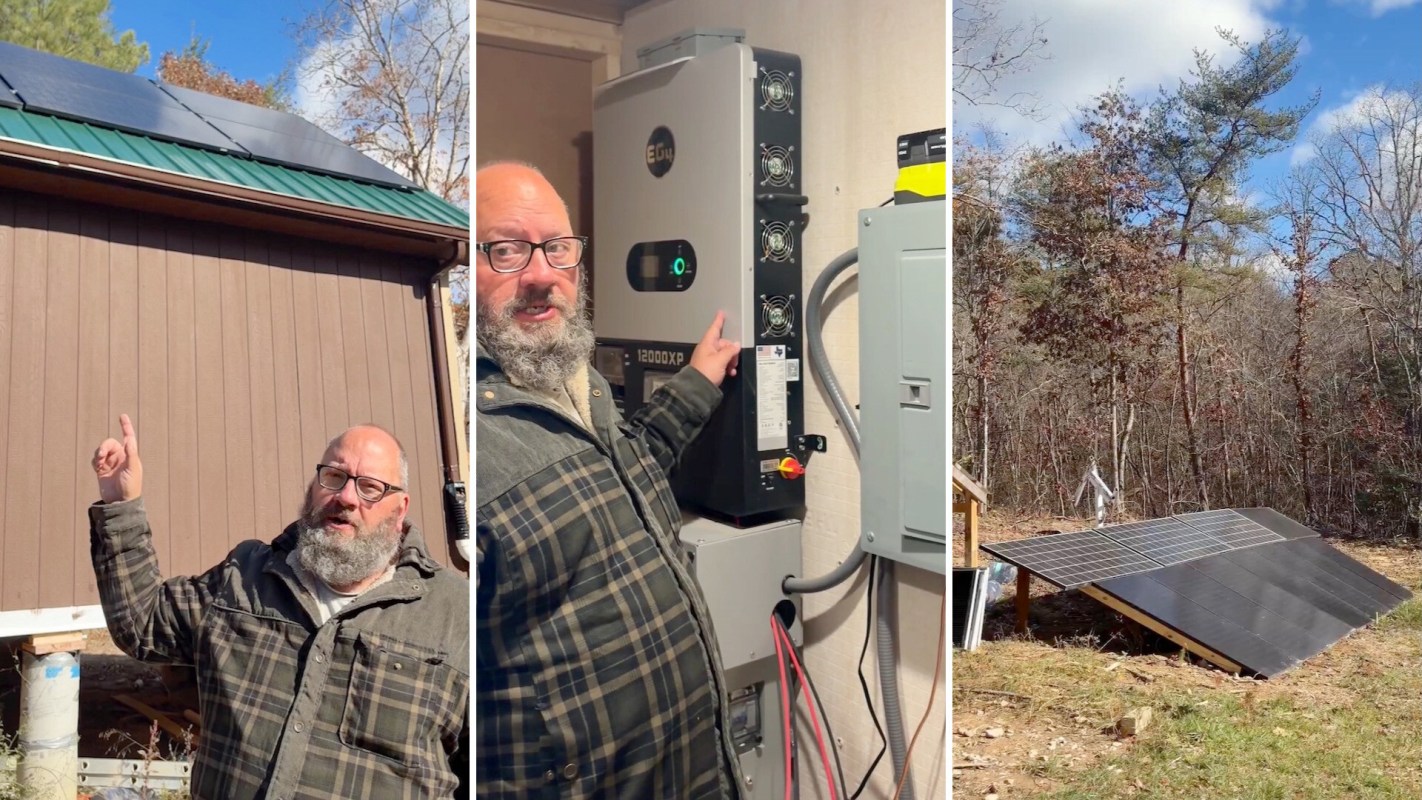
A builder offered a detailed look at the cost of off-grid living, sharing how he built a solar-powered cabin for $36,000.
The compact family space included a loft and an electrical system that provided year-round power.
Here's what to know
TN Off-Grid Systems (@TNOFFGRIDSYSTEMS) shared itemized costs alongside a tour of his 14-by-40-foot cabin in a YouTube video. He offered the breakdown to help viewers gauge the expense of a similar project.
Site preparation and basic construction expenses included a $3,000 foundation and $5,000 to clear the land. The metal roof cost $3,500, while framing lumber and labor totaled $1,500.
Solar equipment cost $10,000, and the mini-split heating and cooling unit cost $3,500. Interior spending included $2,500 for flooring, $5,000 for spray-foam insulation, and $2,000 for cedar paneling.
The cabin had no connections to water, electricity, or sewer lines. Its electrical setup featured an EG4 12,000-watt XP inverter and a battery system that the creator said had been operating for over a year.
TCD Picks » Quince Spotlight
💡These best-sellers from Quince deliver affordable, sustainable luxury for all




More background
A green indicator light on the mini-split showed that it was drawing power directly from solar panels during the tour. The unit can also use electricity from the inverter and battery system.
"It's pulling about 800 watts, heating the cabin just fine," the creator said.
He said the cabin benefited substantially from spray-foam insulation in its ceiling, walls, and floor.
Eight more panels were awaiting connection to the inverter system, while three already supplied the mini-split directly. The setup included six 425-watt panels on the roof and a temporary ground-mounted array for additional capacity.
Surrounding trees helped determine the panels' placement. The creator said the elevated roof array worked better in winter, and he wanted to avoid clearing more land.
Despite having no utility connections, the family still had internet access through Starlink.
What can be done?
The builder intended to use the metal roof to collect rainwater and install a Halo 5 system to filter it, with a demonstration planned for another video. He also intended to add a second battery.
For homeowners interested in solar, EasyHome can help curate competitive bids from local installers. Comparing proposals offers a way to explore a home-specific installation without taking on an off-grid project.
The creator planned to build a more developed mounting system to expand electricity production in stages. He used temporary panel supports made from pressure-treated wood.
Inside, the kitchen will be rearranged. The loft, used for storage, will become a sleeping space for his children.

Get TCD's free newsletters for easy tips, smart advice, and a chance to earn $5,000 toward home upgrades. To see more stories like this one, change your Google preferences here.






