


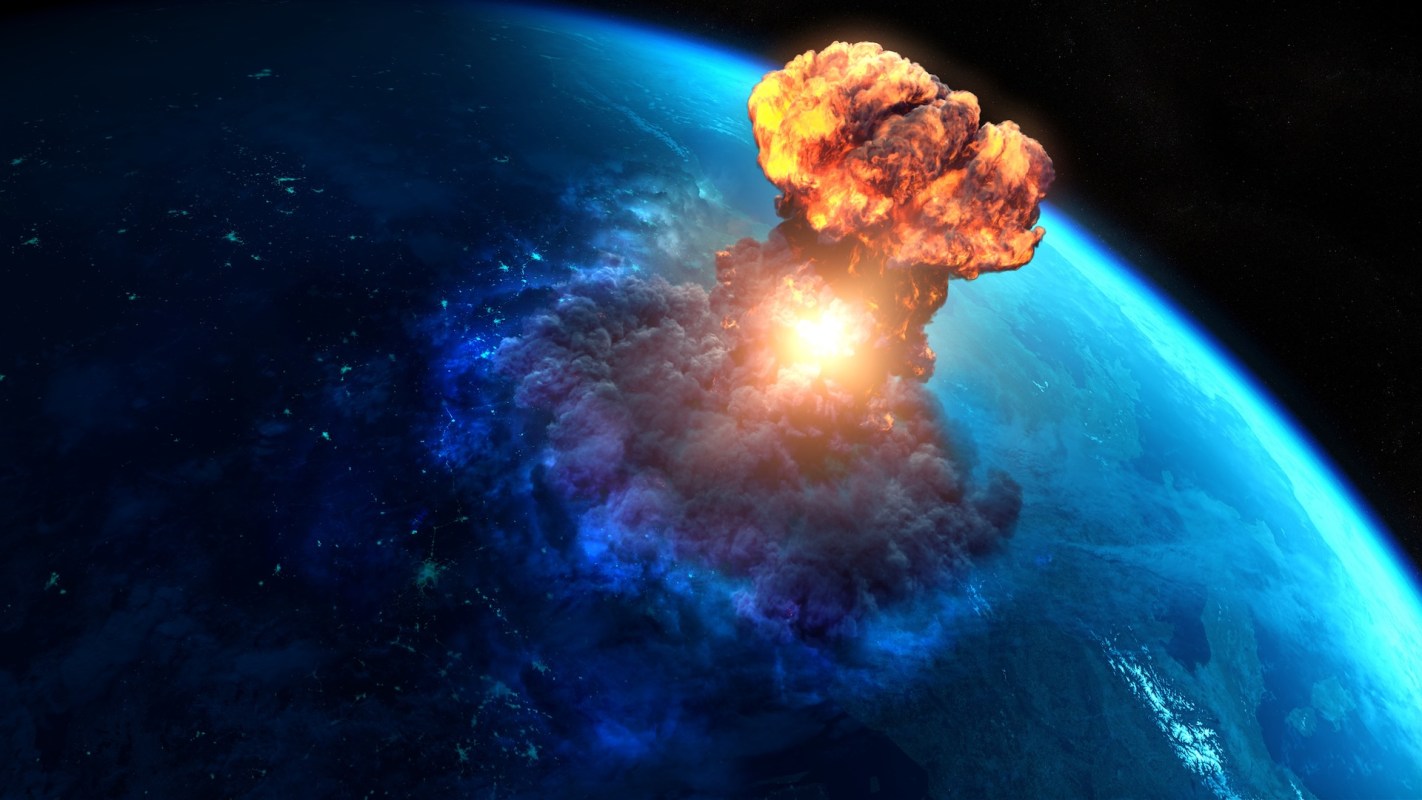
Communications infrastructure could remain under threat long after a nuclear blast in low Earth orbit, according to a new model. The model predicts that one explosion could disable roughly 98% of satellites there within a week.
Here's what to know
Physicists from Princeton University and the University of Wisconsin-Madison used collision and debris models, along with calculations tracking radioactive fission products, to examine a nuclear explosion in orbit, according to Gizmodo. Their simulation placed a one-megaton detonation 311 miles above the South Atlantic.
The researchers found that electrons released by fission products would pose a greater threat than the explosion's initial X-rays. According to Gizmodo, low Earth orbit holds an estimated 17,776 satellites serving civilian and military infrastructure.
An artificial radiation belt would continue to expose spacecraft to damaging radiation as Earth's magnetic field held the electrons in place.
The Starfish Prime test created an artificial radiation belt at a time when far fewer satellites were in orbit. For that 1962 test, the United States detonated a 1.4-megaton nuclear device 250 miles above the Pacific Ocean.
More background
Collision risks would rise after the initial disruption because disabled satellites could no longer maneuver.
TCD Picks » Quince Spotlight
💡These best-sellers from Quince deliver affordable, sustainable luxury for all




With a detonation, the model projected roughly 19 collisions in the first year, compared with about one otherwise. It projected about 20 collisions over two years after the blast.
Replacement satellites would have to enter the same artificial radiation belt, exposing newly launched equipment to the hazard that disabled its predecessors.
"The result would not be an immediate collapse of modern society, but rather a prolonged degradation of many services that we now take for granted," Chantal Cappelletti, a University of Nottingham aerospace engineer who did not participate in the paper, told New Scientist, according to Gizmodo.
Falling satellites could push concentrations of some metals well beyond their naturally occurring levels, an issue the researchers noted would require a separate assessment.
What's being done?
The researchers tested whether making satellites more resistant to radiation could protect them. Even after tripling radiation tolerance in their calculations, roughly 97% were rendered inoperable within a fortnight, indicating how difficult it is to protect orbital infrastructure with tougher materials alone, Gizmodo reported.
The Partial Nuclear Test Ban Treaty prohibited nuclear weapons testing above ground — including in the atmosphere and space — while allowing it underground. The United States and Soviet Union signed the agreement in 1963.
However, the researchers pointed to Russia's 2024 veto of a United Nations Security Council resolution as a cause for concern that a nuclear weapon "could be used against orbital infrastructure," according to Gizmodo. The resolution would have reaffirmed the prohibition on nuclear weapons in Earth's orbit.
"Recovery would likely require years of rebuilding orbital infrastructure while managing elevated radiation and debris hazards," Cappelletti told New Scientist.

Get TCD's free newsletters for easy tips, smart advice, and a chance to earn $5,000 toward home upgrades. To see more stories like this one, change your Google preferences here.






