


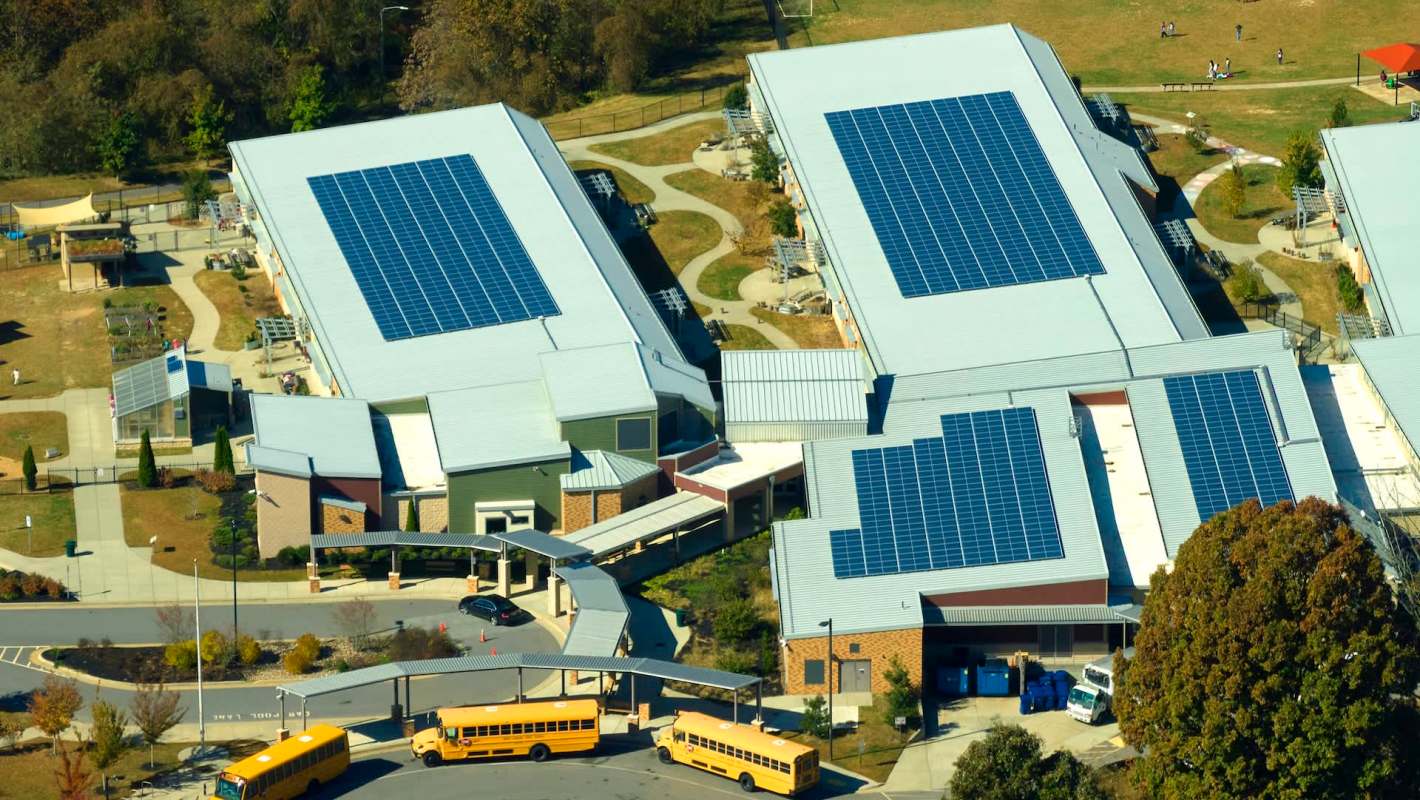
A Virginia school district expects its switch to solar power to cut its energy spending by $46.5 million over 35 years.
Classroom funding and other essential programs could benefit from Roanoke City Public Schools' anticipated reduction in energy bills.
Here's what to know
Across the country, over 10,800 K-12 schools use solar energy to educate more than 7 million students, according to Solar Power World, which reported findings from clean energy nonprofit Generation180's sixth Brighter Future report.
Those schools collectively provide over 2.4 gigawatts of solar capacity — sufficient to supply more than 450,000 homes, according to the report. That capacity is more than three times its 2016 level.
Teacher salaries, essential programs, and classroom resources are among the needs that could receive more funding when schools spend less on electricity.
Households may also reduce electricity bills with residential solar, and $0 upfront solar leases could deliver savings of hundreds of dollars per month. EasyHome offers a free explorer tool to estimate potential savings and find vetted local installers, helping homeowners investigate whether those benefits are realistic for them.
More background
Keeping electricity available during outages is another reason schools are adopting batteries.
The report included Generation180's first national census of school battery storage, identifying systems added at 155 schools since 2016. Of those, 94 use solar alongside batteries, while the remaining 61 rely on standalone battery storage.
Crushed by your bills? See instant solar savings from vetted installers in just a few clicks With energy prices through the roof, there's never been a better time to go solar — and EasyHome can help you find the best prices from the best installers in your area. EasyHome takes the guesswork and headaches out of energy upgrades by showing you estimated savings from a network of vetted local partners. To get started, just enter your ZIP and share a few details about your home — seeing your estimate is really that easy. |

Roughly 1 in 3 U.S. public K-12 schools has FEMA emergency shelter status, according to the report, making reliable electricity particularly important when emergencies disrupt normal operations.
Peak electricity charges are another expense schools can manage with batteries. California's 109 schools with storage represent roughly 70% of the nationwide total. Massachusetts ranks next, ahead of Oregon, Hawai'i, and Arkansas. Still, despite sevenfold growth in school battery systems over 10 years, adoption remains limited, the report says.
What's being done?
School solar adoption is expanding across the country, with states such as Virginia, Connecticut, Pennsylvania, New Jersey, and New York adding the most school solar capacity from 2021 to 2025, according to the report.
California's 2,921 schools using solar put it first nationally; New Jersey ranks second, ahead of New York, Illinois, and Arizona.
The report featured resources, such as district examples and potential savings, for school leaders weighing similar projects. It also examined how financing and ownership can work.
For households interested in backup power, EasyHome offers options for exploring battery storage. Combining solar with a battery can help manage electricity costs and keep power available during outages.
"Schools are at the heart of our communities. Every community has a school, and today more than 10,000 schools have already shown what is possible, but the vast majority of America's schools are still missing out," Generation180 Executive Director Stuart Gardner said. "Every school should have the opportunity to benefit from affordable clean energy and greater resilience. We hope this report gives school leaders and their communities the information and inspiration they need to take the next step."

Get TCD's free newsletters for easy tips, smart advice, and a chance to earn $5,000 toward home upgrades. To see more stories like this one, change your Google preferences here.






