


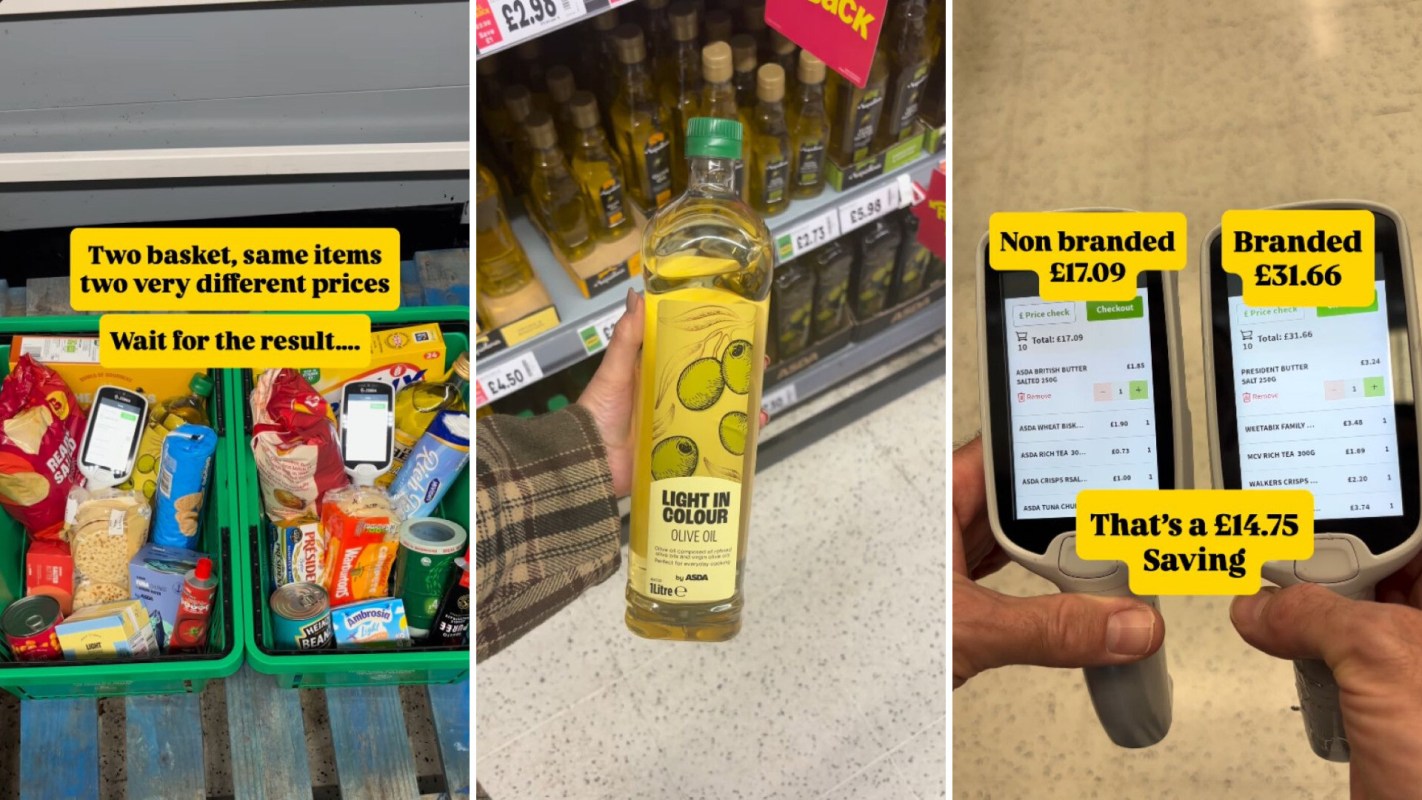
Buying big food brands can add more to your grocery bills than you might expect.
One money-saving influencer found that a 10-item basket cost £31.66 ($41.64) for name-brand products, compared with just £17.09 ($22.48) with cheaper alternatives, the Mirror reported.
Here's what to know
The comparison included British grocery staples like Weetabix cereal, crumpets, butter, and beans, along with tuna chunks, tomato purée, oil, custard, Rich Tea biscuits, and potato chips.
Content creator Gemma Bird, known as Money Mum, filmed a grocery run at the supermarket Asda for Instagram.
Choosing non-branded versions cut Bird's total by £14.57 ($19.16).
She encouraged shoppers facing rising supermarket bills and looming holiday expenses to consider similar changes to reduce their regular food spending.
TCD Picks » Quince Spotlight
💡These best-sellers from Quince deliver affordable, sustainable luxury for all




The comparison followed another 10-item grocery comparison haul in which Bird recalled saving about £13.50 ($17.75).
More background
Bulk buying isn't always the best way to save — shoppers can actually pay more by choosing a larger package, Bird found.
In one Instagram video, she showed that Asda charged £1.98 ($2.60) for a 56-cookie double pack of Oreos.
However, buying the same quantity in two smaller boxes cost £1.70 ($2.24), saving shoppers about 28p (37 cents).
"We often think bigger pack it must be cheaper so we just pop it in the basket! But where they're on [sale,] it wasn't," Bird wrote on Instagram.
"Now this wasn't just on one double pack of [Oreos], I found it on a couple of them so check, check, check," she added. To avoid paying more, she recommended checking the smaller print on shelf labels.
Prices per gram or per cookie allow shoppers to compare costs across different box sizes.
What can be done?
Seeing the running total before checkout can prompt shoppers to question an extra purchase.
Bird advised her followers to use supermarket scanners when available to monitor spending as they shop, alongside comparing brands and unit prices. She also recommended checking what ingredients are on hand before shopping, and sticking to a list in the store.
Buying only the pasta for a Bolognese avoids duplicate purchases when the carrots and ground beef are already at home, and carrying groceries by hand limits impulse buys.
Bird suggested skipping handbaskets and shopping carts on smaller grocery runs, especially for shoppers prone to adding extras, and she emphasized that the savings add up.
"If you saved that per week, over the year that's a massive saving of £757.64 (996.41)," she told followers.

Get TCD's free newsletters for easy tips, smart advice, and a chance to earn $5,000 toward home upgrades. To see more stories like this one, change your Google preferences here.







