


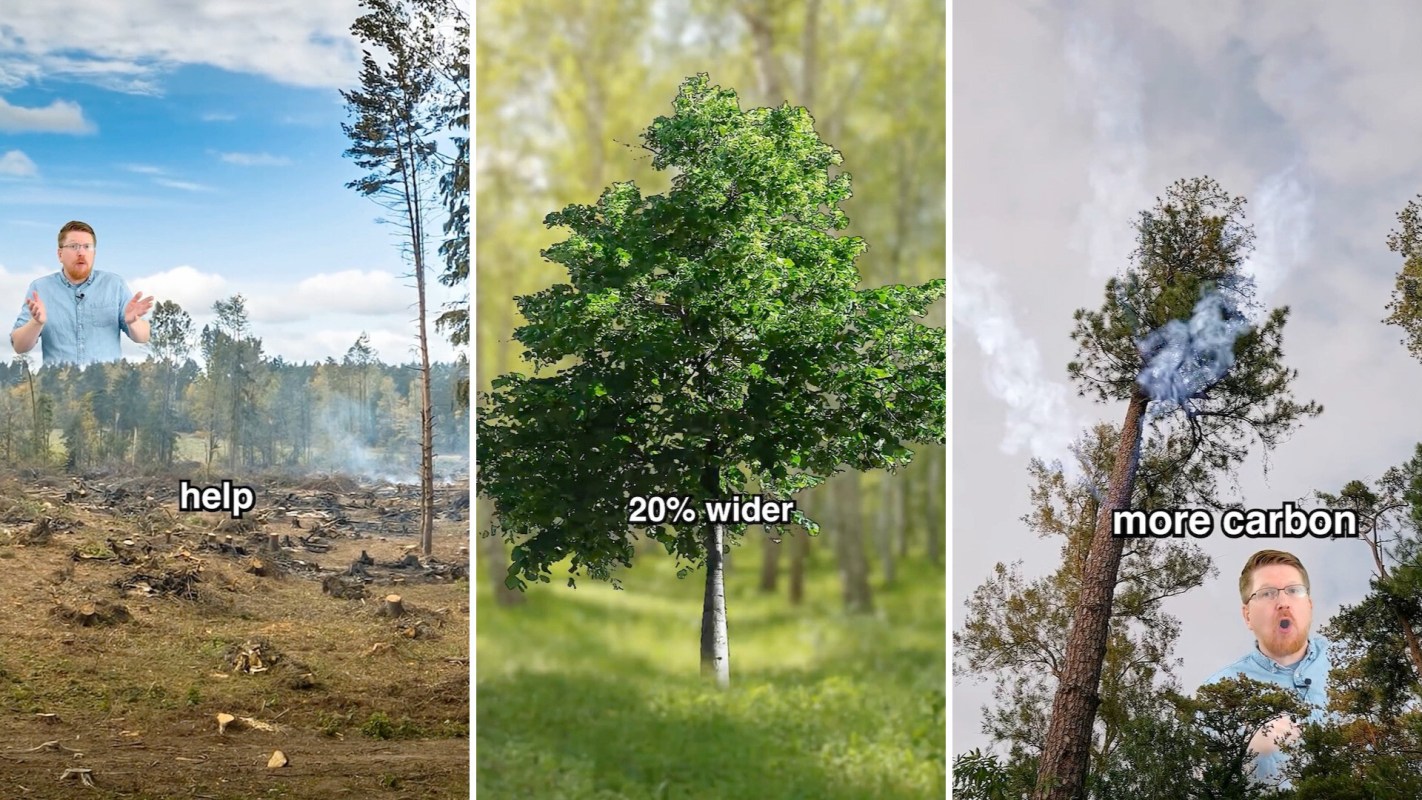
A 30-year experiment in Australia's mountain ash forests suggests that the remaining trees can eventually make up for the carbon lost when most trees are removed.
Here's what to know
Content creator and EcoBits (@EcoBitsOfficial) host Justin Pack described a forest-health experiment in a YouTube video. Researchers compared areas where they had removed 70% of the trees with forest they left untouched.
The remaining trees thrived with less competition, according to Pack. By the experiment's end, the largest trees in the treated areas were roughly one-fifth wider than those in the untouched forest.
"With fewer neighbors fighting over light, water, and nutrients, the trees left standing got more of everything," Pack said.
More background
The experiment also examined changes in the forest's carbon stores.
The remaining trees have to compensate for the carbon initially lost when thinning removes some of the forest's wood.
TCD Picks » Quince Spotlight
💡These best-sellers from Quince deliver affordable, sustainable luxury for all




According to Pack, the thinned forest eventually matched or exceeded the untouched forest in the amount of carbon stored in the wood of its remaining trees.
What's being done?
The practice, known as forest thinning, involves removing some trees to give others more room and resources to grow.
Pack described greater carbon uptake, larger trees, and better resilience to future stress as potential benefits in suitable ecosystems. He emphasized that the researchers did not present thinning as a solution for every forest.
One commenter asked about the other benefits forests provide.
"Outside of carbon storage, I imagine there are other ecosystem services that are being missed out on by thinning old growth forests? I'd liked to have seen some more nuance in this short," they asked.
"Finland has been doing this for like 70 years, except the cutting is staggered, it's done in phases," another commenter said. "There is no clear cut, but the select trees are cut, leaving the biggest ones, and in turn the big ones spread seeds so more saplings can grow without need for planting."

Get TCD's free newsletters for easy tips, smart advice, and a chance to earn $5,000 toward home upgrades. To see more stories like this one, change your Google preferences here.







