


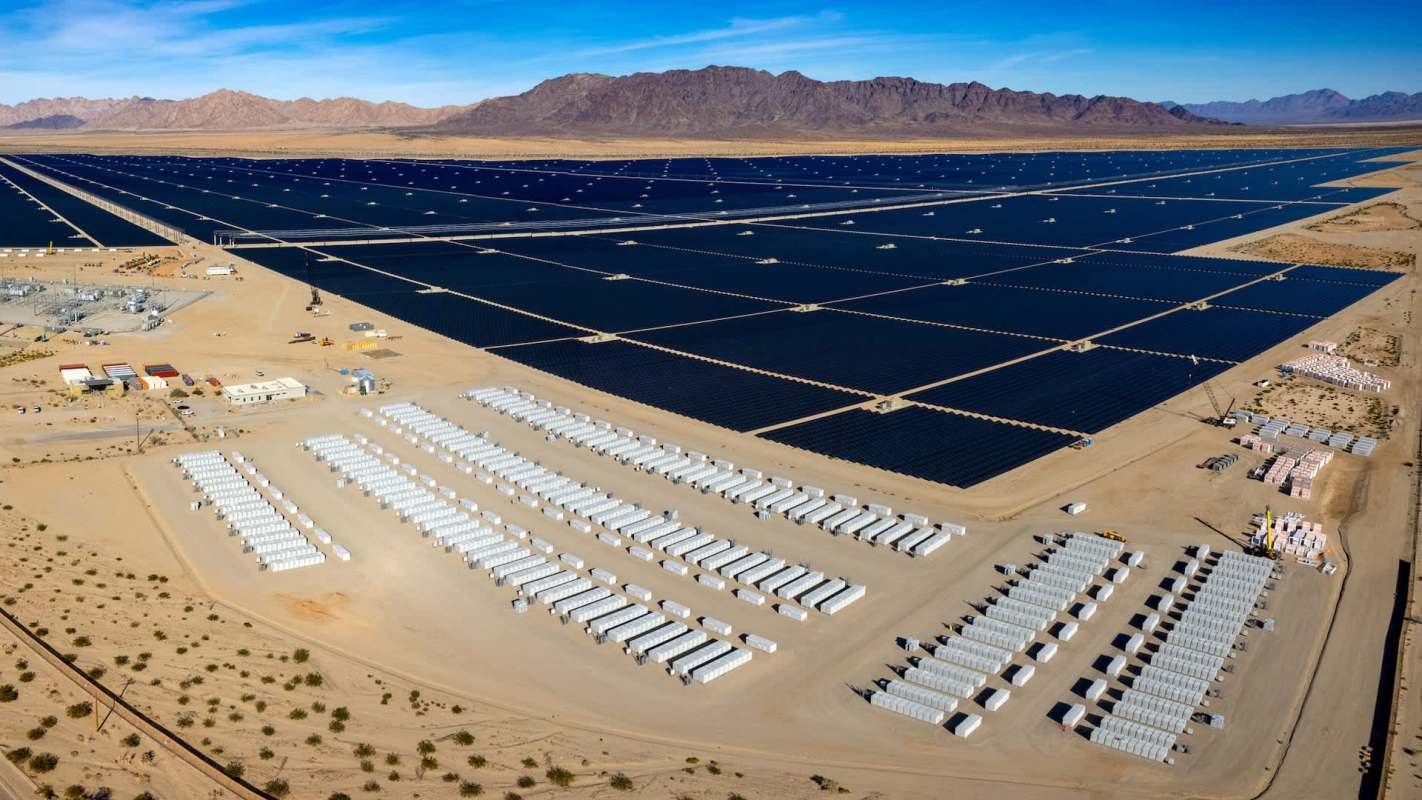
Global solar electricity generation more than doubled in three years, rising from 769 to 1,564 terawatt-hours between the first halves of 2023 and 2026.
Cheaper batteries are ensuring that growing supply reaches beyond daylight hours.
Here's what to know
Solar supplied 5.6% of the world's electricity between January and June 2023, but its share passed 10% for the same period in 2026, an Ember study cited by ESS News found.
Between 11 a.m. and 2 p.m., solar handled over a quarter of worldwide electricity demand, compared with virtually none overnight.
Batteries can help bridge that gap, and falling costs are making stored solar power increasingly practical. Battery installation costs dropped 95% from 2010 to 2025, plummeting from $2,634 per kilowatt-hour to $140, according to Ember.
For homeowners facing grid instability and time-of-use pricing, whole-home battery leases can keep essentials powered during outages and reduce peak-period electricity costs — without costs upwards of $20,000 upfront. EasyHome is a unique marketplace for battery shoppers seeking exclusive prices and deals from trusted partners.
More background
Battery installations worldwide are expected to reach 459 gigawatt-hours in 2026, a 50% increase over 2025, Ember projected.
That storage could, in theory, shift 34% of additional daily solar output into hours without sunshine.
Crushed by your bills? See instant solar savings from vetted installers in just a few clicks With energy prices through the roof, there's never been a better time to go solar — and EasyHome can help you find the best prices from the best installers in your area. EasyHome takes the guesswork and headaches out of energy upgrades by showing you estimated savings from a network of vetted local partners. To get started, just enter your ZIP and share a few details about your home — seeing your estimate is really that easy. |

By comparison, batteries installed in 2025 could shift 18%.
Solar provided 26% of Chile's electricity from January through June this year, reaching 71% at midday before dropping to virtually nothing by 9 p.m.
At the household level, Pila offers a plug-and-play battery backup alternative for renters and homeowners alike, at a substantially lower price than whole-home systems.
Ember also sees continuing roles for wind, hydropower, nuclear power, and long-duration storage, especially during prolonged stretches with little sunshine or wind.
What's being done?
Chile added 4 gigawatt-hours of battery storage in 2025, mostly alongside solar plants.
Those additions helped reduce wasted generation and shift electricity into evening hours.
In the first two quarters of 2026, batteries enabled solar to supply over 10% of Chile's evening electricity needs, Ember found.
On an average day during in that period, solar and batteries together supplied over 25% of electricity needs between 7 p.m. and 9 p.m., up from 6.8% in 2023.
For households exploring similar solutions, EasyHome is not unlike Groupon for home energy, negotiating better deals for its large user base — and giving battery shoppers the best pricing.
It also offers exclusive solar deals. Pairing panels with a battery can supercharge home energy savings by storing cheaper electricity to use when prices are high, while also providing vital backup power during outages.
According to Ember, Bulgaria's battery storage grew from almost nothing in 2023 to more than 8.6 gigawatt-hours by May of this year.
In the first half of 2026, solar paired with storage supplied 24% of Bulgaria's electricity needs between 7 p.m. and 9 p.m.

Get TCD's free newsletters for easy tips, smart advice, and a chance to earn $5,000 toward home upgrades. To see more stories like this one, change your Google preferences here.






