


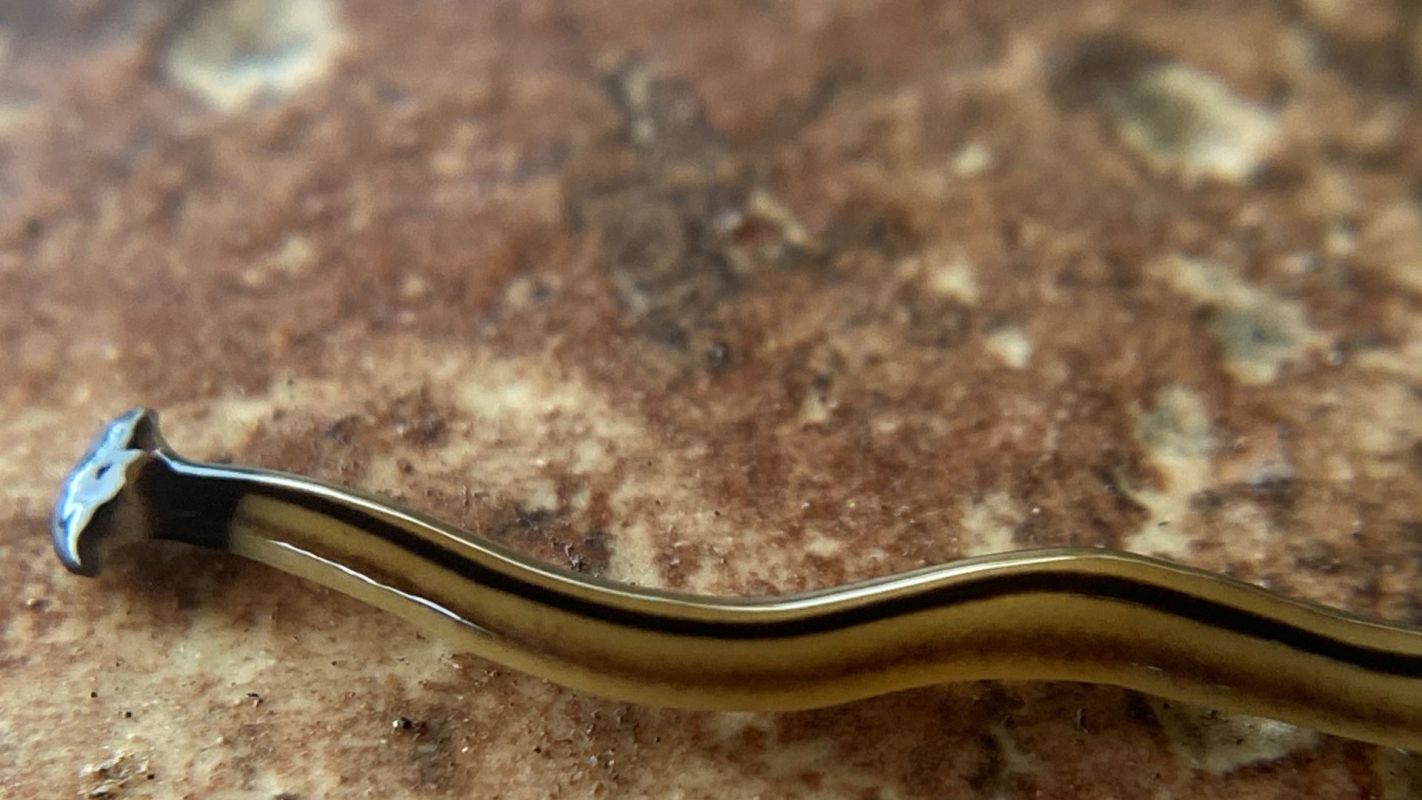
A 13-year-old boy from Shreveport, Louisiana, expelled a large hammerhead worm through his nose after experiencing headaches and a nosebleed.
Here's what to know
Imaging and a nasal exam turned up no lasting damage and no more worms. Brandon Watkins, David Cabaniss, and Paul Bracey, the emergency physicians who treated him, wrote up the case for the journal Wilderness & Environmental Medicine, according to Medical Daily.
A pseudoparasite ends up inside a person without feeding on them, unlike a true parasite. The report classified the worm this way. It was published online June 2, 2025, and appeared in the journal's December issue.
Flower beds and garden soil are typical hunting grounds for hammerhead worms, free-living land flatworms with broad, half-moon-shaped heads. Most fall under the genus Bipalium.
The physicians presented the encounter as a warning amid the spread of invasive hammerhead worms across the Southeast. Their review found only three earlier records of these flatworms occurring in people, according to Medical Daily.
More background
According to the University of Florida Institute of Food and Agricultural Sciences Extension, hammerhead flatworms reached the United States through horticultural commerce. Moving soil and plant material can carry them into new areas.
TCD Picks » Quince Spotlight
💡These best-sellers from Quince deliver affordable, sustainable luxury for all




Hammerhead worms hunt native earthworms and immobilize them with a toxin-laced mucus.
Some grow to about 11 inches long, according to the UF-IFAS Extension. They favor wet, shaded ground, living under bushes, fallen leaves, and rotting wood, and they tend to surface after a hard rain. Those same damp corners of a yard are often where kids play.
North Carolina State University Extension specialists say Bipalium kewense has been recorded in the state since at least 1951.
What can be done?
They caution that the worms' mucus can irritate some people's skin, so it's best to limit direct handling, keep it away from the eyes and mouth, and wash hands well afterward. A pair of gloves, or a stick to keep some distance, works well when handling worms found in a yard.
A review in the Revista da Sociedade Brasileira de Medicina Tropical, published Oct. 17, 2025, also recommended handwashing after accidental contact. Researchers at Brazil's Federal University of Minas Gerais and Federal University of Lavras, who conducted the review, put the toxin load per worm at roughly 200 nanograms of tetrodotoxin, enough, they said, to stun prey but not much else.
The team found no solid evidence behind reports that the worms had sickened pets or people. By their math, a mammal would need to eat several hundred worms before the toxin posed any danger.
Doctors recommend seeking medical care for any worm-like discharge from the nose or a nosebleed that won't stop, and holding onto whatever comes out can help with identification.
Bryce C. Walton and Muneo Yokogawa, writing in a 1972 Journal of Parasitology paper, described a child in Japan's Chiba Prefecture who, after four days of a bad cough and labored breathing, coughed up a live Bipalium fuscatum.

Get TCD's free newsletters for easy tips, smart advice, and a chance to earn $5,000 toward home upgrades. To see more stories like this one, change your Google preferences here.






