


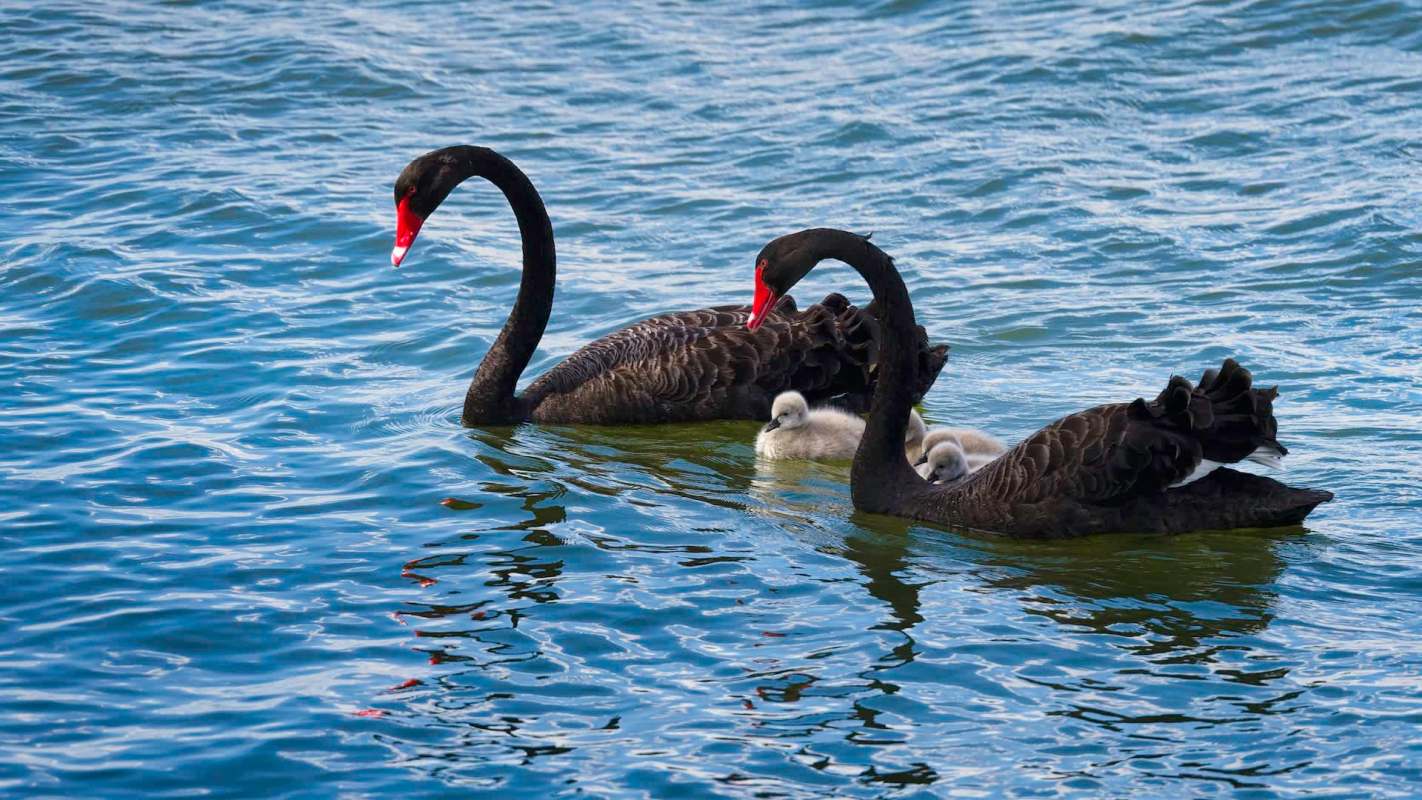
A rescue at a rapidly drying Australian lake has given 49 baby black swans a chance to eventually return to the wild. More than 100 volunteers took part in the quickly-organized effort.
Here's what to know
Rising temperatures left Lake McLarty dry months ahead of its usual schedule, PerthNow reported. Located south of Mandurah in Western Australia, the freshwater lake belongs to the Peel-Yalgorup System, an important area for waterbirds.
The outlet said WA Seabird Rescue worried that falling water levels would force the parents to leave before their cygnets could survive independently. About 110 young swans remained on Nov. 8, when the lake was just 5.5 inches (14 centimeters) deep and losing roughly another 0.4 inches (1 centimeter) of water each day.
Foxes had killed many of the abandoned birds. Rescue volunteer Rachel Olsen told the Australian Broadcasting Corporation that only about 60 cygnets were still alive on the morning of the rescue.
"We knew that in a few days all of these cygnets would be dead; the parents had no choice but to abandon them," Olsen recalled, per PerthNow.
More background
The adult swans still at Lake McLarty were those tending their young. Most others had departed as dwindling water and food supplies and a growing threat from foxes made conditions increasingly difficult.
TCD Picks » Quince Spotlight
💡These best-sellers from Quince deliver affordable, sustainable luxury for all




WA Seabird Rescue president Matt Watson identified fox attacks as the most urgent danger, but the weather conditions were compounding the problems for vulnerable young birds.
"Climate change and drier winters are leading to an increase in these situations," he explained to PerthNow. "We're losing our wetlands, so it's extremely important to look out for these types of scenarios."
Watson said the team had only days to secure approval and arrange the rescue, rather than the months spent planning similar efforts. Over 100 strong, the group was able to pull off the emergency rescue in the nick of time.
"At WA Seabird Rescue, we believe every bird matters, and we're incredibly proud to have played a part in protecting these young swans and giving them the opportunity to thrive," Watson said.
What's being done?
Rescuers guided the cygnets into a containment area in a joint operation involving WA Seabird Rescue, Darling Range, WA Wildlife, Mandurah Wildlife Rehabilitation Centre, and River Wren Rescue.
The 49 birds went to wildlife rehabilitators for assessment and care after rescuers secured permission from DBCA, the agency that manages the lake.
Melissa Evans, DBCA's manager for the Swan Coastal district, explained to PerthNow that the rescue groups hold licenses allowing them to capture native animals in need of assistance and rehabilitate them for release. Evans also noted that DBCA conducts regular fox control at the reserve and had scheduled another round.
Five of the rescued cygnets were being cared for at Mandurah Wildlife Rehabilitation Centre. Board member Jane Danzi said the young birds were settling in well, with the ultimate goal of returning them to the wild.
"We are looking forward to watching them grow and prepare for when they will return to their natural habitat," she concluded to PerthNow. "Wild and free as they should be."

Get TCD's free newsletters for easy tips, smart advice, and a chance to earn $5,000 toward home upgrades. To see more stories like this one, change your Google preferences here.







