


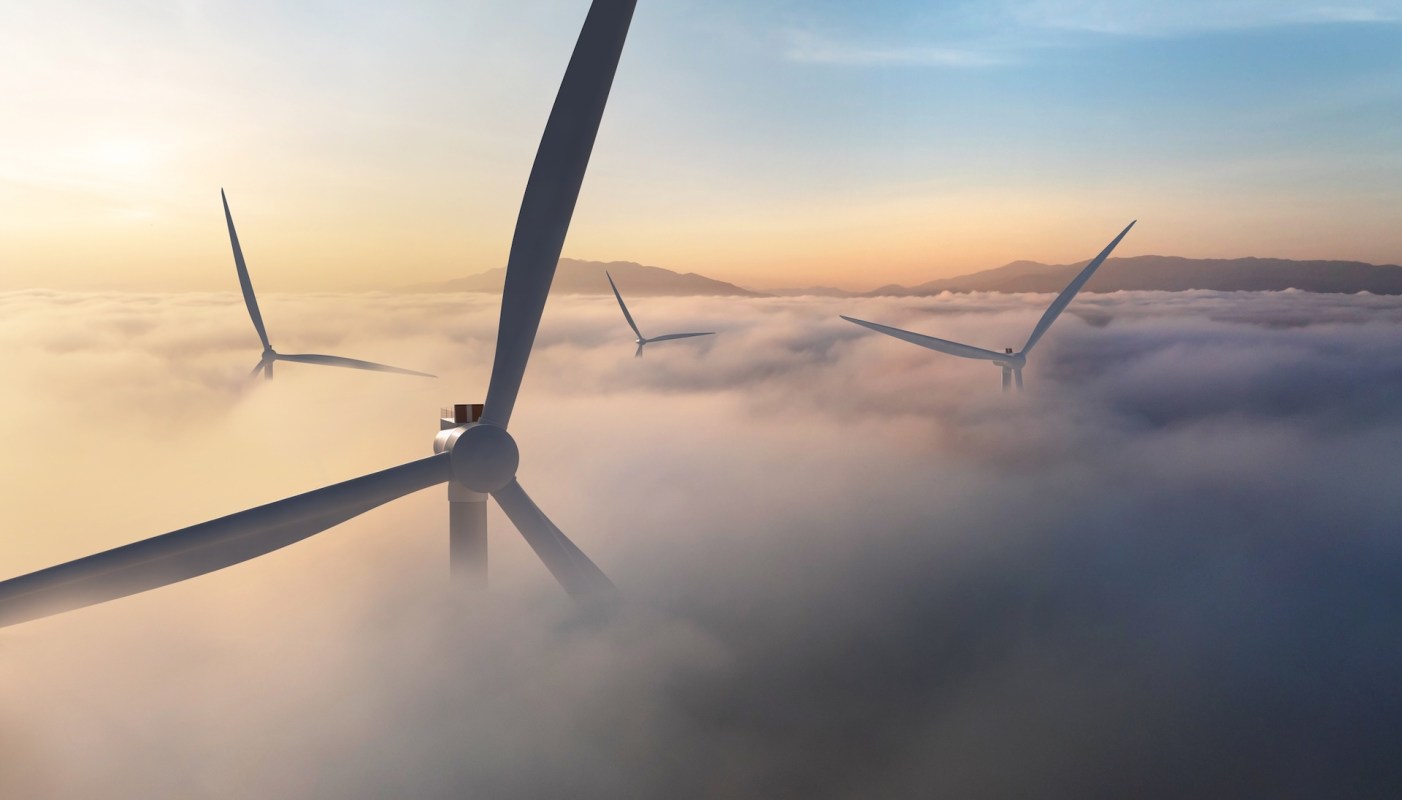
Low clouds could help offshore wind farms generate more electricity if the air above them is dry enough.
Researchers in the Netherlands found that the right atmospheric conditions can stir up air, bringing more wind energy within reach of turbine blades.
Here's what to know
Physicist Davide Selvatici of the University of Twente in the Netherlands led a simulation study exploring how offshore wind farms and low-lying stratocumulus clouds influence each other, ScienceAlert reported. The team's research was published in the Journal of Renewable and Sustainable Energy.
The researchers found that dry air above the clouds sent less heat back down toward them than moist air would. This allowed the clouds to cool, creating heavier air that sank and stirred the atmospheric boundary layer, the near-surface air from which turbines harvest energy.
That mixing deepened the boundary layer, helping deliver more energy to the turbines.
Moist air above the clouds had the opposite effect. With weaker mixing and a shallower boundary layer, winds reached the turbines with less energy.
TCD Picks » Quince Spotlight
💡These best-sellers from Quince deliver affordable, sustainable luxury for all




More background
Less than 10% of ocean skies are cloud-free at any given moment, and satellite-based estimates put global cloud cover at about 67%, according to NASA. Wind energy research and modeling nevertheless tend to assume dry air and cloudless skies.
A wind farm's access to energy depends in part on the depth of the atmospheric boundary layer, which changes with atmospheric conditions even though turbine height remains fixed. Stratocumulus clouds commonly lie along the top of this layer in broad, nearly continuous banks.
When shallow clouds had bases close to the tops of turbine rotors, the simulations showed that wind farms could decrease both the amount of liquid water in the clouds and the extent of cloud cover. The researchers said that finding was consistent with satellite observations.
What's being done?
Selvatici's team planned to expand its simulations to include more varied weather conditions and alternative wind farm design features.
For offshore wind developers, the findings could help guide decisions about where projects are built, how turbines are arranged, and how much electricity a farm is expected to generate under different conditions.
"Accurately modeling wind farm-atmosphere interactions is essential for predicting power output and informing wind-farm design," the researchers wrote. "The role of clouds in these interactions, however, remains poorly understood."
"Our results suggest that two-way wind farm-cloud interactions should be considered when planning and deploying large offshore wind farms."

Get TCD's free newsletters for easy tips, smart advice, and a chance to earn $5,000 toward home upgrades. To see more stories like this one, change your Google preferences here.






