


Planned detonations of a sensitive explosive near an Iowa neighborhood have raised concerns about potential damage and toxic dust.
Here's what to know
After discovering barrels of lead azide, the U.S. Army is planning to detonate the explosives at the Iowa Army Ammunition Plant on Nov. 20.
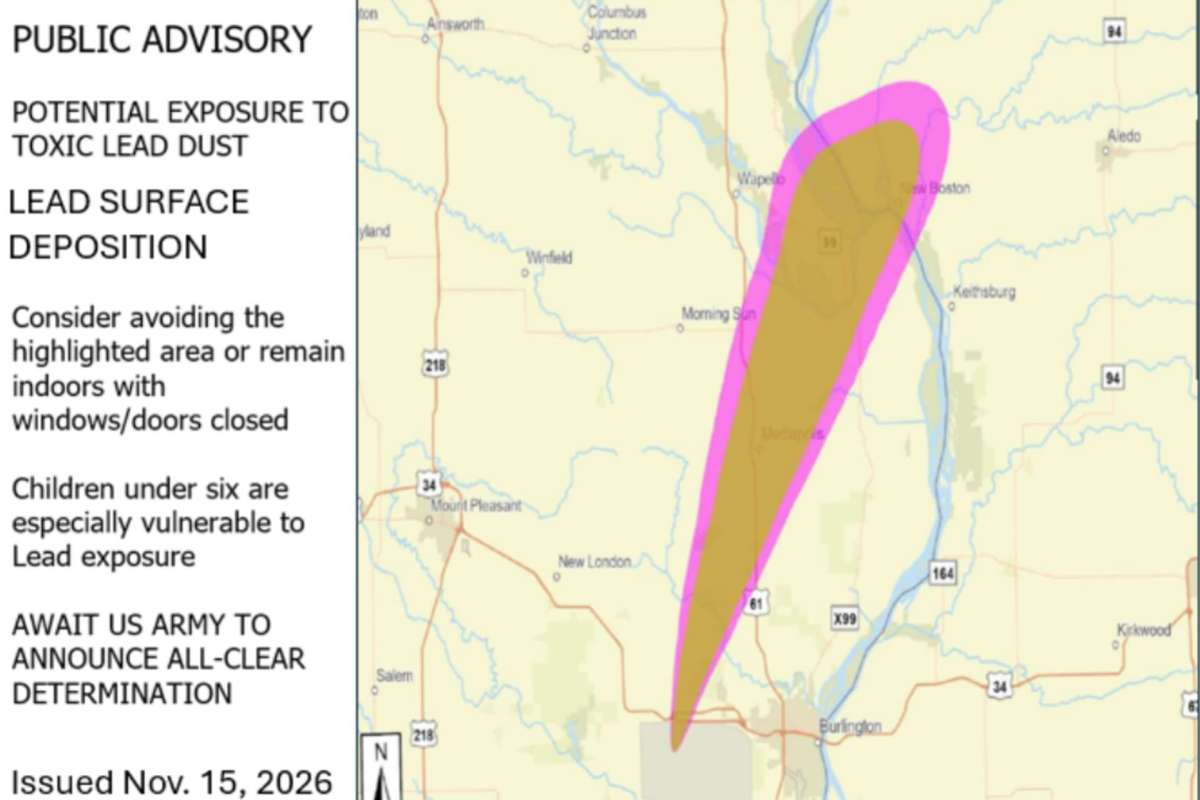
In a public advisory, plant officials have said the detonation will create an air plume. Those living near Middletown City Park have been told to leave ahead of the detonation and not to return until the Army has given the all-clear.
The issue has begun to go viral across social platforms, including Instagram, where Iowa creator Luke Alexander Brooks made an impassioned and detailed video about the topic that has reached over 100,000 likes.
Resident Daren Paul Morris has known about the scheduled detonations for months and said he plans to leave with his parents for the day.
Morris told local news outlet KCRG that he understands the need for the explosions, but many still have concerns about the potential impact on nearby homes, habitats, air quality, and human health.
TCD Picks » Quince Spotlight
💡These best-sellers from Quince deliver affordable, sustainable luxury for all




More background
Morris has relatives working at the ammunition plant. He even worked there himself in 1991.
As he understands it, the material is old and can't be moved safely.
"I guess it was just some stuff they found or something that was back from years ago that dried out or something and they can't move it because it'll blow up," Morris told the local news.
A communication from the U.S. Environmental Protection Agency announced that the agency had "issued an Emergency Permit under Resource Conservation and Recovery Act to the U.S. Army for its planned detonation of 68 drums of degraded lead azide" at the plant.
Morris said he might wait for a good rain before mowing his yard after the explosions. He worries about lingering dust and does not want to stir it up.
As part of its public advisory, the Army has shared maps projecting how far lead particles could travel.
"The plant's modeling predicts the possibility of elevated levels of lead particles in the air in an area up to 20 miles wide," Tri States Public Radio reported. "Some lead particles could also end up on the ground in an area up to 10 miles wide stretching from near Burlington to north of Wapello and New Boston."
The Army and health experts have pointed to unique risks for children and pregnant people. Lead is a neurotoxin linked to adverse impacts on brain and nervous system development, learning and behavior concerns, and hearing and speech problems in kids.
Though shorter-term exposure at lower concentrations "is not equivalent to months or years of exposure … there is no scientifically established threshold below which every exposure is risk-free," the Des Moines Register outlined in its coverage of the planned detonation.
The newspaper cited a social media post from David Cwiertny, director at the University of Iowa Center for Health Effects of Environmental Contamination, which challenged an Army spokesperson's advice to "hose off" any dust residents may be concerned could carry lead particles.
"I mean, that's not how it works," Cwiertny wrote in the post. "It's not magically gone."
What's being done?
KCRG reported that residents can shelter from the detonations and resulting dust at Middletown's U.S. Army Reserve Center, which the Army is opening for this purpose.
Guidelines outlined by the Army and by local outlets included calling for those in any affected areas to remain indoors, close doors and windows, turn off HVAC systems, monitor any animals that may track dust inside, and very carefully wet-clean surfaces with which children may come into contact.
Meanwhile, the Iowa Environmental Council has called on state and federal officials for greater transparency about any potential health impacts from the planned detonation.
A petition has also called for stopping the detonation altogether.

Get TCD's free newsletters for easy tips, smart advice, and a chance to earn $5,000 toward home upgrades. To see more stories like this one, change your Google preferences here.






