


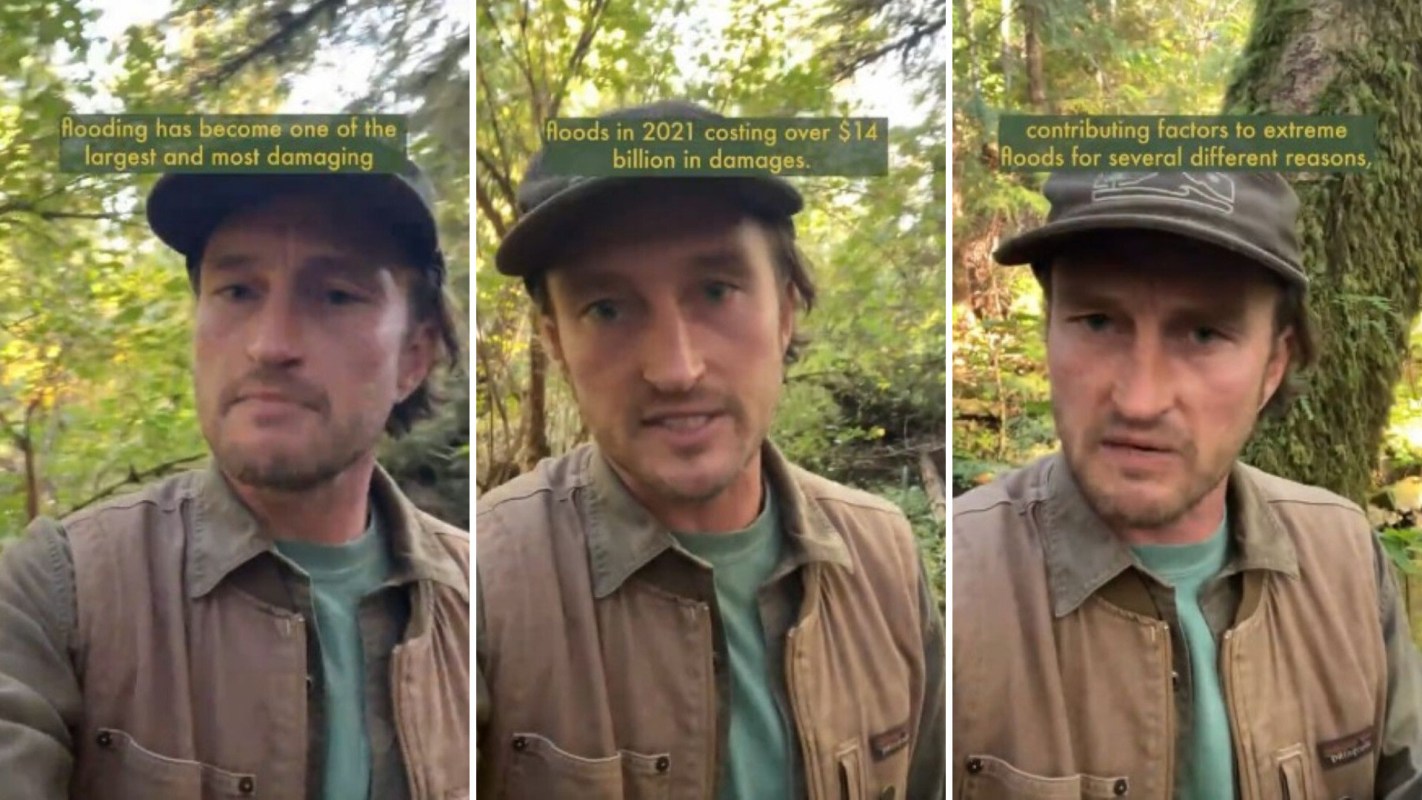
Clearcutting about 40% of a Canadian watershed increased the frequency of large floods by roughly 16 times, according to research highlighted by a nature educator.
Here's what to know
In a TikTok explainer, Ross Reid of Nerdy About Nature (@nerdyaboutnature) described research from forestry researcher Younes Alila's lab at the University of British Columbia's forestry faculty. The study examined how logging and a changing climate affected flooding in an interior British Columbia watershed.
Spring floods became less likely as warming temperatures gradually reduced snowfall and left a smaller snowpack. But clearcutting approximately two-fifths of the watershed more than offset that reduction.
When researchers isolated the effects of harvesting, they found that a flood of a magnitude expected once every 50 years without logging occurred about every three years after clearcutting, Reid explained.
Logging's effects were particularly pronounced among the rarest, most severe floods.
More background
Reid explained that logging allows water to reach rivers faster. Vegetation normally absorbs water and slows its movement, while roots help it soak into the soil.
TCD Picks » Quince Spotlight
💡These best-sellers from Quince deliver affordable, sustainable luxury for all




River systems downstream can be overwhelmed by a rapid influx of snowmelt. Removing the tree canopy exposes snow to more sunlight, speeding up the melt.
"Ooo it also contributes to landslides which also compromise watershed health and flood resiliency," one commenter said, raising another concern about removing forests.
Reid pointed to British Columbia's 2021 Fraser Valley floods, which caused more than $14 billion in damage, as an example of how destructive flooding can be.
What can be done?
Reid called for ending clearcutting, stating, "If we want to create safe, healthy lands and waters with reduced risk to our communities, then it's time we listen to what the science says and stop clearcut logging, to instead implement more ecologically sound harvest practices that work to create better futures for all of us."
Reid argued that forest managers largely overlook clearcutting's broader effects, including how cut blocks are placed across watershed features. Instead, he said, profitability and the volume of wood harvested take priority.
Reid advocated for harvest planning that accounts for the entire watershed to support healthier lands and waters while reducing risks to nearby communities.

Get TCD's free newsletters for easy tips, smart advice, and a chance to earn $5,000 toward home upgrades. To see more stories like this one, change your Google preferences here.






