


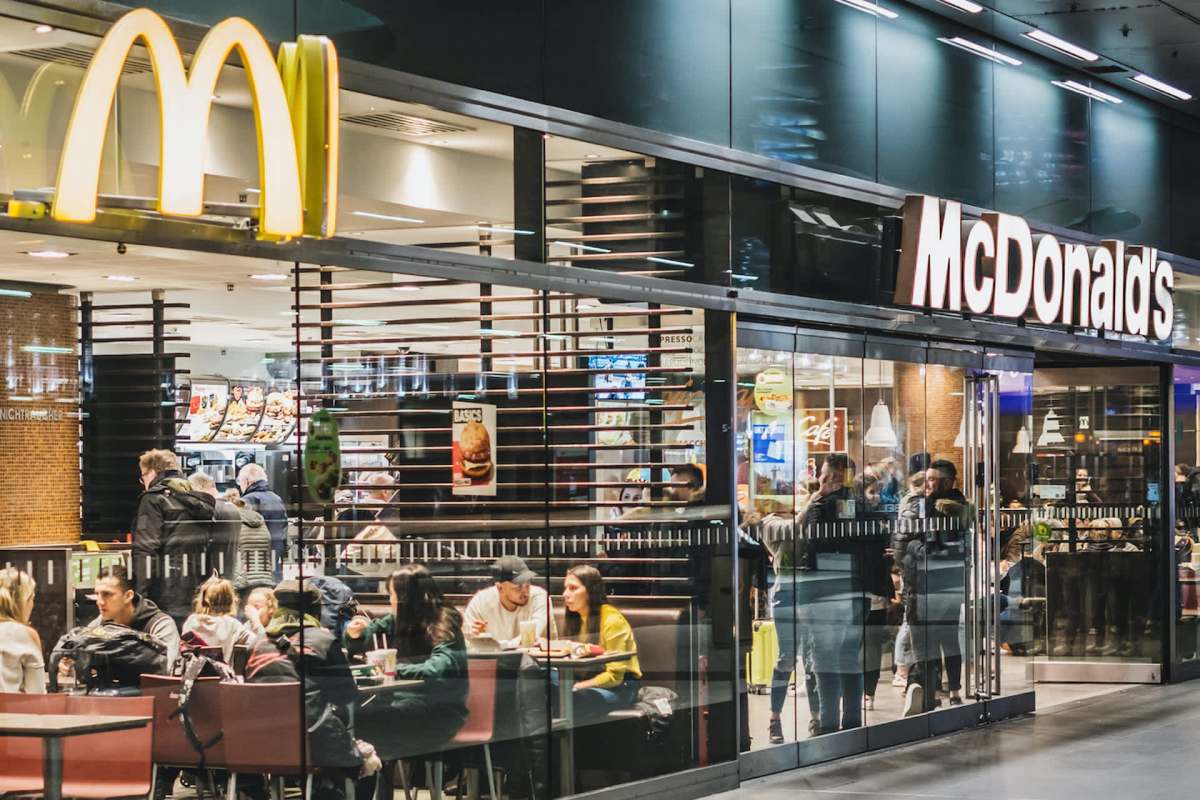
Rent and franchise fees bring McDonald's more money than food sales at its company-operated restaurants.
Here's what to know
As the nonprofit newsroom More Perfect Union (@moreperfectunion) revealed in an investigative video report posted on TikTok, that arrangement brought in $16.5 billion in 2025. Independent operators covered the staffing, ingredients, and equipment needed to run their restaurants.
The report examined the company's business model, revealing that franchisees operate 95% of its roughly 14,000 U.S. locations. Independent businesses manage daily operations, with McDonald's providing the branding, recipes, and kitchen systems.
The probe described McDonald's as both a fast-food franchisor and landlord. The company collects rent along with fees for marketing, services, equipment, and software. It owns most restaurant buildings and a majority of the land beneath its locations.
More Perfect Union put annual franchisee fees at $6.5 billion and rental revenue at $10 billion, citing a McDonald's SEC filing.
Company-operated restaurants generated $9.5 billion from food sales. Rent and franchisee fees, meanwhile, accounted for 60% of McDonald's $27 billion in revenue.
TCD Picks » Quince Spotlight
💡These best-sellers from Quince deliver affordable, sustainable luxury for all




More background
Most of McDonald's $8.6 billion in operating income in 2012 came from rent and franchise fees, the outlet reported. The company's revenue that year totaled $28 billion.
Food sales at company-operated restaurants supplied only 10% of operating income in 2025. Operating income rose to $12.4 billion that year, even as revenue slipped to $27 billion.
"If ingredient costs go up or people can't afford to eat out anymore, the franchisees have to deal with that," More Perfect Union explained.
Other viewers in the thread made the connection to the film "The Founder," which focused on Ray Kroc. The movie, based on the true story of the brand's origins, put a spotlight on how Kroc built the McDonald's dynasty from a local burger joint to a company fixated on being a real estate giant.
What's being done?
McDonald's transferred thousands of company-owned restaurants to franchise operators as part of a deliberate expansion of this business model, according to the video. Rent and fees had trailed food sales as a revenue source.
The video reported $37 billion in shareholder payouts over the five-year period it covered through a combination of dividends and stock buybacks.
"The only thing that ever seems to trickle down is the burden of cost," one user remarked about the arrangement.
Others raged about its impact on franchisees and the subsequent impact on restaurant quality and experience.
"Oh, this makes a lot of sense, but this format should DEF be illegal," one person wrote. "It's super predatory toward franchisees and encourages private equity over individuals to buy up restaurants."
Someone else said, "So this is why they genuinely don't gaf about the quality of the food."

Get TCD's free newsletters for easy tips, smart advice, and a chance to earn $5,000 toward home upgrades. To see more stories like this one, change your Google preferences here.






