


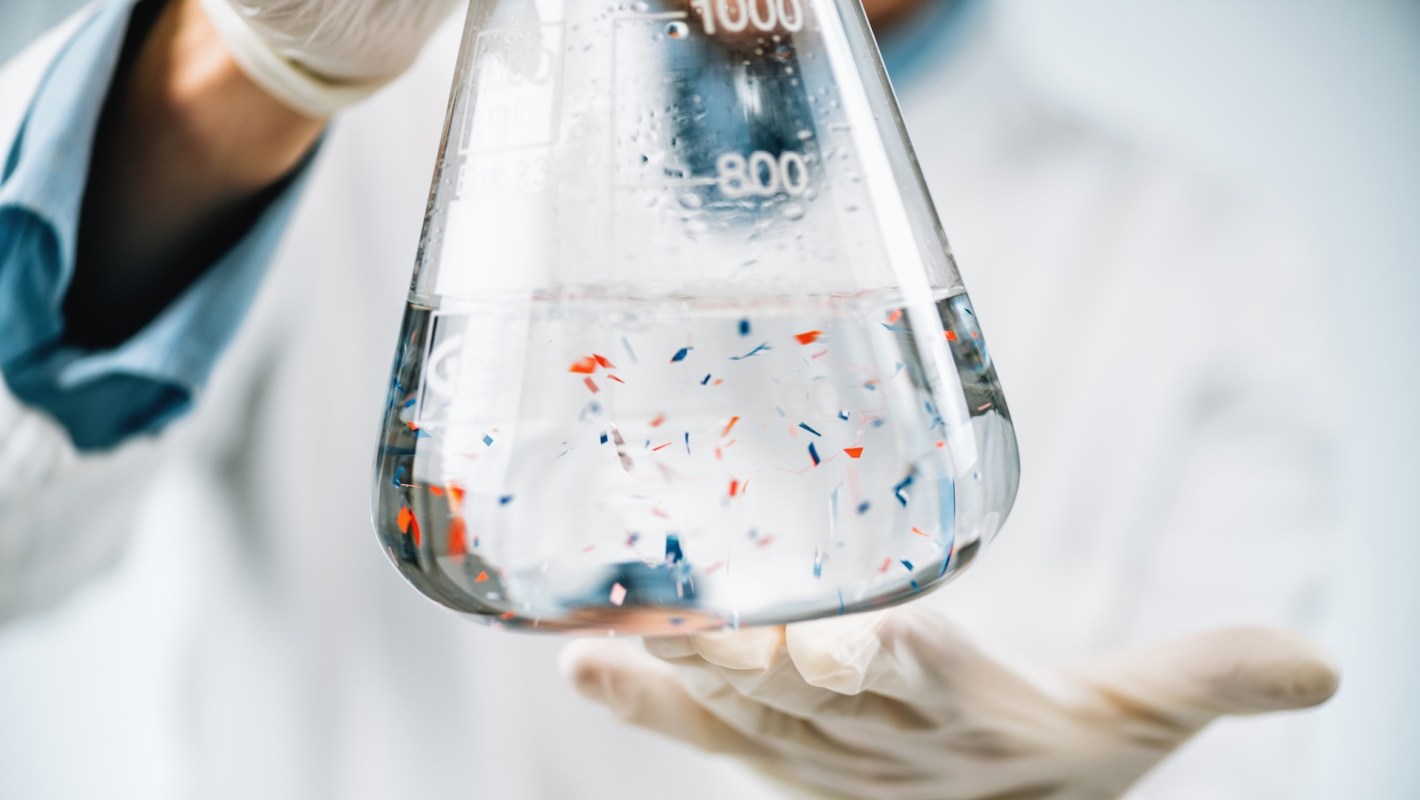
A sunlight-powered catalyst developed by Canadian researchers can convert microplastics in water into acetic acid, vinegar's primary acid.
The experimental technology could supply a useful ingredient for food production and chemical manufacturing while helping address persistent plastic pollution.
Here's what to know
Scientists at the University of Waterloo described the approach in research appearing in Advanced Energy Materials, according to Futura Sciences.
Sunlight sets off a chain of reactions that split the plastic's long polymer chains apart, slowly producing acetic acid as a result. The catalyst driving the process combines individual iron atoms with a carbon nitride structure.
The approach borrows an idea from biology, where fungi and certain bacteria rely on enzymes to dismantle complex molecules step by step, ending up with simpler compounds. The Waterloo researchers built an artificial, sunlight-driven catalyst that follows that same staged breakdown.
"Our goal was to address plastic pollution by converting microplastics into high-value products using sunlight," said Yimin Wu, the University of Waterloo professor who led the project, per Futura Sciences.
TCD Picks » Quince Spotlight
💡These best-sellers from Quince deliver affordable, sustainable luxury for all




More background
A report from the Organisation for Economic Co-operation and Development, cited by Futura Sciences, found that worldwide plastic production exceeds 496 million U.S. tons (450 million metric tons) annually, nearly twice the amount produced in 2000.
Recovering the tiny particles known as microplastics from the environment is extremely difficult; they form as discarded plastics break apart. A single piece of plastic can take five centuries to fully decompose.
These particles have even been detected in tap water.
The researchers describe converting plastics, including PVC, PET, PE, and PP, into a substance already used across several industries. Because the reaction happens directly in water, the process could also help address plastic pollution in the ocean.
What's being done?
The Waterloo team wants to scale up its solar-driven system so it can recycle more plastic and help clean up polluted environments. The technology is still experimental, and the next steps focus on refining the catalyst's materials and improving how it's manufactured.
Acetic acid also comes into play in some energy production applications.
According to Futura Sciences, Roy Brouwer, executive director of the Water Institute and a study co-author, said, "From a commercial and societal perspective, the financial and economic benefits associated with this innovation appear promising."

Get TCD's free newsletters for easy tips, smart advice, and a chance to earn $5,000 toward home upgrades. To see more stories like this one, change your Google preferences here.






