


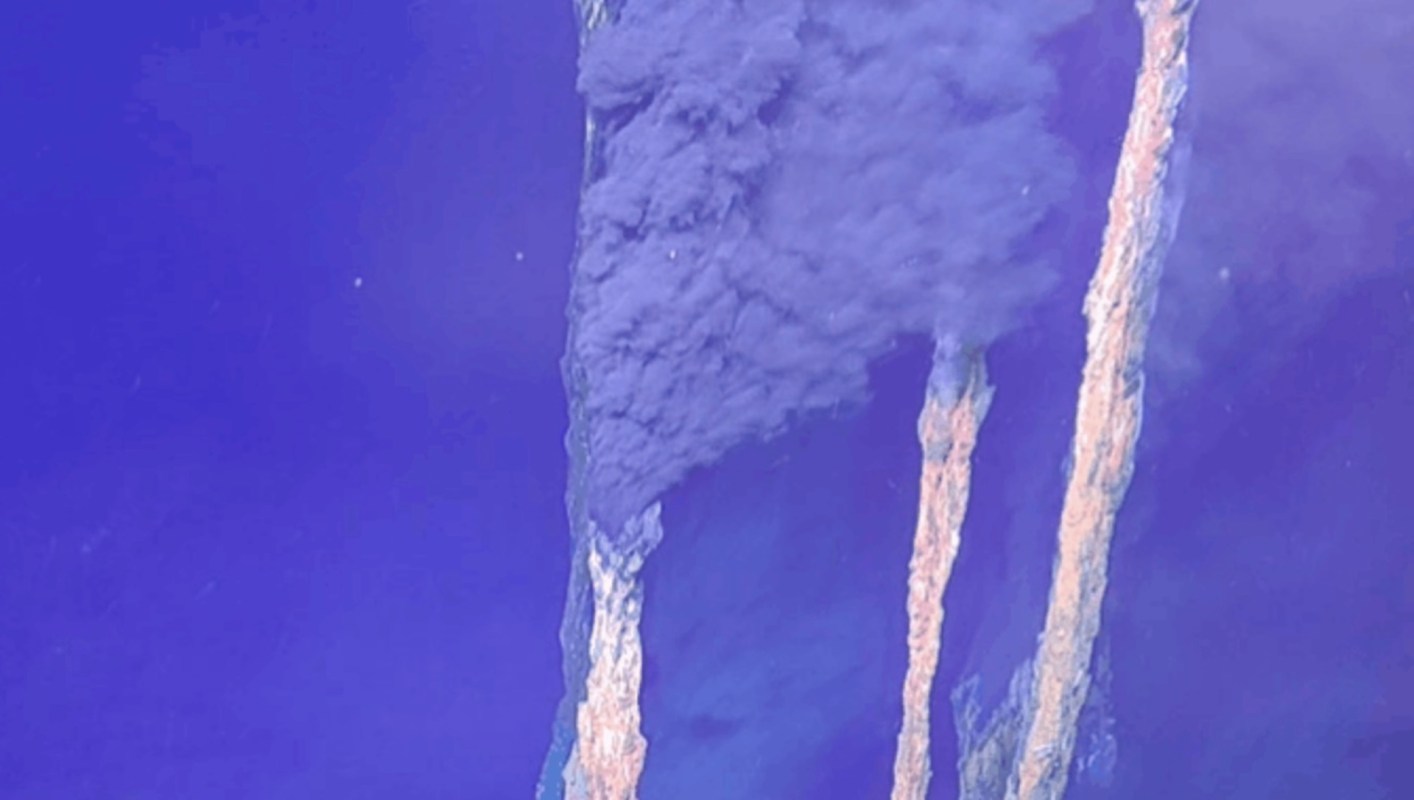
Water reaching about 754 degrees Fahrenheit (401 degrees Celsius) flows from the world's deepest known hydrothermal vents, roughly three miles below the Caribbean Sea's surface.
Here's what to know
Researchers exploring the Cayman Trough with a remotely operated vehicle, or ROV, discovered the Beebe Vent Field, according to Discover Wildlife. The submarine trench is near the Cayman Islands, and the vents sit 16,299 feet (4,968 meters) below the sea's surface.
Hydrothermal vents typically form where tectonic plates pull apart, allowing seawater to reach magma beneath the seafloor. The water becomes superheated before rising back up, carrying minerals and gases.
The immense pressure at these depths keeps the water from boiling, even at such extreme temperatures.
Beebe's vents are known as black smokers, with chimney-like formations that release dark plumes into the surrounding water.
"Black smokers are hotter and spew out a fluid that carries mostly iron sulphides, which make them look darker," the London Natural History Museum explains on its website.
TCD Picks » Quince Spotlight
💡These best-sellers from Quince deliver affordable, sustainable luxury for all




Cooler vents, known as white smokers, appear pale because they contain materials such as silica and barite.
More background
While the water pouring from the vents is dangerously hot, nearby animals inhabit a patchwork of temperatures. The vent fluid cools quickly as it mixes with surrounding seawater, creating places where animals can survive just a short distance from the vents.
"The vent might be very hot, but when you move away from it a little, you can have a temperature of 20°C or so, which is quite nice for lots of animals," Natural History Museum researcher Maggie Georgieva explained, according to Discover Wildlife.
Sunlight cannot reach the Beebe Vent Field, so its food chain must rely on a different energy source.
Bacteria use chemosynthesis to make food from vent chemicals. That energy then passes through the ecosystem as deep-sea creatures eat one another, supporting a community of animals in the sunless habitat.
What's being done?
Researchers used their ROV to explore the Beebe vents and identify the animals living nearby, according to Discover Wildlife. Among the animals observed were eelpouts, also known as zoarcid fish, as well as anemones, squat lobsters, and colonies of shrimp.
The University of Southampton described the shrimp's unusual adaptation on its website, writing, "Lacking normal eyes, the shrimp instead have a light-sensing organ on their backs, which may help them to navigate in the faint glow of deep-sea vents."

Get TCD's free newsletters for easy tips, smart advice, and a chance to earn $5,000 toward home upgrades. To see more stories like this one, change your Google preferences here.







