


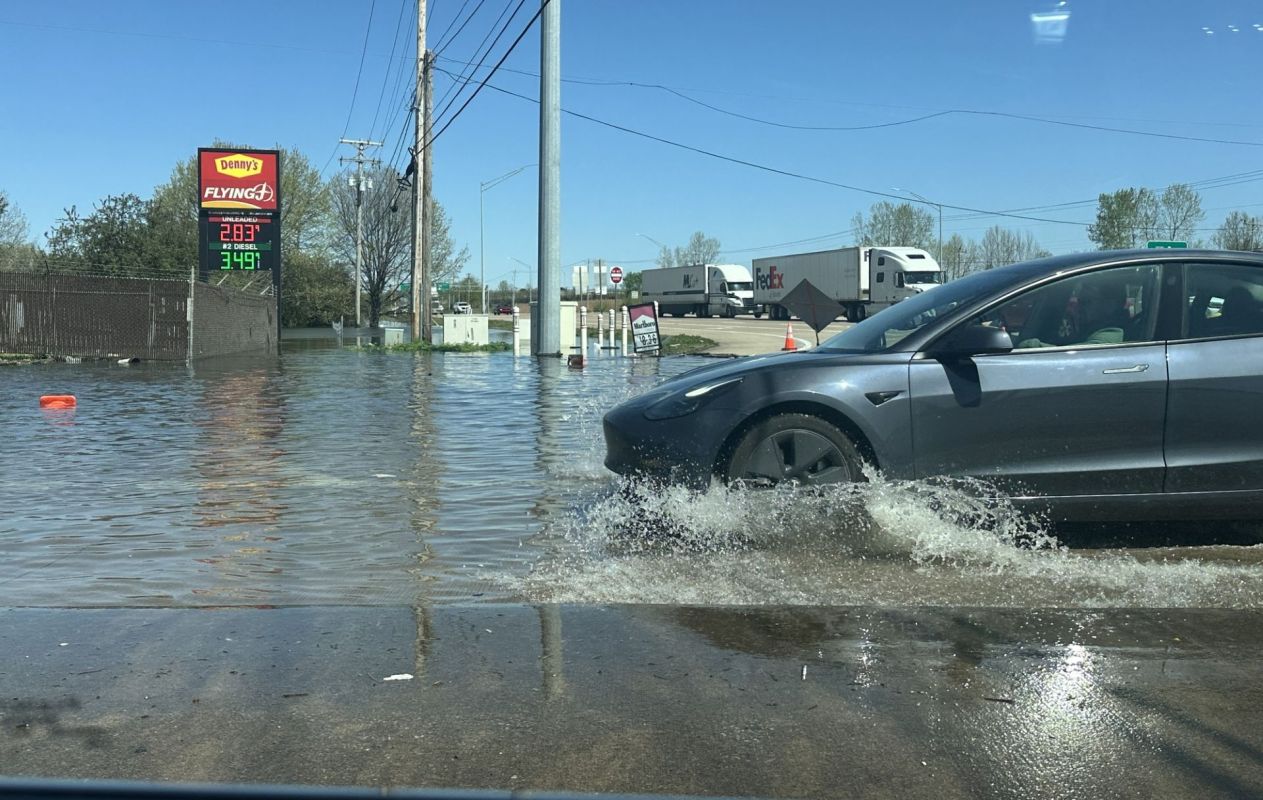
An electric vehicle's sealed battery may offer protection from water, but it cannot keep the car from being swept off a flooded road. That key distinction became the focus of an online discussion after a driver asked whether an electric sedan could safely navigate deep floodwater.
Here's what to know
Posting on Reddit's r/ElectricVehicles, a driver in a storm-surge-prone area wanted to know whether a slow trip through an occasional flooded stretch could damage an EV, particularly after brief contact with brackish water.
"But what if a vehicle, the EV sedan, drives through an occasional flooded area slowly but deep? Is there a research study on this out there?" the original poster asked.
The driver provided a link to a teardown analysis of flood-damaged EVs conducted by the National Highway Traffic Safety Administration. However, the OP noted that they had only been able to find research relating to EVs that had been exposed to hurricane flooding in Florida.
What commenters said
Rather than answering the OP's question directly, several commenters focused on the danger that driving through floodwaters poses to people inside the vehicle. One Redditor warned that drivers cannot reliably judge the depth or strength of moving water or see the condition of the road beneath it.
As for the risk of water exposure, one commenter explained that electric powertrains lack an engine air intake and exhaust, two areas where water can pose a problem for internal combustion engines. Several commenters also pointed out that seals help keep water out of EV high-voltage batteries and drive units. However, others observed that, while the high-voltage components were protected, saltwater could still corrode low-voltage electrical components.
TCD Picks » Quince Spotlight
💡These best-sellers from Quince deliver affordable, sustainable luxury for all




While the OP emphasized the risk to the EV's electrical components, one commenter warned that water above a vehicle's underside could cause problems with lubricants and leave suspension parts rusting. Additionally, interior finishes could become waterlogged, and heating and cooling equipment could suffer damage as well.
Throughout the discussion, many commenters remained focused on safety concerns over the threat of costly repairs. They cautioned that flooded roads can hide displaced manhole covers, submerged rocks, and washed-out pavement.
Considering all of these risk factors, one commenter cited NHTSA guidance urging drivers to turn around when encountering a flooded roadway.
Where can I learn more?
The risk of flood damage can leave car owners worrying about costly repair bills. These stories cover flooded cars and roads in Florida, EV shopping concerns, and battery replacement fears.
• A Florida driver feared a costly repair bill after flooding stalled their leased car.
• In Fort Lauderdale, king tides shut down part of A1A amid saltwater damage warnings.
• EV owners linked battery replacement fears to their experiences with deteriorating phone batteries.
• An Ontario shopper weighing a Bolt or BYD Dolphin encountered EV safety skepticism.
• A Northern European buyer feared future battery replacement costs, but owners offered reassurance.

Get TCD's free newsletters for easy tips, smart advice, and a chance to earn $5,000 toward home upgrades. To see more stories like this one, change your Google preferences here.






