


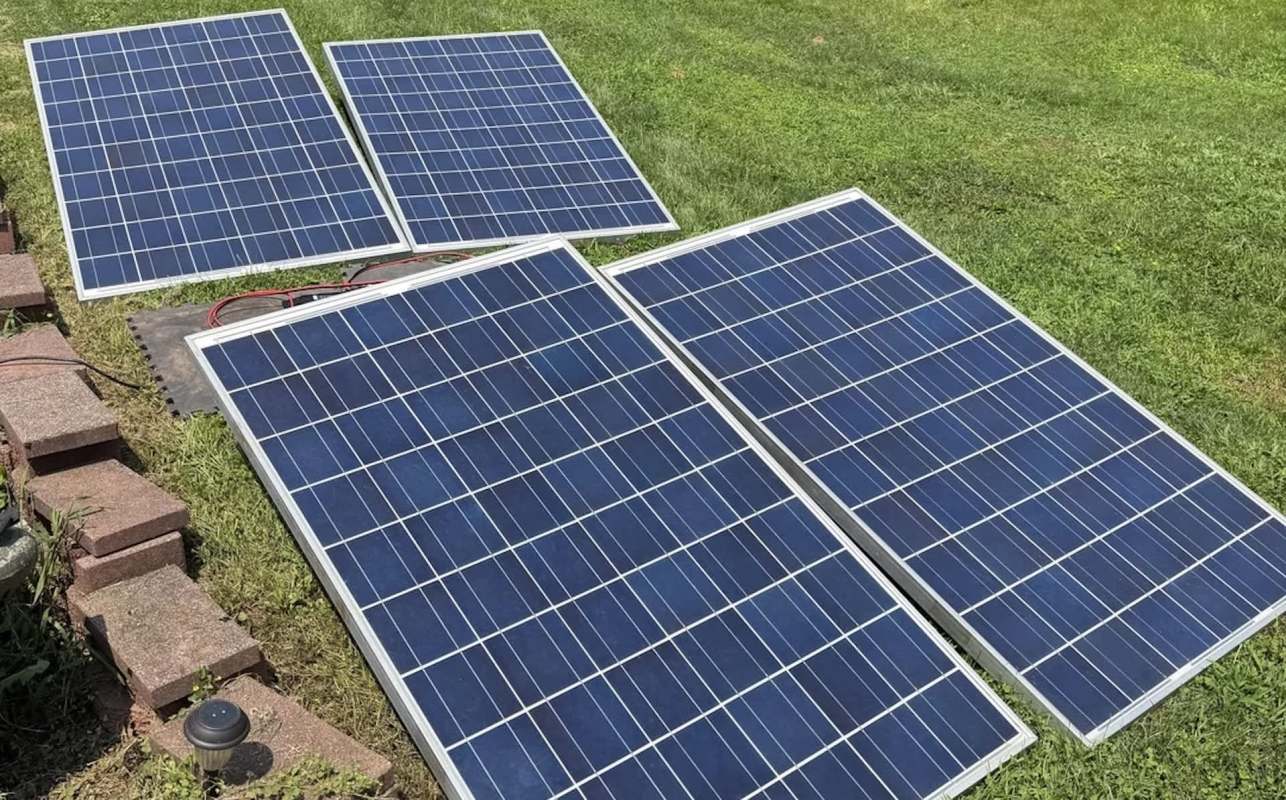
Secondhand equipment is giving one DIYer an inexpensive start in solar power. Four older panels, purchased for $100, are generating electricity while lying on the lawn.
Here's what to know
The panels are Schott 245-watt models from President Barack Obama's administration. In a post on Reddit's r/DIYSolar community, the original poster described connecting four of them to an APsystems EZ1-LV plug-in microinverter.
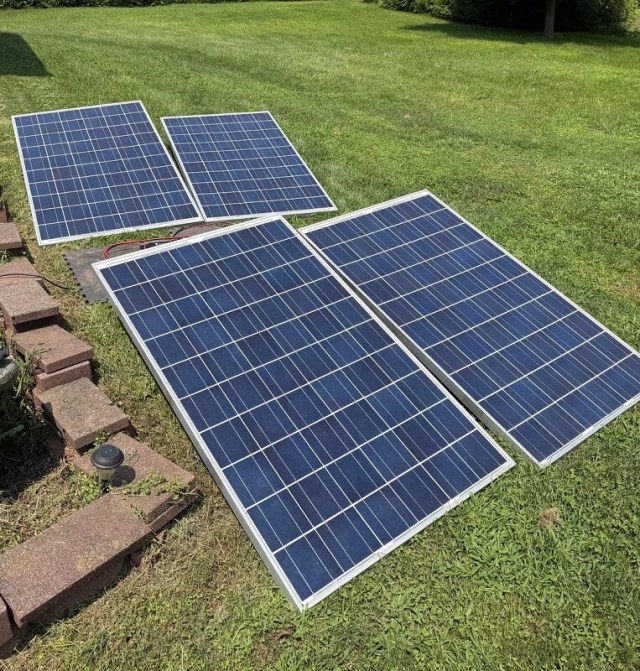
"Generating about 4.5kWh a day just laying [on] the lawn," the OP wrote.
The four panels have a combined rated capacity of 980 watts, and the setup does not require rooftop installation.
When a commenter asked about the effect on the electric bill, the DIYer conservatively estimated savings of about $1 a day. The whole project cost roughly $400, the poster added, including $255 for the microinverter with shipping.
For households considering residential solar, $0-upfront leases may cut electric bills by hundreds of dollars per month, depending on the home and agreement. EasyHome offers a free explorer tool to estimate potential savings and find vetted local installers.
More background
The lawn placement drew some warnings in the comments.
"You can burn brown rectangles in your grass in a single day if you leave them like that," one Redditor cautioned.
Crushed by your bills? See instant solar savings from vetted installers in just a few clicks With energy prices through the roof, there's never been a better time to go solar — and EasyHome can help you find the best prices from the best installers in your area. EasyHome takes the guesswork and headaches out of energy upgrades by showing you estimated savings from a network of vetted local partners. To get started, just enter your ZIP and share a few details about your home — seeing your estimate is really that easy. |

Commenters recommended lifting the panel frames off the turf and setting the panels at an angle facing south to improve the setup.
The poster replied that the panels were only on the grass for testing and now sit on wood blocks. Raising them for airflow and adding a slight tilt made "a massive improvement," and pallets may come next before the panels move to a longer-term spot.
What can be done?
Anyone tempted to copy the project can start by checking that the panels match the inverter. The poster noted the microinverter calls for 28 to 45 volts of input, with a 60-volt maximum, which narrowed the search for panels.
Local rules matter, too. One commenter asked whether plug-in solar was legal in the poster's state, and another pointed out that not every utility pays for excess power sent to the grid.
For anyone who'd rather hire a pro than hunt for bargain panels, EasyHome can help curate competitive bids from local installers.
Panels like the ones on this lawn only produce power while the sun is out. EasyHome lets households explore battery storage options as well. Pairing solar with battery storage can help manage electricity costs by saving daytime power for later and providing backup power during outages.
In a later update, the DIYer reported on the grass.
"Some yellowing from the panels but the ants did way more damage. Nature is great!" the OP wrote.
"Every kwh not bought from the utility company is a win!" another Redditor said.
Where can I learn more?
Other homeowners are experimenting with solar on a small scale or building systems themselves.
• A DIY solar owner planned a three-panel solar test before sizing a larger installation.
• A Colorado homeowner bought panels for $130 each, but questioned a $375 grid connection fee.
• A homeowner built a $9,000 barn solar array using a homemade tractor lift.
• A California DIYer installed a $1,200 plug-in solar array to charge an electric vehicle.
• A homeowner with a $1,000 solar budget sought advice on building an expandable system.

Get TCD's free newsletters for easy tips, smart advice, and a chance to earn $5,000 toward home upgrades. To see more stories like this one, change your Google preferences here.






