


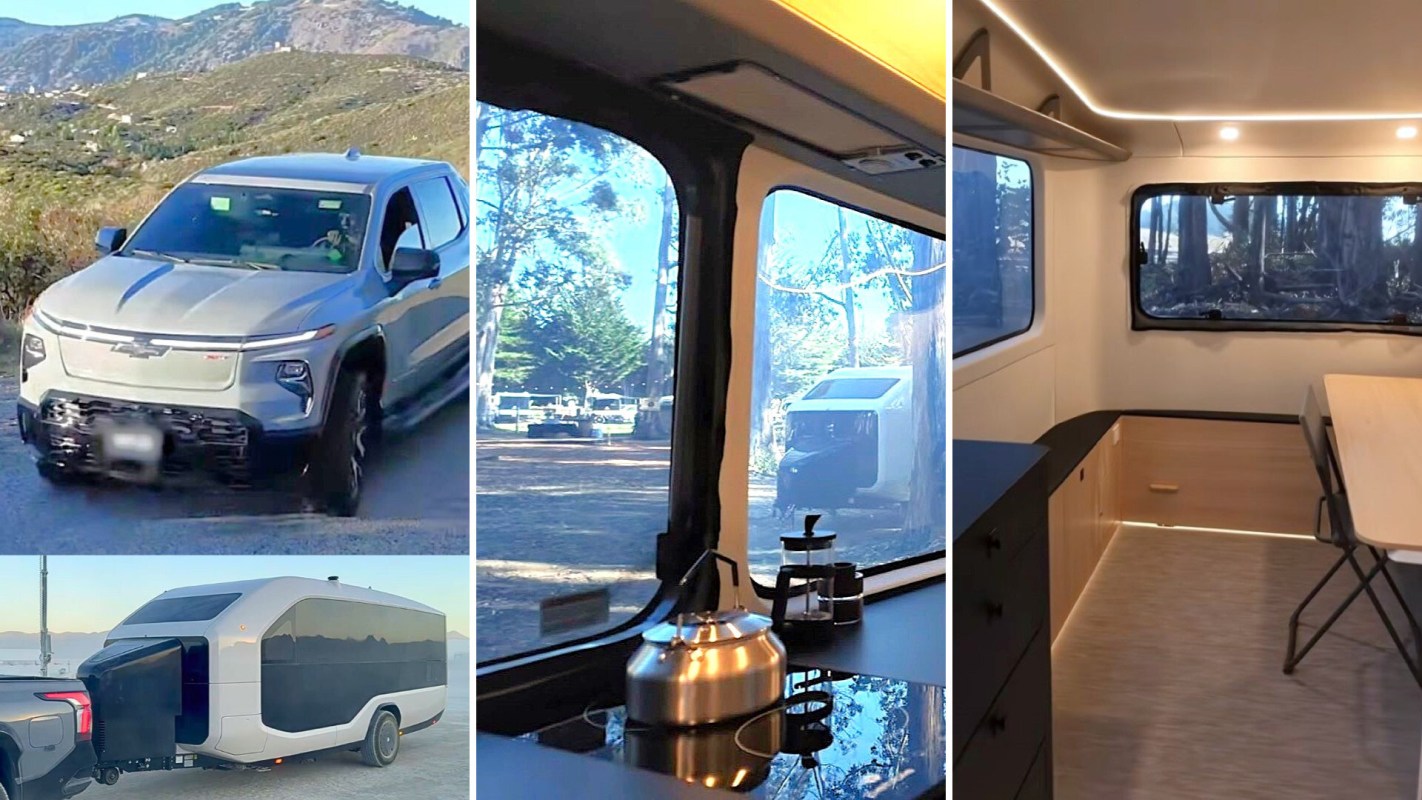
Within the EV community, many assumed electric trucks were not quite ready yet. However, one electric-truck owner put that familiar concern to the test by towing a battery-powered camper over California's Sierra Nevada mountains on a round trip to Burning Man.
Here's what to know
In a YouTube video, the content creator behind Two Bit da Vinci documented a round trip from the Bay Area to Burning Man, including a week camping in the desert, powered by his truck.
The creator bought a Chevrolet Silverado EV RST with the Max Pack battery and borrowed a Pebble Flow electric camper for the journey.
After climbing to roughly 6,000 feet, the creator, towing for the first time, described the experience as "effortless."
The truck purchase was specifically for a towing test, and even after seven years and 250,000 miles of driving EVs, the creator still hesitated.
The creator estimated a full-battery towing range of roughly 300 miles, based on the truck's efficiency of about 1.5 miles per kilowatt-hour between the Bay Area and Sacramento.
TCD Picks » Quince Spotlight
💡These best-sellers from Quince deliver affordable, sustainable luxury for all




The Pebble Flow is no ordinary camper either. It has motors that help propel the trailer, reducing the truck's workload.
More background
During the mountain crossing, the electric setup recovered energy through regenerative braking as the vehicle slowed on the downhills.
The creator reported seeing roughly 270 kilowatts of regeneration from the Silverado during the trip and about 100 kilowatts while descending from the Sierra Nevada climb.
When the Pebble Flow senses that it is pushing against the truck, it manages its own braking and energy recovery. The camper's independent regenerative system can recover energy, up to 50 kilowatts, which can be used in the truck or to charge the camper for longer stays.
The creator ran into a couple of issues when charging the truck: First, a second EV pulled up to the 348-kilowatt charger, which halved his charging speed. Secondly, that stop also required the creator to detach the camper to reach a charger.
In another session, 50 minutes of charging cost $43 and supplied 120 kilowatt-hours, leaving the truck's battery at 95%. The creator was also able to leave the camper attached.
What's being done?
The creator credited GM for designing this truck and said the max battery pack and packed features gave him a premium towing experience.
With no charging available along the final approximately 90 miles, the Silverado arrived at Burning Man's entrance with 69% charge, nearly matching the creator's 70% target. The creator had charged the battery to 100% before that stretch.
The creator said the truck and camper could charge each other, giving the Pebble Flow a role beyond helping propel itself.
The creator also demonstrated a mode that replenished the trailer's battery while towing. Once at camp, the trailer's Instacamp feature handled setup and leveling with a button click.
For one YouTube commenter, electric towing was already part of everyday work.
"I use it to run an electric lawn care business. It's got a trailer hooked up 7 days a week and it's been awesome!"
Where can I learn more?
Range, charging stops, and ownership costs all factor into deciding if an electric truck is right for towing. These stories cover those factors, as well as pricing considerations.
• A Ford F-150 Lightning towed 6,000 pounds from Alaska through Canada without using its generator.
• After $7 diesel, a Duramax owner explored EVs but encountered Model Y towing limits.
• Chevrolet Silverado EV owners compared charging and gas costs, including solar, during a regular week.
• A Ford F-150 Lightning encountered just two charging snags during a 6,900-mile U.S. road trip.
• A used Chevrolet Silverado EV lost $39,000 in value over two years, lowering its purchase price.

Get TCD's free newsletters for easy tips, smart advice, and a chance to earn $5,000 toward home upgrades. To see more stories like this one, change your Google preferences here.






