


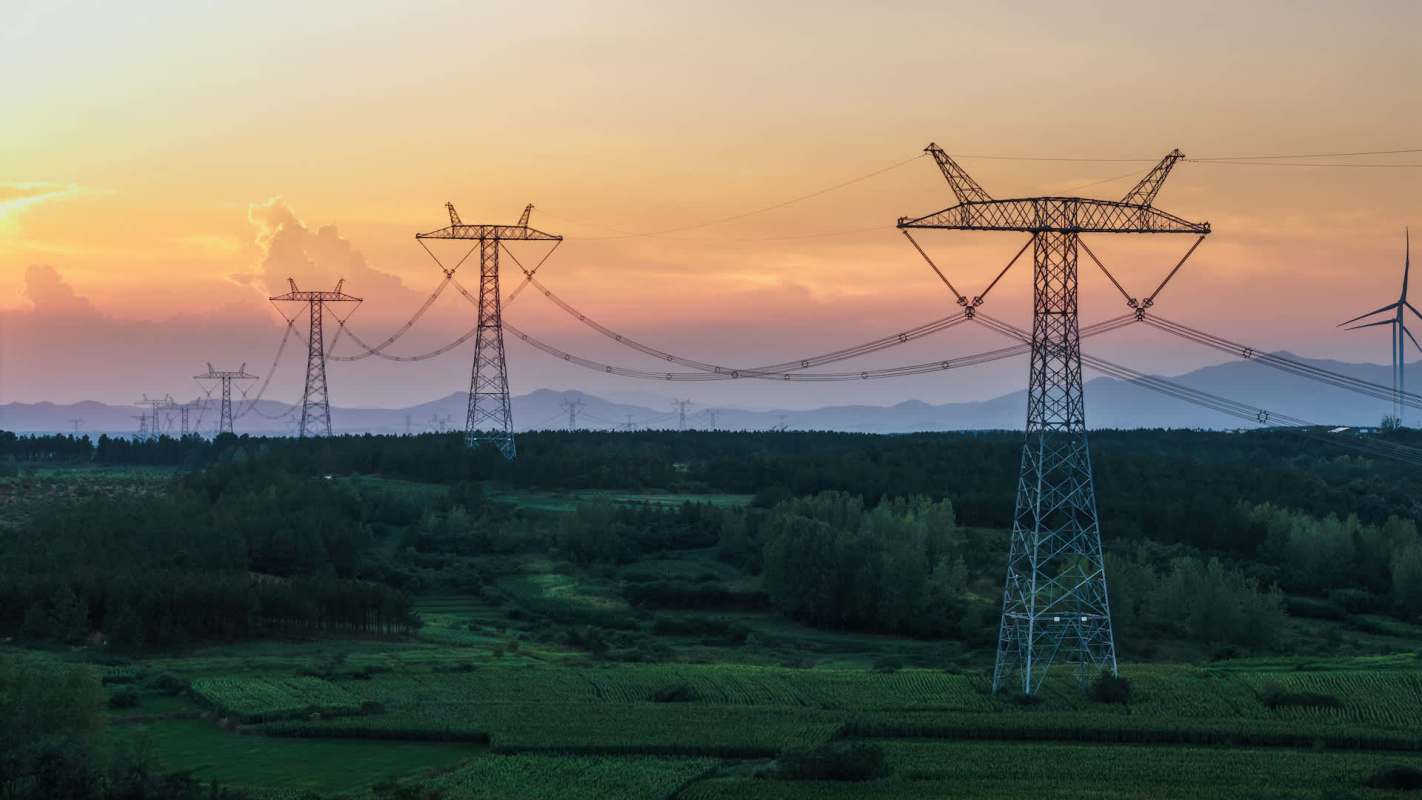
Power grids on five continents have been pulsing at 60-second intervals for over a decade.
Now, scientists suspect that backup batteries running automatic checks in unison may be responsible for the mystery.
Here's what to know
A team led by Dirk Witthaut, a physicist at Germany's University of Cologne, traced minute-by-minute electrical fluctuations to uninterruptible power supplies at a German research campus, according to ScienceAlert.
The researchers' work was published last month in Nature Energy. They examined detailed power readings at the Forschungszentrum Jülich campus, where four buildings with backup power systems showed the pattern.
They detected brief bursts of battery current at one-minute intervals and tracked the resulting fluctuations through one building to the point where it connected to the public high-voltage network.
The equipment manufacturer confirmed that automatic battery self-tests caused the activity. Digital clocks synchronized through external time signals appear to explain why otherwise independent systems would perform those checks in unison.
TCD Picks » Quince Spotlight
💡These best-sellers from Quince deliver affordable, sustainable luxury for all




Hospitals, data centers, and laboratories rely on these backup systems to keep operating if their main power supply fails.
Buildings without these systems did not show the same pattern.
More background
ScienceAlert reported that Scandinavian researchers recorded unusual grid-frequency variations recurring each minute as far back as 2014. While hydropower systems had been linked to such oscillations, similar patterns across mainland Europe, the U.K., Australia, and the U.S. suggested a more widespread explanation.
Grid frequency rises when electricity production outpaces consumption and falls when demand exceeds supply. Grids must continually balance the two to maintain alternating current that typically operates at 50 or 60 hertz.
According to Witthaut and his colleagues, the observed pulses are small, generally just a few millihertz, and do not endanger grid stability. However, grid dynamics can amplify small fluctuations and increase wear on infrastructure.
As battery installations, data centers, and internet-connected equipment become more common, the researchers warn that synchronized electrical demands and impacts could grow. Coordinating when equipment performs routine tasks could therefore become increasingly important for reliable power.
What's being done?
The researchers have already contacted a manufacturer of one of the identified backup systems, according to ScienceAlert.
The company reportedly distributed updated software to make battery checks less rigidly timed, addressing the synchronization at its source.
Small scheduling offsets in device software could keep large numbers of units from executing identical operations simultaneously, the researchers indicate.
Where can I learn more?
Home battery owners face practical questions about testing their own systems, keeping backup power ready, and drawing electricity from the grid:
• Home battery owners recommend a planned outage test to catch wiring mistakes before emergencies.
• A DIYer says a portable battery setup cut overnight grid draw by about 220 watts.
• A U.K. buyer's battery plan depends on cheap overnight electricity rates that suppliers could end.
• A homeowner considering $5,000 backup power learned that brief outages need a UPS.

Get TCD's free newsletters for easy tips, smart advice, and a chance to earn $5,000 toward home upgrades. To see more stories like this one, change your Google preferences here.






