


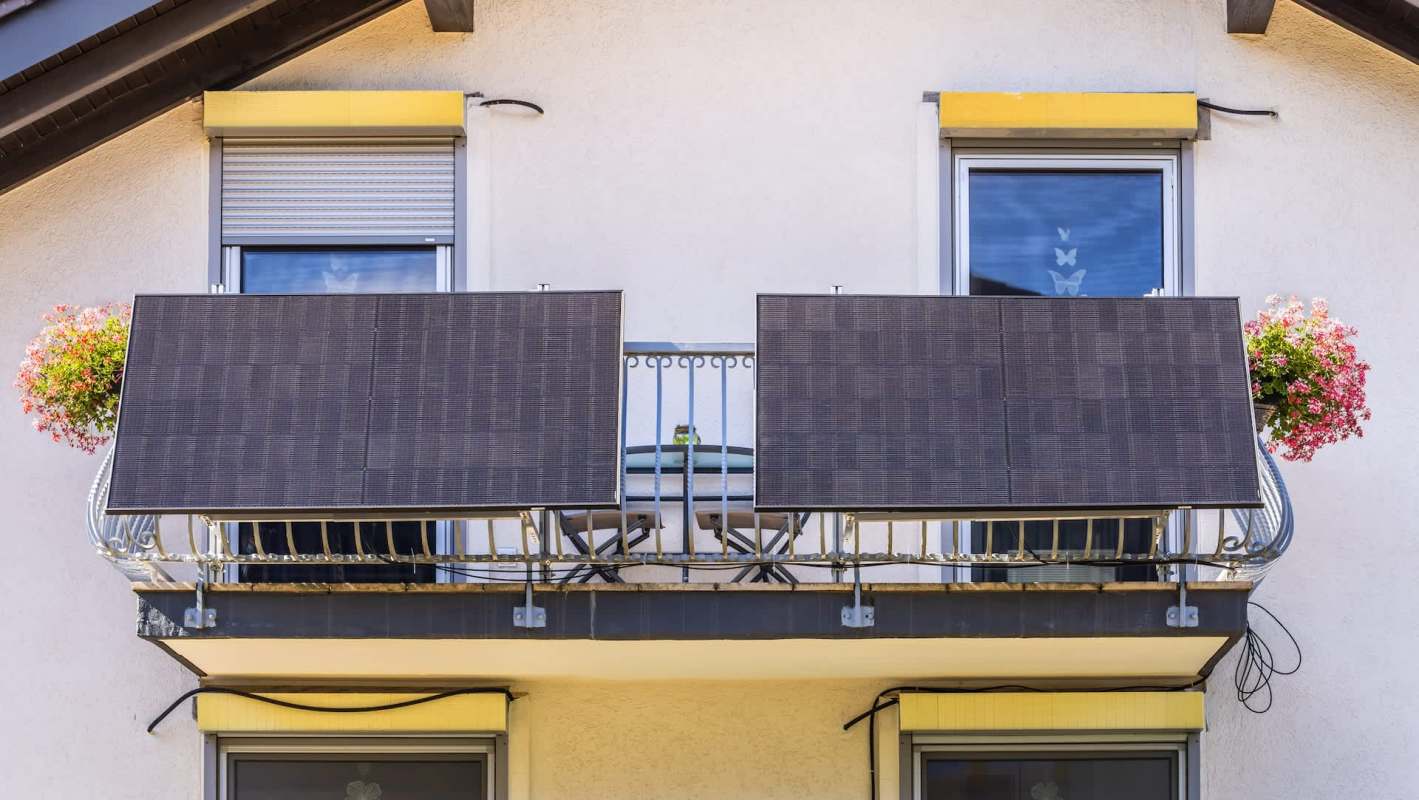
Colorado residents looking to add solar panels to a balcony or patio will have a new option starting January 1, 2027, thanks to a state law protecting qualifying portable systems, including plug-and-play solar panels, from unreasonable restrictions.
Starting in 2027, those protections will extend to limits imposed by HOAs, opening the door for more residents to generate their own electricity.
Here's what to know
The rules for personal-scale portable solar generation are laid out in Colorado House Bill 26-1007, also called the Improve Customer Use of Distributed Resources bill.
Residents can place advance orders for compact solar kits through Denver-based nonprofit Solar Access Colorado before the law takes effect. The group describes itself as Colorado's first organization focused on balcony solar, also called plug-in solar.
Eligible portable solar equipment will soon count as an energy-efficiency measure under Colorado's common-interest-community rules, expanding protections for those interested in the technology.
Colorado's move to permit more small-scale solar equipment is part of a larger national trend where states are legalizing the technology and removing barriers to installation. BrightSaver has been tracking state-by-state balcony solar legislation across America, and as the group noted, "11 states have passed legislation" and "21 [more] states aim to re-introduce [balcony solar legislation] in 2027."
For residents with suitable roofs, residential solar offers another way to lower electricity bills, and $0-upfront solar leases may save hundreds of dollars per month, depending on the home and arrangement. EasyHome's free explorer tool helps estimate possible savings and find vetted local installers.
More background
Renters, people in multifamily buildings, and homeowners without suitable roof space are among the households Solar Access Colorado aims to reach, according to Solar Power World. These groups have historically had limited access to home solar.
Crushed by your bills? See instant solar savings from vetted installers in just a few clicks With energy prices through the roof, there's never been a better time to go solar — and EasyHome can help you find the best prices from the best installers in your area. EasyHome takes the guesswork and headaches out of energy upgrades by showing you estimated savings from a network of vetted local partners. To get started, just enter your ZIP and share a few details about your home — seeing your estimate is really that easy. |

Soon, residents will be able to generate electricity without a rooftop installation using the nonprofit's initial kits, which are designed for outdoor areas such as patios, fences, and balconies.
Some residents will still face restrictions under HB26-1007 to protect property, prevent fires and circuit overloads, and ensure safe attachment. So before purchasing a kit, residents should determine which mounting and electrical-safety requirements apply to their proposed setup.
For households looking at solar alongside broader home-energy upgrades, EasyHome also offers the opportunity to explore battery-storage quotes. Pairing solar with suitable battery storage can help households manage electricity costs and provide backup power during outages, adding another consideration beyond where panels can fit.
Where can I learn more?
Other states are also working to make plug-in solar more accessible.
• New Jersey lets renters and condo owners use plug-in solar without utility approval.
• California waives utility approval for plug-in solar, but renters may still need a landlord's OK.
• New York weighs plug-in solar, though one panel may cover 5% to 10% of daily electricity use.

Get TCD's free newsletters for easy tips, smart advice, and a chance to earn $5,000 toward home upgrades. To see more stories like this one, change your Google preferences here.






