


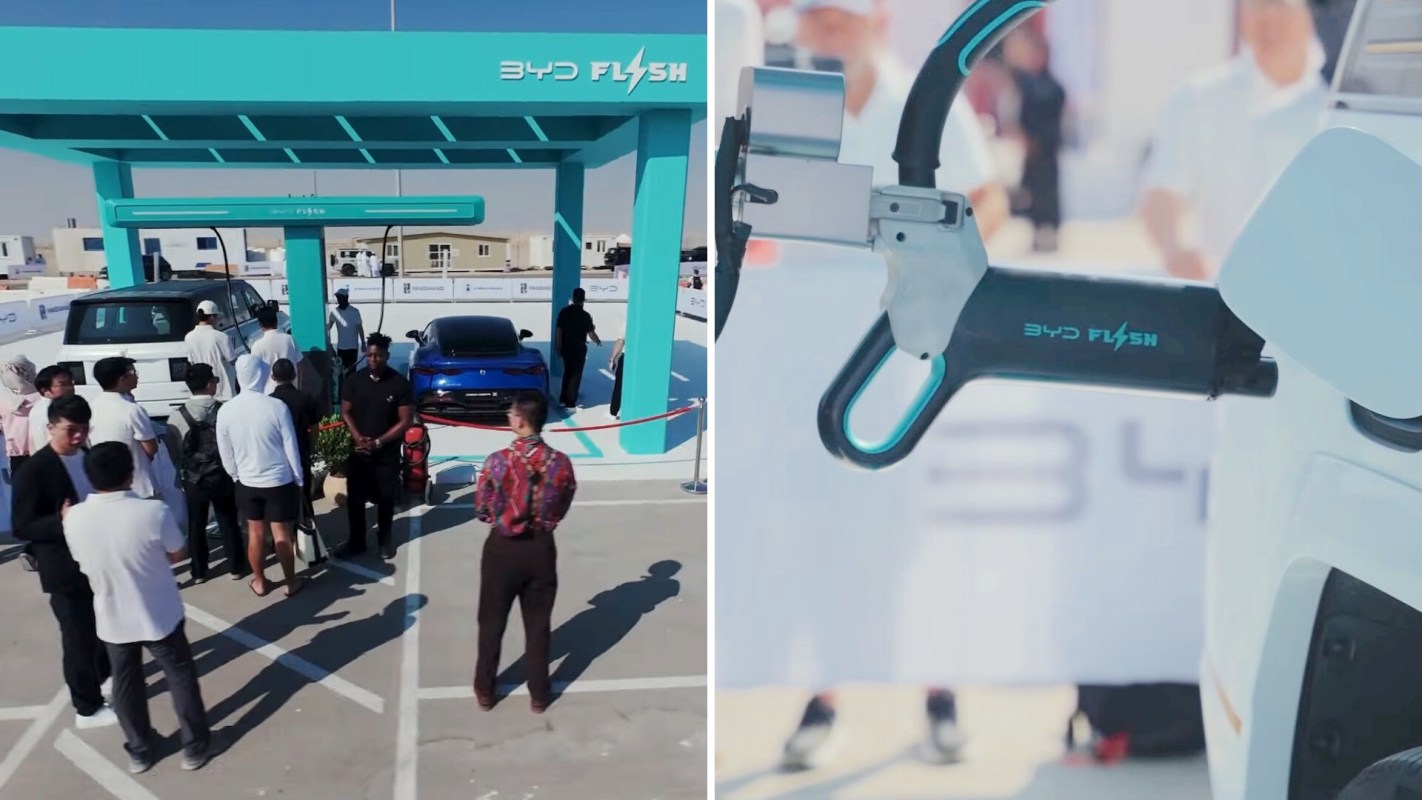
A robotic arm took over two steps in charging an electric car — opening its charging-port cover and plugging it in — during a hands-free demonstration in the Abu Dhabi desert.
The BYD installation reached 1,000 kilowatts during the demonstration, pairing high-powered charging with technology that lets drivers avoid handling cables in the desert heat, according to Gadgeteer.
Here's what to know
BYD described its Solar-Storage-Charging system as the first installation to combine solar power generation, battery energy storage, and its Flash Charging equipment.
The company unveiled the system at the event in Abu Dhabi.
Once a charging session ends, the robotic arm unplugs the vehicle and closes its port cover. To connect, it locates the car and charging port through visual recognition and uses force-feedback controls to guide the connector into place.
The system can also work alongside BYD's Automated Valet Parking technology.
TCD Picks » Quince Spotlight
💡These best-sellers from Quince deliver affordable, sustainable luxury for all




With a one-tap parking and charging function, a driver can exit, lock the car, and leave while a compatible vehicle autonomously enters its assigned charging bay.
The robotic arm then connects the parked vehicle.
More background
The installation's chargers use energy generated by its solar panels and stored in its batteries.
This arrangement can enable off-grid operation, the Gadgeteer observed, while reducing the need to draw the station's full power demand from the local network during peak periods.
While the integrated installation reached 1,000 kilowatts during the demonstration, BYD's underlying Flash Charging system has a stated maximum of 1,500 kilowatts per connector.
The system uses the second generation of BYD's Blade Battery.
When BYD launched the battery program in March, it specified that a charge starting at 10% could reach 70% after five minutes or 97% after nine minutes.
The desert setting is known for intense sunlight, high temperatures, and scarce rainfall.
BYD also brings more than 16 years of solar industry experience to the project, with solar sales reaching over 100 national and regional markets, the Gadgeteer reported.
What's being done?
BYD reports that more than 12,000 Flash Charging stations are operating in China, with a target of 20,000 by the end of 2026.
The company's European targets call for 100 stations before 2026 closes and 3,000 before the close of 2027, alongside a broader plan for 6,000 stations outside China.
BYD's work on charging robots began with automated guided vehicles in warehouses and later expanded to passenger-car parking applications.
The robotic arm builds on that development and was designed to accommodate multiple charging-interface specifications in overseas markets.
However, a commercial launch date, equipment price, and deployment count for the robotic arm have not been announced. The company's station-expansion targets apply to its conventional Flash Charging network, where drivers connect their vehicles manually.
BYD executive vice president Stella Li introduced the integrated system onstage.
"For the first time, BYD is bringing its integrated Solar-Storage-Flash Charging technology to the global stage," she announced.
Where can I learn more?
The hands-free demonstration adds automation to BYD's push for faster charging. These stories cover BYD models with rapid charging capabilities and their prices.
• BYD says its Seagull can charge in five minutes from 10% to 70% on its Flash Charging network.
• BYD launched its Formula S in China with five-minute charging from $28,000, undercutting Tesla's Model 3.
• In France, BYD's ATTO 8 offers seven seats and nine-minute charging, alongside 775 horsepower.

Get TCD's free newsletters for easy tips, smart advice, and a chance to earn $5,000 toward home upgrades. To see more stories like this one, change your Google preferences here.






