


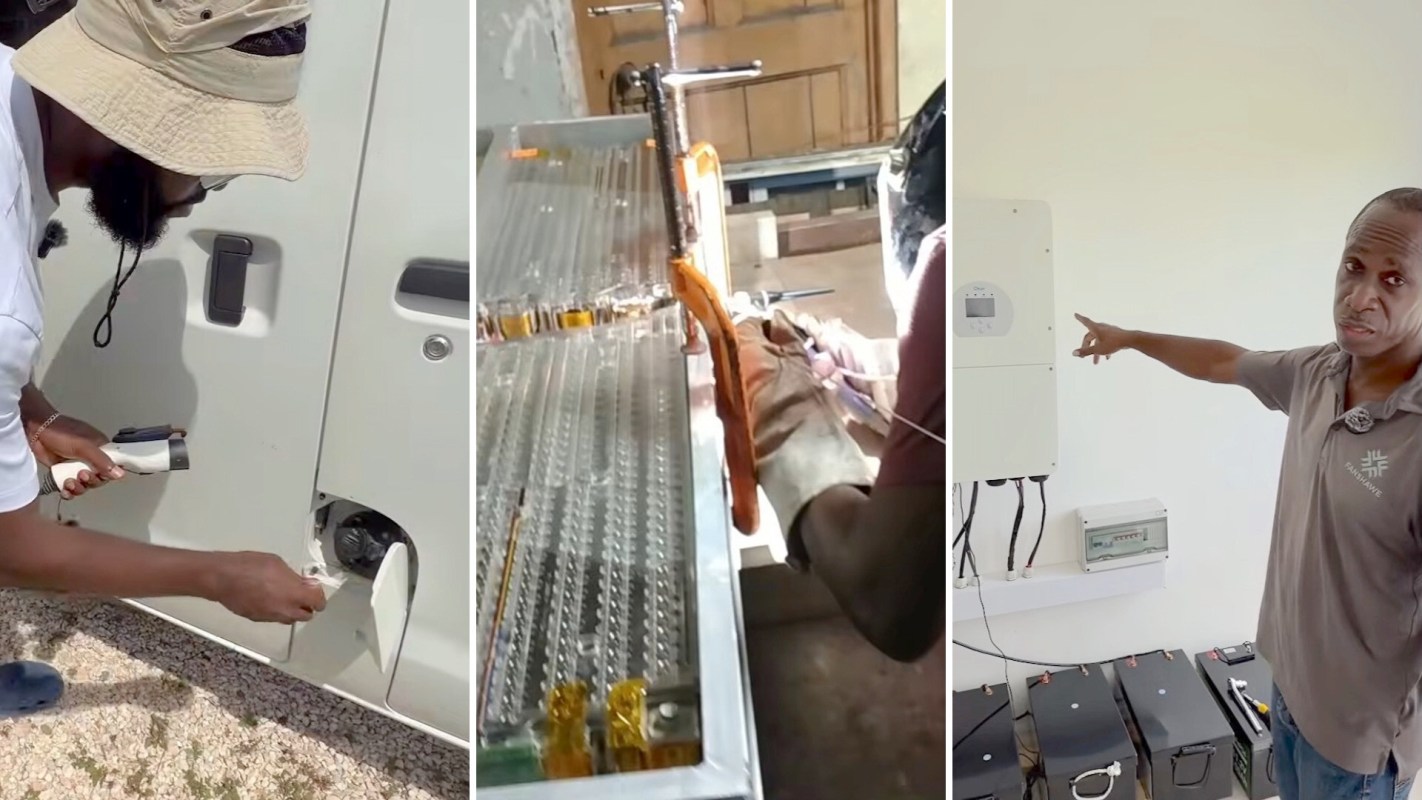
A resourceful Jamaican turned an ordinary gas-powered van into a fully electric vehicle, proving that an electric vehicle doesn't have to come straight from the factory.
Here's what to know
YowNoel (@YowNoel) featured the project in a YouTube video, joining DIY builder Duane Williams for a drive. Williams replaced his Toyota TownAce's gas-powered drivetrain with salvaged Tesla components, creating an everyday workhorse powered by sunshine from his own roof.
Williams said he finished the conversion in 2022 and had relied on the van as his sole daily driver for four years.
Williams kept the system to roughly 200 volts by using eight Model S battery modules — half of the original car's battery pack. That choice kept costs and weight down and limited the suspension modifications needed.
He used a salvaged Roadster motor to power the van.
Williams installed a battery box underneath the van in the space freed up by removing the engine, driveshaft, gas tank, and muffler.
TCD Picks » Quince Spotlight
💡These best-sellers from Quince deliver affordable, sustainable luxury for all




The undercarriage battery placement also preserved the interior cargo space, a crucial feature for Williams, who runs a firm focused on solar installations and digital microsystems.
More background
Williams had imagined this project since 2010 out of enthusiasm for electric vehicles, but financial constraints held it up. Importing the components added substantially to the cost.
Williams said some equipment cost nearly as much to clear through customs as it did to buy.
"I am sure that I have recovered the cost of the conversion and I'm starting to put money in my pocket," he said.
Williams also said going off-grid with solar eliminated his utility bill. He had been paying roughly 46,000 Jamaican dollars ($289) a month for electricity while charging the van from the grid.
The build was not without issues. The van's original drivetrain suffered CV joint damage from regenerative braking, so Williams disabled the feature.
What can be done?
A 20-kilowatt-hour home battery bank stores solar energy for nighttime use and supplements production when clouds limit sunlight. The setup Williams uses to power his electric workhorse also includes a 12-kilowatt inverter and 18 rooftop solar panels rated at 700 watts each.
For homeowners interested in exploring a rooftop solar setup, EasyHome can help curate competitive bids from local installers. Comparing those bids can help you evaluate installation options for your home.
Williams left fast charging out of the build to avoid the extra expense. The van supports Level 1 and Level 2 charging; he said a Level 2 charge takes about five to six hours.
A round trip from Portmore to Ocho Rios of 100 miles left the van with 18% to 20% of its battery charge remaining, Williams said.
"Noel back again with another interesting topic. I'm definitely gonna remember this guy when it's time to do my solar system," one commenter wrote.
Where can I learn more?
Williams' van shows how an electric conversion can fit into a home solar setup.
• In Washington, a builder converted a Toyota pickup to electric for $7,785 mostly using secondhand parts.
• A Florida DIYer says a $15,115 solar setup powers a home and EV off-grid.
• A California DIYer says a $1,200 plug-in solar array can charge an EV for 2.3 cents per kilowatt-hour.
• A California homeowner wants a backyard solar EV charger that bypasses gas pumps and the grid.
• An EV owner says Tesla's solar charging tapped the home battery when sunlight dropped.

Get TCD's free newsletters for easy tips, smart advice, and a chance to earn $5,000 toward home upgrades. To see more stories like this one, change your Google preferences here.






