


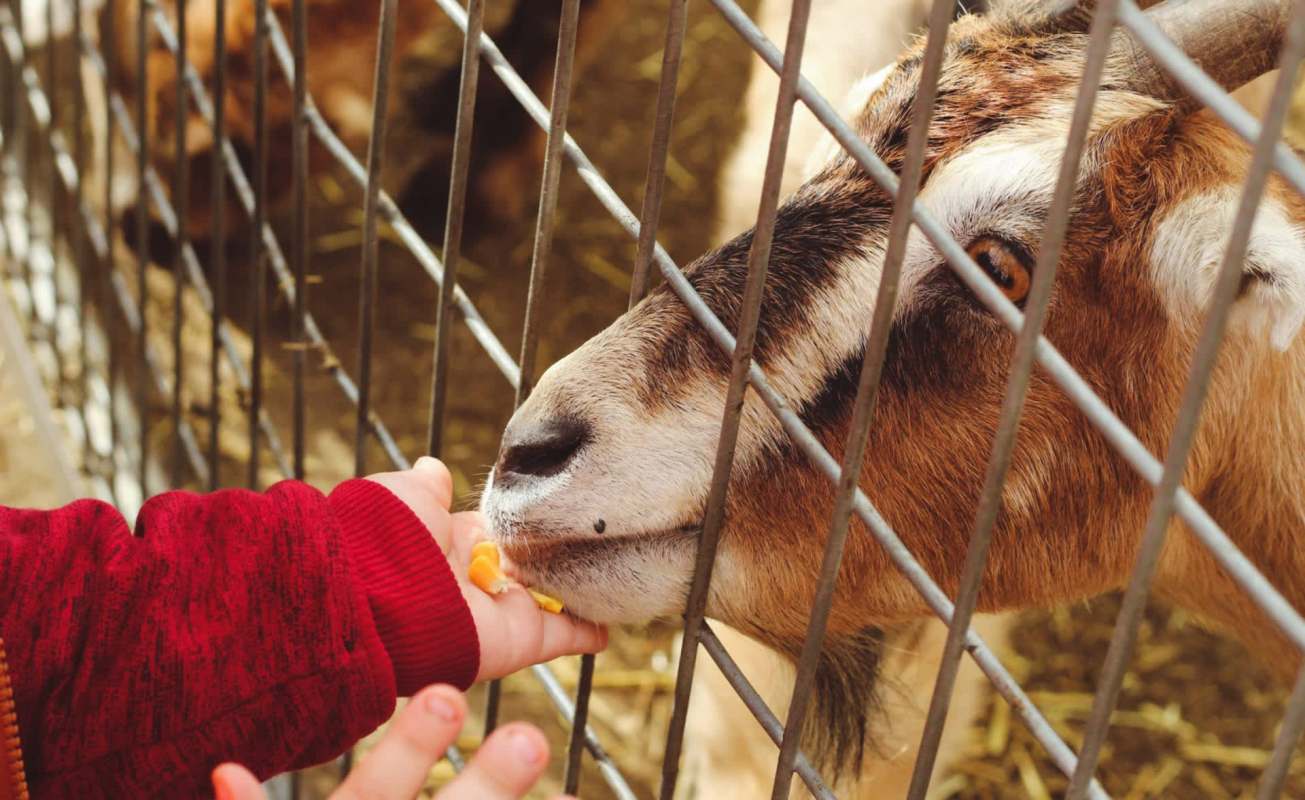
DNA testing linked an Illinois petting zoo's baby goat to an E. coli outbreak involving seven confirmed patients.
Here's what to know
As part of its investigation, the Will County Health Department announced that a baby goat at Bengtson's Pumpkin Farm in Homer Glen was the likely culprit of the spread.
It stated that "advanced DNA testing has identified a close genetic link between bacteria found in people who became sick and bacteria collected from a baby goat at the farm's petting zoo."
Though only seven cases have been confirmed via laboratory testing, at least 270 individuals submitted responses to a WCHD confidential health survey after visiting the pumpkin patch and developing symptoms. The health department classified 159 of these 270 responses as probable cases.
"We appreciated Bengtson's cooperation throughout this investigation," Sean Conners, the director of environmental health at the WCHD, said. "The farm voluntarily closed its petting zoo when we first contacted them and later arranged for a veterinarian to collect samples from the animals. Their willingness to work with us has been important in helping identify a likely source of the outbreak."
More background
Families who visited the farm should watch for symptoms of E. coli infection. These can include severe abdominal cramps and diarrhea that often contains blood, with some patients also developing a fever.
TCD Picks » Quince Spotlight
💡These best-sellers from Quince deliver affordable, sustainable luxury for all




Most patients will recover in five to seven days. Because symptoms differ from person to person and can resemble those of other illnesses, diagnoses may require specific testing.
"To help prevent the spread of E. coli, wash your hands after animal contact," the WCHD noted. "Use soap and water after touching animals or anything in their environment, even if you did not directly touch an animal. … Washing your hands thoroughly with soap and water is one of the simplest and most effective ways to reduce the risk of infection."
Where can I learn more?
Other E. coli and Salmonella cases have been traced to animal contact and contaminated food.
• A California toddler needed intensive care for E. coli after drinking raw goat milk.
• Shoppers were urged to return Miyoko's plant-based butter over E. coli, yeast, and mold concerns.
• Across the U.S., a backyard poultry-linked Salmonella outbreak reached 1,061 cases and led to two deaths.

Get TCD's free newsletters for easy tips, smart advice, and a chance to earn $5,000 toward home upgrades. To see more stories like this one, change your Google preferences here.






