


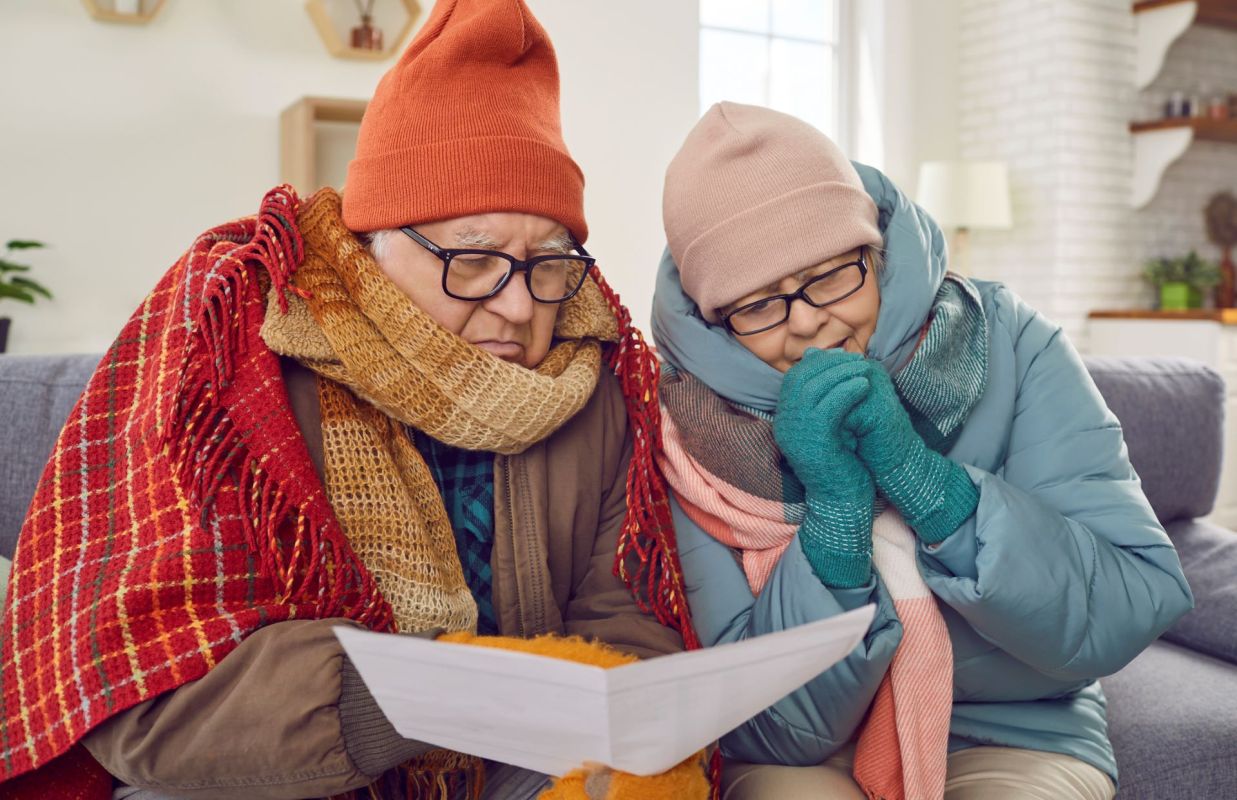
Turning down the heat can save money, but it can also come with health risks for older adults.
Here's what to know
According to Money Talks News, indoor temperatures of 60 to 65 degrees can be low enough to cause hypothermia in older adults. The National Institute on Aging recommends keeping homes at 68 degrees or warmer, which can be difficult for households on limited incomes with rising utility prices.
The National Energy Assistance Directors Association's September forecast projected an 8.7% increase in average household heating expenses this winter, bringing the total to about $1,030. Homes heated with oil will see the steepest jump.
Mark Wolfe, executive director of the National Energy Assistance Directors Association, warned that low-income and fixed-income households facing those costs may resort to "turning the thermostat down to unsafe levels," per Money Talks News.
Thankfully, the right heating equipment can warm homes efficiently, helping keep these costs low. For homeowners considering equipment upgrades, Palmetto helps compare efficient HVAC and heat pump solutions and vetted installers through its Comfort Plan network.
More background
In 2023, the Centers for Disease Control and Prevention recorded 1,024 deaths across all age groups from hypothermia or excessive cold, with January accounting for the largest share.
Older adults with certain health conditions may have more difficulty staying warm, according to the NIA. Parkinson's disease and arthritis can make adding clothing difficult, while memory problems may keep someone from taking precautions against the cold. Diabetes can affect circulation, and thyroid problems can disrupt the body's ability to regulate its temperature.
People should discuss medication-related risks with a doctor, since some drugs can affect body heat.
Crushed by your bills? See instant solar savings from vetted installers in just a few clicks With energy prices through the roof, there's never been a better time to go solar — and EasyHome can help you find the best prices from the best installers in your area. EasyHome takes the guesswork and headaches out of energy upgrades by showing you estimated savings from a network of vetted local partners. To get started, just enter your ZIP and share a few details about your home — seeing your estimate is really that easy. |

For households planning a heating system replacement, upfront expense is another obstacle. Palmetto's Comfort Plan offers $0-down options and says it can lower heating and cooling costs by up to 50%. Its Comfort Plans also include 12 years of free maintenance, helping households plan for equipment upkeep at an affordable price.
What can be done?
The NIA recommended keeping a blanket nearby and wearing loose layers, warm socks, and slippers.
To help retain heat, residents can place rolled towels against drafty doors, close blinds and curtains, and seal gaps around windows and doors with caulk or weatherstripping.
The agency also warned that alcohol can cause the body to lose heat.
Families checking on older relatives should ask about the thermostat setting and watch for cold hands and feet, shivering, unusual sleepiness, confusion, or slow or slurred speech.
Hypothermia — a core temperature below 95 degrees — is a medical emergency. If signs appear, call 911, move the person somewhere warmer, and cover them with dry towels, blankets, or coats while awaiting help.
For longer-term utility savings, pairing solar with an efficient electric HVAC system can also make a home more self-reliant. EasyHome offers a solar comparison shopping tool to help homeowners evaluate installation offers and make sure they get the best deal.
Where can I learn more?
Keeping a home warm in the winter can be a challenge when heating bills climb.
• A New York utility says a 65-degree setting could trim heating use 15%, while warning about space heaters.
• HVAC experts recommend 68 degrees by day to help reduce fall heating costs.
• Maryland residents are urged to prepare for winter outages and brace for higher heating bills.
• Massachusetts renters and homeowners can qualify for winter heating help under a 60% income rule.
• Northeast households face $2,300 heating oil bills as war in Iran jolts winter costs.

Get TCD's free newsletters for easy tips, smart advice, and a chance to earn $5,000 toward home upgrades. To see more stories like this one, change your Google preferences here.






