


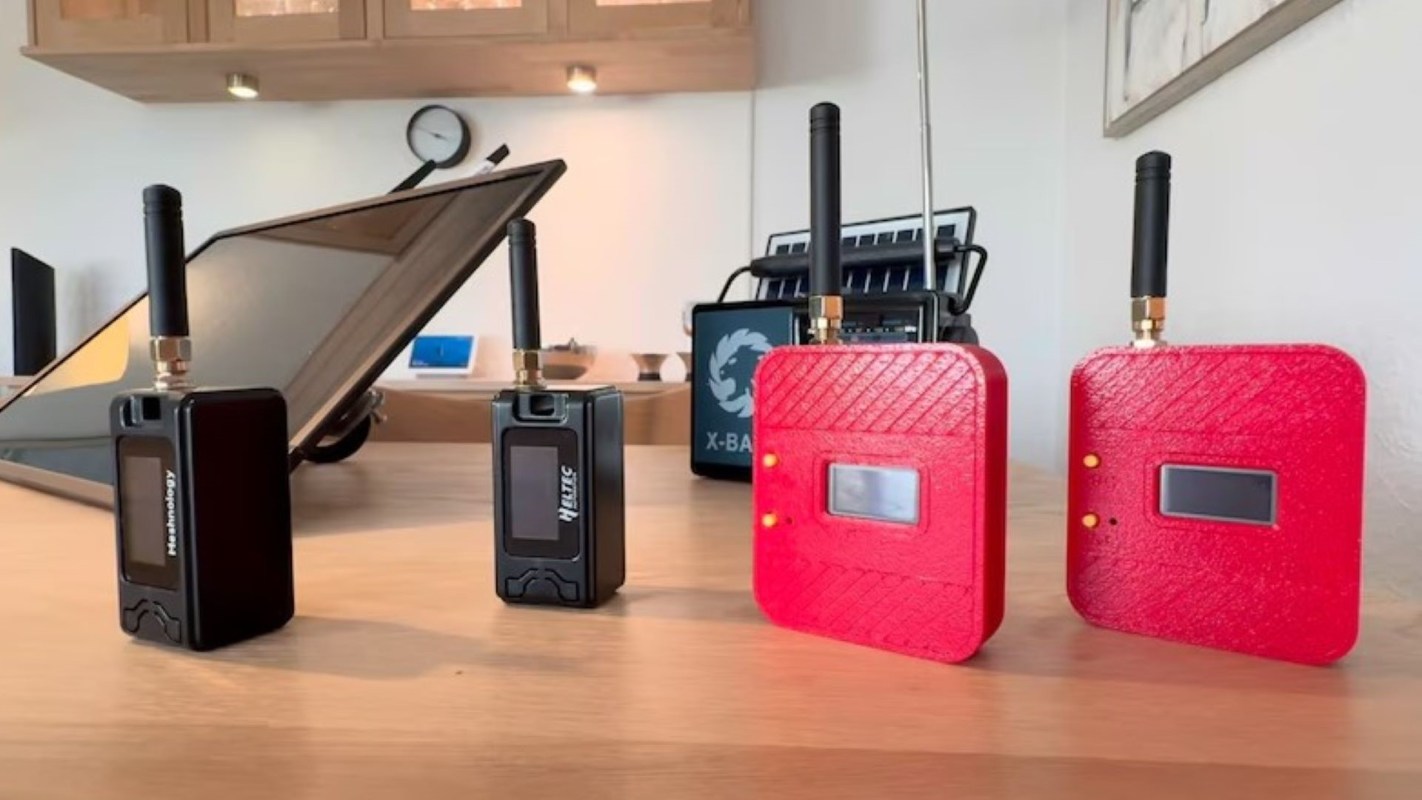
Schools in Denmark could receive updates during blackouts through a network of battery- and solar-powered radios, even when mobile service fails.
But the emergency communications experiment faces a hurdle: A national agency indicated that the technology's encryption is too weak for government use.
Here's what to know
Danmarks Radio, Denmark's public broadcaster, was first to report on the trial of the network Meshcore, according to Militarnyi.
Battery- and solar-powered radios and transmitters allow Meshcore to carry messages without cellular service. The trial focuses on their use during a prolonged, widespread blackout that knocks cellular base stations offline, such as one caused by an extreme weather event.
The system could help schools and other institutions receive emergency updates, according to Kristian Risager Larsen, who leads the IT team in the Department of Innovation, Technology, and Creativity in the city of Aarhus, where the trial was launched.
"The pilot project is intended to determine whether we can send messages to local schools during an emergency, informing them how long it will last, where to get drinking water and so on, if all other means of communication fail," Larsen told Danmarks Radio.
TCD Picks » Quince Spotlight
💡These best-sellers from Quince deliver affordable, sustainable luxury for all




More background
Standalone repeaters allow Meshcore messages to travel beyond the range of an individual device. Users exchange those messages through a smartphone app after pairing their phones with the radios over Bluetooth, according to Militarnyi.
A mesh network is built from nodes that connect to each other, not a single straight line. Devices can communicate directly or relay data through other devices nearby. A message can then take several different routes instead of one fixed path.
The design is "self-healing." That is, when a node drops out, or a connection gets congested, nearby nodes can shift the message onto a working pathway.
The network can still fail, however. If not enough devices are in range, or if every path gets cut off, messages can stop going through.
What's being done?
The Danish Emergency Management Agency told Danmarks Radio that it was aware of mesh networks.
"It is important to remember that mesh technology is a means of communication that uses open, unlicensed frequencies, and the technology itself is not controlled and does not provide sufficient encryption," the agency explained.
"For example, Meshcore and Meshtastic can encrypt content. However, because of the technology's low bandwidth, there are often limitations, including on encryption key lengths, which means the encryption can be broken using relatively simple methods."
"For these reasons, among others, our preliminary assessment is that government authorities cannot use mesh technology during an emergency."
Although the trial has been run through a municipality, Meshcore has been privately developed to date.
Where can I learn more?
Staying in touch when the power goes out is a challenge communities everywhere are working to solve:
• In Victoria, a bushfire left families without power or NBN and struggling to receive warnings.
• Scurry County, Texas, began testing new warning sirens to close alert gaps for rural families.
• A disabled U.K. villager's reliance on Wi-Fi calls leaves no way to summon help during blackouts.
• Reddit users testing hand-crank emergency radios during outages found stored power more dependable.
• A ham operator's one-page radio code sheet is finding its way into emergency kits.

Get TCD's free newsletters for easy tips, smart advice, and a chance to earn $5,000 toward home upgrades. To see more stories like this one, change your Google preferences here.






