


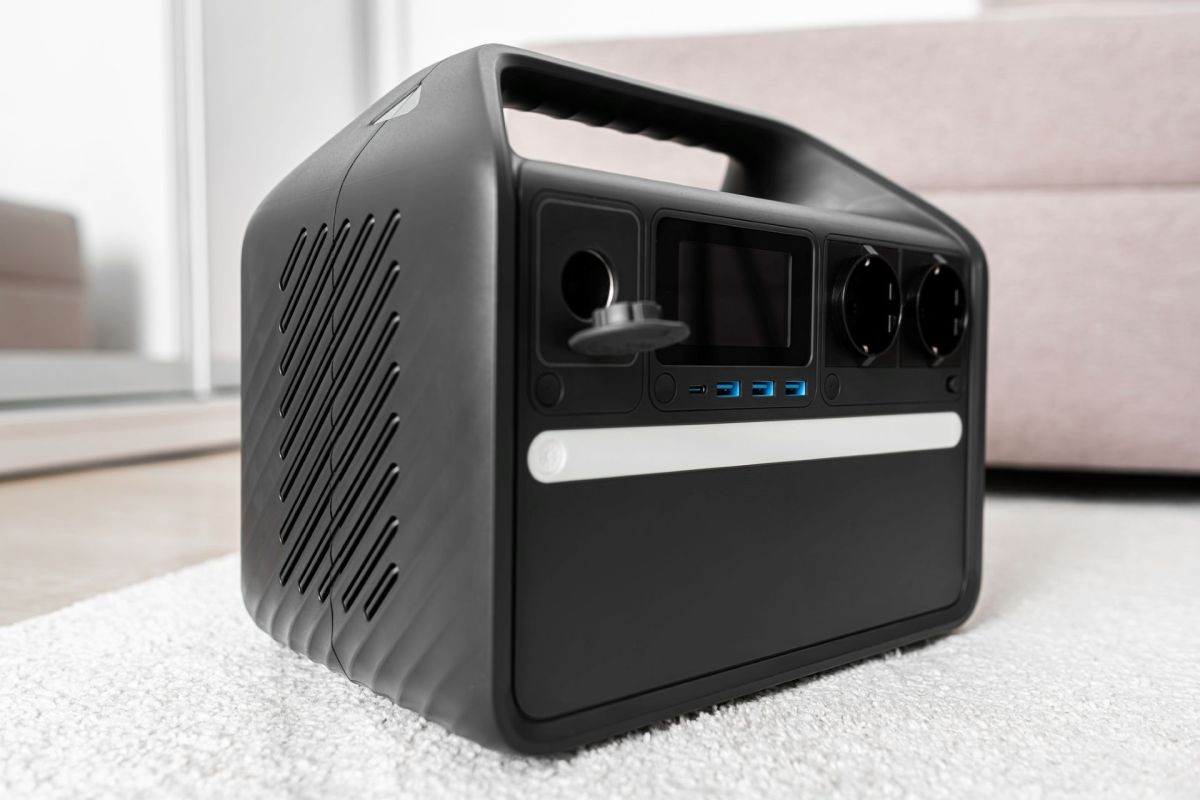
A free home battery could help households save nearly £500 a year on electricity bills, even without solar panels.
According to E.ON Next, customers taking part in its Battery Boost program are seeing those savings without changing their daily electricity use.
Here's what to know
E.ON Next is investing £4 million to provide 1,000 additional home batteries through an expansion involving three electricity network operators. Households at risk of fuel poverty are a particular focus, and participants do not have to buy the bill-cutting equipment upfront.
The company is continuing its work with Northern Powergrid, with UK Power Networks and SP Electricity North West joining as new partners. Households in Greater Manchester, Yorkshire, North Lincolnshire and the east and northeast of England are covered by the expansion.
Battery Boost batteries supply homes during periods of high electricity demand and prices, using power stored during cheaper, off-peak hours. Earlier battery projects produced bill savings from installation day onward in every type of housing, the energy supplier said.
More background
E.ON Next's research found that 73% of people were unaware that batteries can power homes without solar panels. It also found that 59% favored managing energy spending over the long term rather than receiving short-term help, a preference the company is seeking to address through Battery Boost, which was started in June 2025.
TCD Picks » Quince Spotlight
💡These best-sellers from Quince deliver affordable, sustainable luxury for all




The network partnerships also aim to manage the extra electricity demand created by the electrification of Britain's homes, transport, and industry.
By moving household electricity use away from the busiest periods, batteries can ease pressure on local networks while improving how renewable electricity is used, according to E.ON Next.
Balancing electricity supply and demand increasingly requires generators, network operators, suppliers, and consumers to coordinate their work.
What's being done?
E.ON Next and its network partners are choosing battery locations to maximize the combined benefits for households and the grid.
UK Power Networks included Battery Boost in a flexibility services procurement covering several future years, the company said. That gives the battery program a role in planning how the network will accommodate rising electricity demand.
The modeling indicated potential annual savings of roughly £150 million for about 615,000 households and a reduction in most of a possible 3.74-gigawatt grid constraint by 2035. Households can find more information or register through E.ON Next's Battery Boost page.
Chris Norbury, chief executive of E.ON UK, said shifting electricity use can benefit the wider network.
"Most people do not know a home battery works without solar panels. For the households in Battery Boost, it works without them paying a penny for it: the battery is provided free, fills up overnight when electricity is cheap and runs the home when it is not, and the previous customers are nearly £500 a year better off as a result. That is what making new energy work for everyone means in practice — the benefit reaching those who need it most.
"The network operators matter because this cuts both ways. Every unit of electricity shifted off the evening peak is a unit the local grid does not have to be reinforced to carry. Working with three operators lets us put batteries where they do the most good for the household and the network at the same time, and build the case for doing this at real scale."
Where can I learn more?
As Battery Boost shows, home batteries can help cut electricity bills without solar panels.
• A U.K. homeowner learned batteries without solar panels could repay costs within four to five years.
• A U.K. homeowner considering battery-only storage for savings received a warning about G98/G99 requirements.
• After ruling out solar, a U.K. homeowner considered a battery-only setup and asked about moving it.
• U.K. electricity tariff users discussed home batteries without EVs, while flagging potentially costly exit fees.
• Octopus Energy users said small battery exports can earn rewards without reducing peak consumption.

Get TCD's free newsletters for easy tips, smart advice, and a chance to earn $5,000 toward home upgrades. To see more stories like this one, change your Google preferences here.
Cool Picks






