


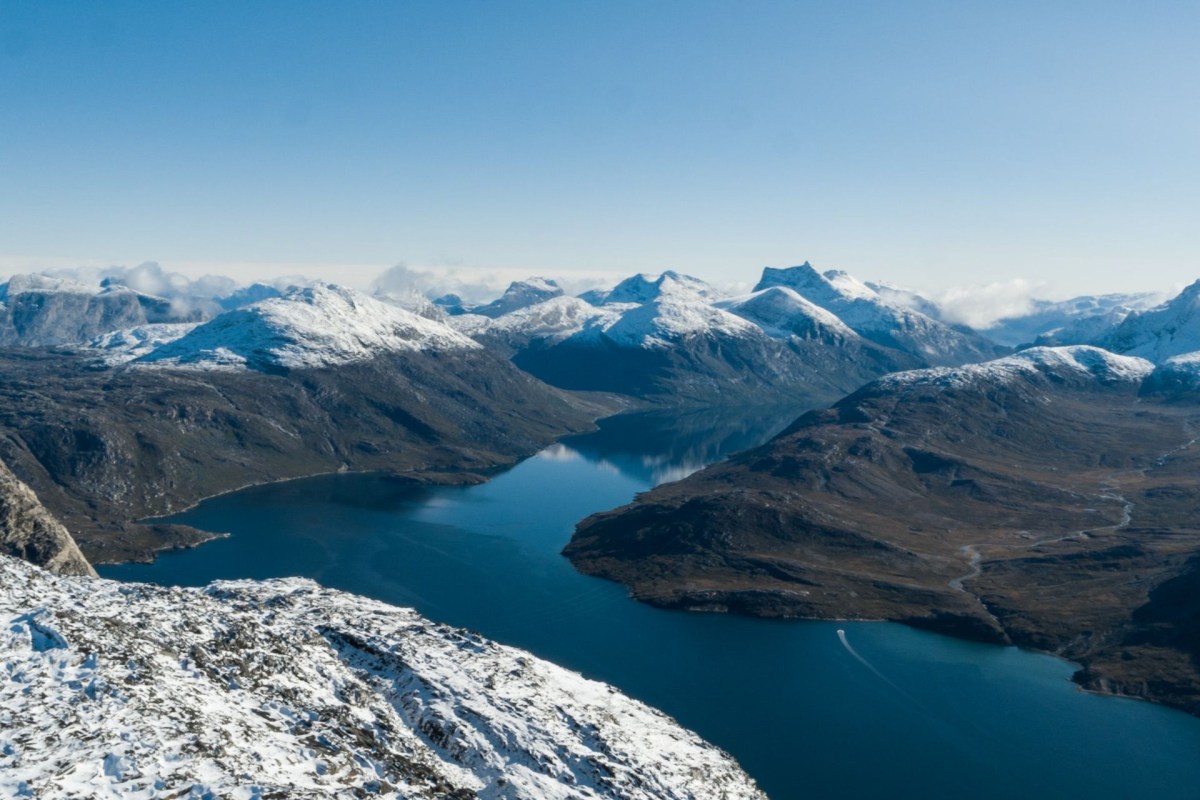
An unstable mountainside in Greenland holds an estimated 400 million cubic meters of rock that could collapse into a fjord, sending tsunami waves toward communities more than 100 kilometers away.
Here's what to know
A study in Communications Earth & Environment examined two identified unstable slopes within the Uummannaq Fjord system, ScienceAlert reported. Geologist Marie Keiding and colleagues at the Geological Survey of Denmark and Greenland carried out the research with the Norwegian Geotechnical Institute.
The larger slope ranks among the largest active unstable slopes ever mapped, covering 2.65 million square meters above sea level. Its location in Karrat Fjord puts it just 3 kilometers west of the landslide that triggered a deadly 2017 tsunami.
A complete collapse could produce tsunami run-up of 10 meters above sea level more than 100 kilometers away, according to Keiding and colleagues.
More background
ScienceAlert reported that an estimated 58 million cubic meters of rock fell into Karrat Fjord in the 2017 disaster. The landslide began on an unstable mountainside on Ummiammakku Mountain.
The tsunami killed four residents of Nuugaatsiaq and injured nine others; the village remains abandoned. The run-up there was about 10 meters.
TCD Picks » Quince Spotlight
💡These best-sellers from Quince deliver affordable, sustainable luxury for all




Such disasters can uproot entire communities, threatening public health, safety, and livelihoods.
Keiding and colleagues estimate that a collapse of the second unstable slope in Kangerluarsuk Fjord could displace about 30 million cubic meters of material.
Waves from that collapse could reach Ukkusissat, a settlement 25 kilometers away, in just six minutes, with a run-up of 3 to 7 meters.
What's being done?
Keiding's team analyzed the scale and behavior of these hazards.
Their analysis distinguished between the enormous but relatively slow-moving Karrat slope and the faster-developing slope at Kangerluarsuk.
Before 2015, the instability at Kangerluarsuk was barely visible. It has since developed rapidly and may be accelerating.
"It is likely to fail in whole or in parts within the next few years or decades as a translational rockslide, although the timing of this remains very uncertain," the researchers wrote, according to ScienceAlert.
The team also examined the role of rising temperatures. Thawing permafrost may increase catastrophic landslide activity in Arctic areas, putting nearby communities at growing risk.
"These slopes and the tsunamis they may cause illustrate an emerging hazard in Arctic and high-mountain areas, where progressive permafrost degradation associated with global warming will increase the frequency and magnitude of such events," the researchers concluded.
Where can I learn more?
The danger from collapsing mountainsides and the waves they can unleash extends beyond Greenland.
• Norway's biggest earthquake in a century triggered a glacier-burying rock avalanche in the Arctic.
• In Switzerland, Kandersteg faces a looming landslide threat that scientists say could rival Blatten's collapse.
• Scientists say warming destabilized a Nepal glacier before a collapse that killed 1,300 people.

Get TCD's free newsletters for easy tips, smart advice, and a chance to earn $5,000 toward home upgrades. To see more stories like this one, change your Google preferences here.
Cool Picks






