


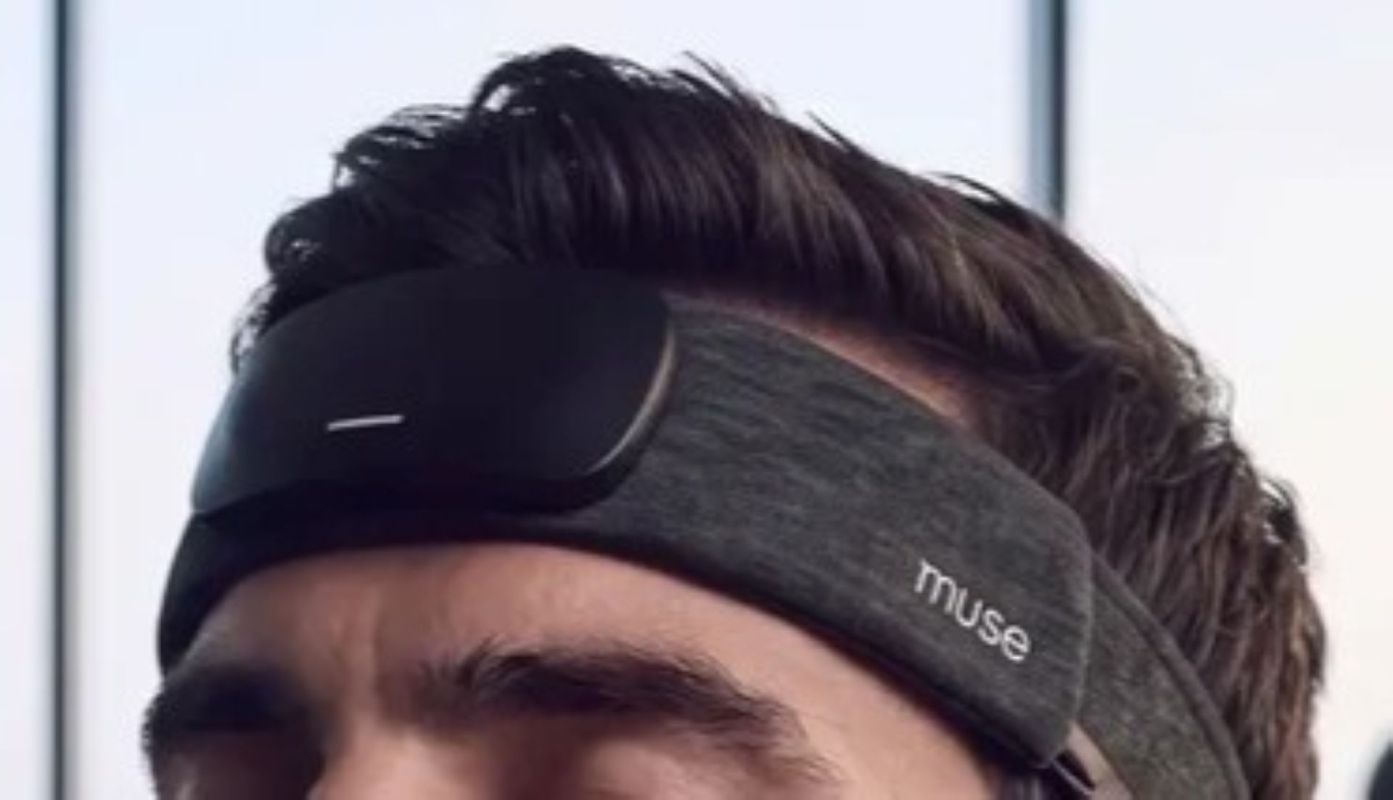
The maker of Muse sleep-tracking headbands updated its privacy policy after questions revealed that it had used roughly 50,000 hours of users' brain-wave data to train an artificial intelligence model without explicitly disclosing the practice.
Here's what to know
User recordings, with names and email addresses removed, reportedly make up the vast majority of the training material for InteraXon's "brain foundation model." The Canadian neurotechnology company aims to use the model to improve its services and support brain research, according to Science.
Muse user Adnan Jinnah did not realize his Muse recordings might be used to train AI. The Leicester, England, resident used the headband to understand how stress and medication affect his sleep.
Science's questions about the missing disclosure prompted InteraXon to revise its privacy policy.
"We agree users should be explicitly informed," Nadia Kumentas, InteraXon's chief marketing officer, told Science.
Removing information's influence from an AI model is extremely difficult once it has been embedded, as Science noted. InteraXon had already trained the model by the time it changed the policy.
TCD Picks » Quince Spotlight
💡These best-sellers from Quince deliver affordable, sustainable luxury for all




More background
Among 57 consumer-facing companies collecting electroencephalography, or EEG, data, 11 limited their privacy policies to website visitor information and four had no policy. Science identified those gaps in a yearlong investigation.
It identified nine companies in consumer neurotechnology and AI software that had made their work on brain foundation models public.
Only six companies explicitly ruled out selling users' brain data. More than two-thirds expressly permitted corporate data transfers, meaning an acquisition could put brain recordings in another company's hands.
The companies building these models believe they could become a breakthrough technology in medicine.
"The model is there in order to serve the world for so many things," said Tan Le, founder and CEO of Emotiv. This San Francisco–based neurotech startup has developed multiple EEG wearables, according to Science.
A pilot study found that AI startup Piramidal's model detected 90% of seizures after fine-tuning with Cleveland Clinic data. The company developed the model using EEG recordings from hospitals and publicly available sources.
What's being done?
Emotiv's revised privacy disclosures say it uses de-identified data to train brain foundation models with users' opt-in consent. The company made the change after Science asked about its practices.
Chile established constitutional protections for brain activity and associated information in 2021.
Former Chilean Sen. Guido Girardi's challenge to Emotiv's consent practices led Chile's Supreme Court to order the company to delete his brain data in August 2023.
Residents of Colorado and California can request access to their neural data or ask for its deletion under amendments to the states' consumer privacy laws, Science reported. Those changes classify neural data as sensitive personal information.
U.S. Sen. Chuck Schumer introduced a bill calling for the Federal Trade Commission to recommend a regulatory framework and investigate gaps in existing protections.
Nita Farahany, a Duke University professor of law and philosophy, emphasized that consent must account for how information will actually be used.
"It matters if you agree to something and then there's a totally different context of use that you never contemplated," she told Science.
Where can I learn more?
Similar questions about consent and privacy arise with AI tools people wear, chat with, and connect to their personal accounts.
• Senators warn Meta's smart glasses may feed bystanders' intimate images into AI training.
• Meta's Muse AI tracks where your inner circle lives and what they like.
• In the U.K., a safety creator warns that Meta's AI charm can hear, watch, and remember.

Get TCD's free newsletters for easy tips, smart advice, and a chance to earn $5,000 toward home upgrades. To see more stories like this one, change your Google preferences here.
Cool Picks






