


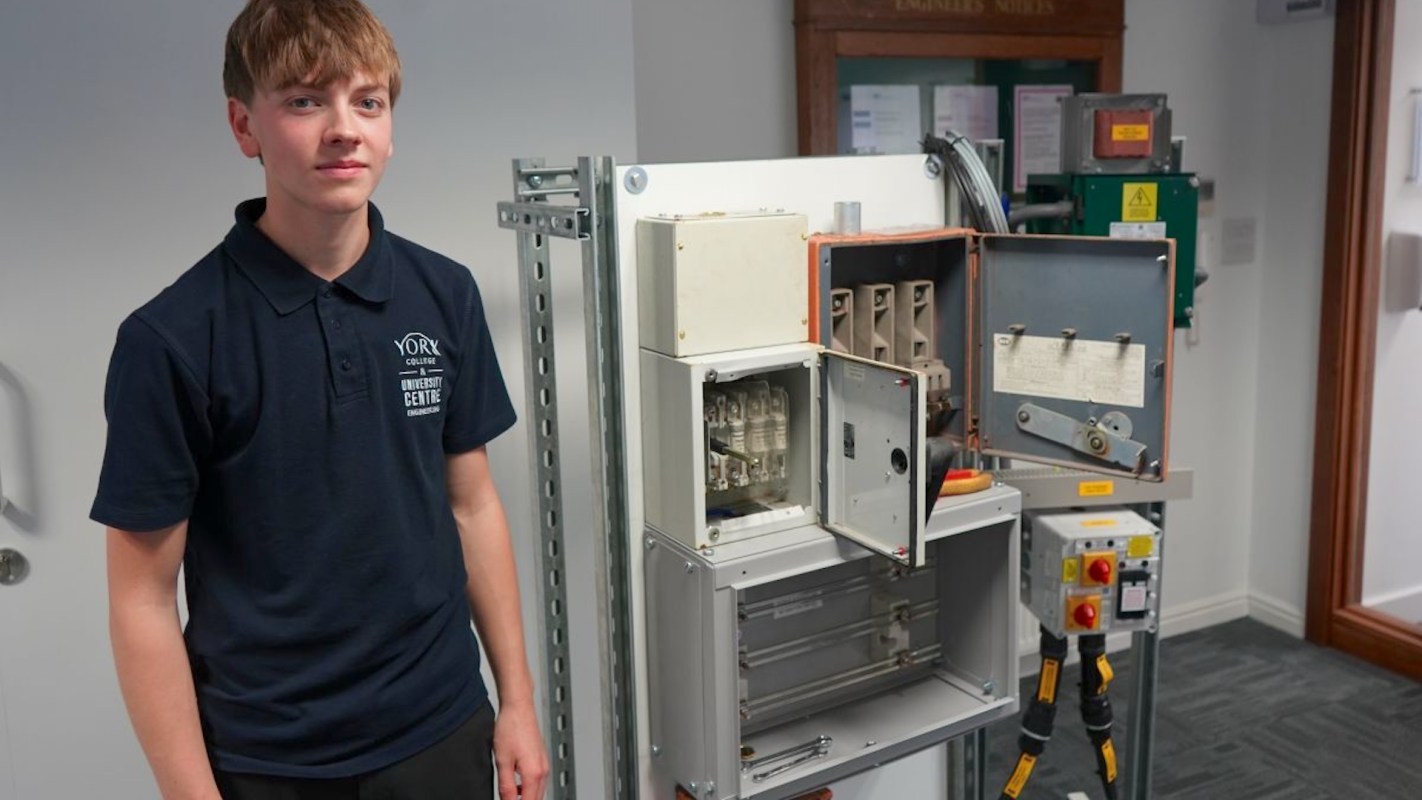
An engineering student in England has designed a device to protect railway equipment from rats, turning a work placement project into a job offer.
Here's what to know
Jackson Hall, who studies at York College, developed screens that Network Rail has fitted at two signal boxes in the Leeds area, according to the BBC.
The project took shape at AGH Engineering, the York-based design consultancy where Hall was on placement. His screen uses polycarbonate.
Aging signal boxes across the rail network need protection from rats and other animals that gnaw on their cables. Train services over considerable distances can be disrupted when damage to the cables causes power failures.
"Before, if just one of the boxes was damaged it was creating a short circuit that would stop trains being able to run on miles and miles of track. They have to get decommissioned and rebuilt, which is more money and time," Hall explained, according to the BBC.
With two screens already installed, another 63 signal boxes are set to receive the technology.
TCD Picks » Quince Spotlight
💡These best-sellers from Quince deliver affordable, sustainable luxury for all




More background
Adam Wood, AGH Engineering's principal engineer, pointed to an outage at Leeds Station whose repair and delay compensation bill exceeded £1 million ($1,336,750.07).
"Sometimes, a simple idea can become a very efficient way of saving delay minutes, which is obviously great for Network Rail and cost-saving. But there's also a wider impact to passengers and rail operators and, when you start looking at the knock-on effect, the numbers clearly increase exponentially," Wood explained, per the BBC.
For AGH, which works with industry partners including Network Rail, Hall's design has also helped strengthen a business relationship.
"For Jackson to deliver something that has future-proofed and negated an issue has enhanced the confidence the client has in our company," Wood said.
What's being done?
Network Rail has asked AGH for an installation estimate to fit Hall's screen to 65 signal boxes, according to the BBC. Wood hopes to see the device adopted across the country to protect railway equipment beyond the initial Leeds-area installations.
An offer from AGH would see Hall join the company as a design technician after completing his manufacturing and engineering T-Level studies. The company will pay for him to earn a Higher National Diploma, allowing him to continue his education while pursuing his engineering career.
"It's all come from his ideas and thought process, which is impressive for a student coming to us at the age of 17," Wood said.
Hall said his friends and family were "buzzing" over his achievement.
"It's really hard to get jobs at my age, so it was very lucky I'd been given the opportunity to show someone who can give me a job what I can do," he said. "It feels pretty good that they trusted me to create the product, and it's given me a bit more confidence in my ability."
Where can I learn more?
Here are a few other recent plans to improve transportation.
• In the U.K., engineers discovered slugs in the controls after traffic lights repeatedly failed for a year.
• Switzerland is testing solar panels between tracks, putting railway space to work generating electricity.
• A Massachusetts rail deal moves the Berkshire Flyer closer to permanent seasonal train service to New York.

Get TCD's free newsletters for easy tips, smart advice, and a chance to earn $5,000 toward home upgrades. To see more stories like this one, change your Google preferences here.
Cool Picks






