


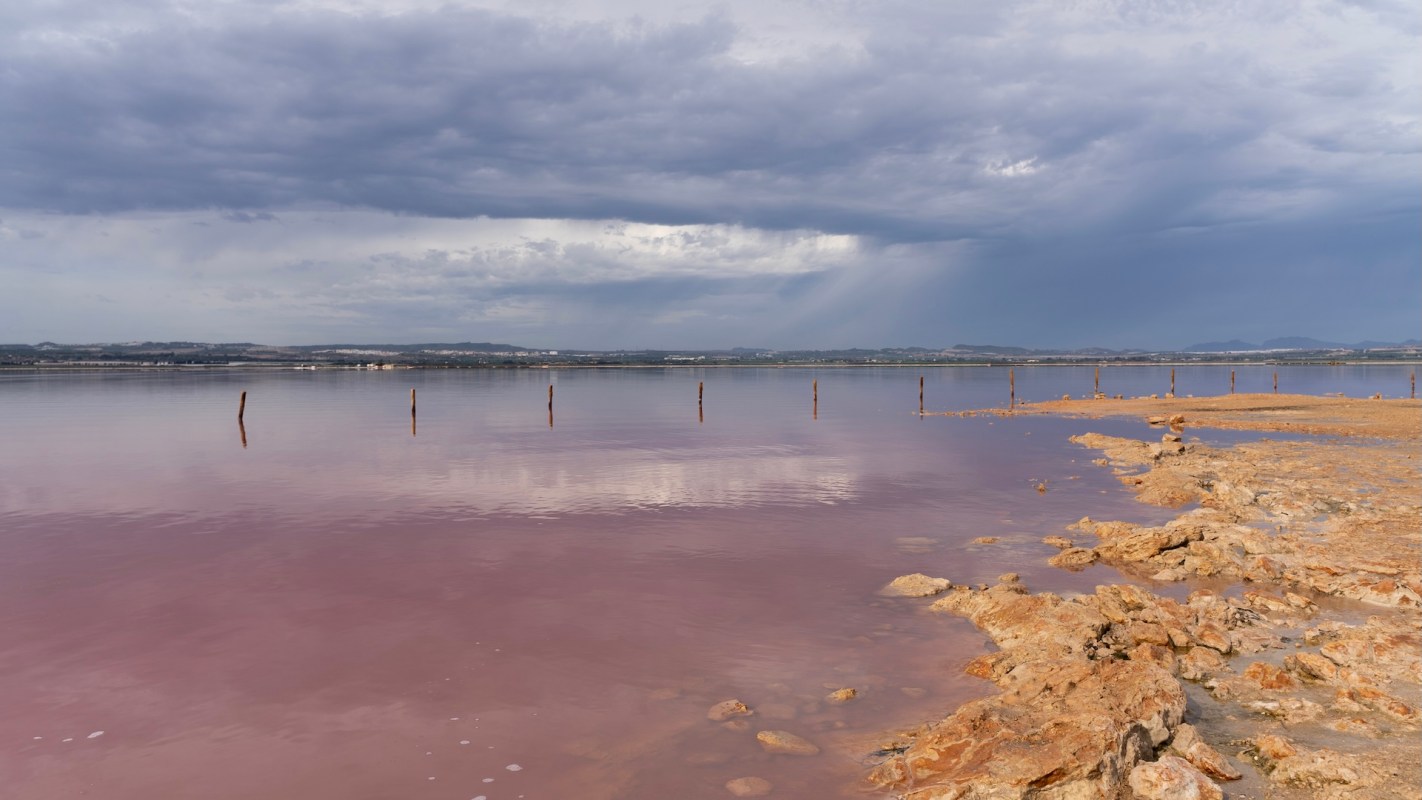
Scientists used pink dye to trace water draining from Florida's Lake Jackson to five natural springs, revealing an underground route that could also carry pollution.
Here's what to know
Earth.com reported that Wakulla Spring, roughly 19 miles from Lake Jackson, was one of five natural springs reached by water entering a sinkhole in the lake.
Instruments at Wakulla and nearby Sally Ward springs recorded the main dye peaks 35 days after the release. Researchers began the test on Sept. 19, 2017, introducing Rhodamine WT dye into a lake-bottom sinkhole over six-and-a-half minutes.
The findings appeared in the Journal of Cave and Karst Studies in 2024. Study co-author Alan W. Niedoroda and Seán E. McGlynn, technical director of McGlynn Laboratories Inc., conducted the investigation.
Carried by groundwater through channels in the limestone, the dye traveled about half a mile per day on average. Individual detection events lasted between one and 100 minutes.
Much of the dye dispersed into porous rock alongside the underground channels during transit, according to Earth.com. The researchers described those channels as "leaky." Its appearance at five separate springs also indicated a network below ground.
TCD Picks » Quince Spotlight
💡These best-sellers from Quince deliver affordable, sustainable luxury for all




More background
Lake Jackson periodically drains underground. Its original name, Okeeheepkee, means "disappearing waters" in Muscogee, which is also known as Creek. Its closed drainage basin spans 27,000 acres north of Tallahassee, according to Earth.com.
Heavy storms can quickly refill the lake. The opposite process — a dry down — can occur when low groundwater and below-average rainfall combine with high water loss through plants and evaporation.
The Upper Floridan aquifer is the eventual destination for water draining through the lakebed, according to the Florida Department of Environmental Protection. Earth.com identified two lakebed openings: Lime Sink to the north and Porter Hole Sink to the south.
That aquifer provides drinking water for Leon and Wakulla counties and supplies Wakulla Spring.
The 2024 study identifies a pathway that can quickly transport nutrients and pollutants over long distances. Wakulla Spring's daily discharge is roughly 300 million gallons, according to Florida State Parks, making these underground connections particularly important for protecting a substantial water resource.
What's being done?
Earth.com reported that the Florida Geological Survey announced a second tracing effort at Porter Hole Sink in August 2021. This time, researchers used green fluorescein dye to help confirm the connection identified by the earlier experiment.
The release coincided with low water as Tropical Storm Fred approached. Rain from the storm was expected to carry the tracer toward 23 monitoring locations, with results potentially taking weeks or months, according to the Florida Geological Survey.
All five springs yielded dye detections in charcoal packs, which collected the tracer from passing water during the pink dye study.
The packs' detection windows matched peaks recorded by water-quality instruments at Wakulla and Sally Ward springs, helping researchers track the dye's movement.
"Confirming this connection will help resource managers develop more informed strategies for managing our water resources," said Guy Means, then acting director of the Florida Geological Survey and Florida's state geologist, according to Earth.com.
Where can I learn more?
Protecting springs like Wakulla also means protecting the lakes and groundwater that feed them.
• Northeast Florida officials said the aquifer needs 30 extra inches of rain as springs dry up.
• Florida drought now affects 15.5 million people, putting drinking water at risk alongside wildfire threats.
• In Texas, efforts to save Medina Lake would move farmers onto new wells.

Get TCD's free newsletters for easy tips, smart advice, and a chance to earn $5,000 toward home upgrades. To see more stories like this one, change your Google preferences here.
Cool Picks






