


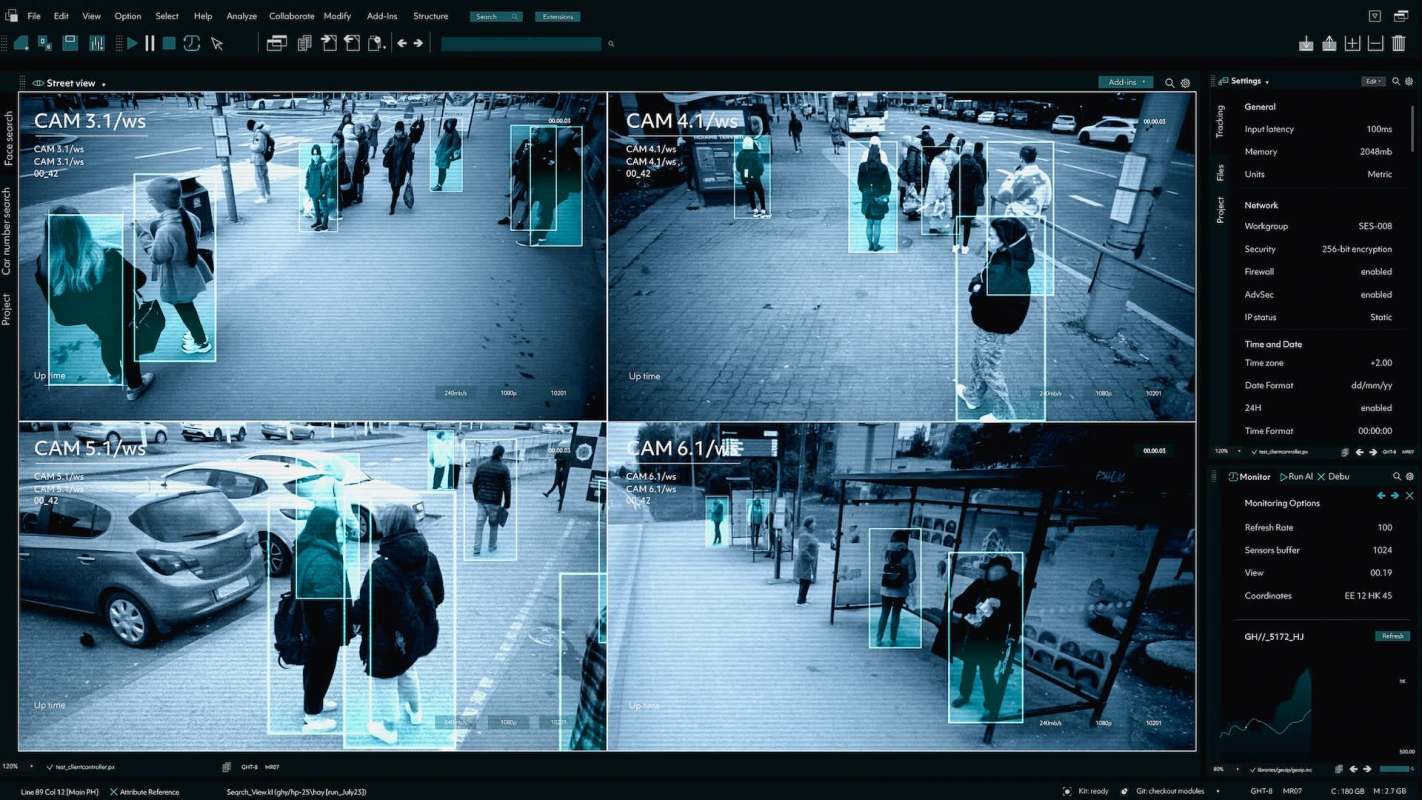
People passing through transport hubs or attending crowded public events could be subjected to live facial recognition as the UK prepares to expand its use in immigration enforcement.
Concerns about AI-enhanced surveillance in everyday public spaces center in part on who might appear on watchlists — Tech Times UK reported that people who have overstayed their visas and others who have violated immigration conditions could be targeted.
Here's what to know
Facial images captured by LFR cameras would be checked against immigration enforcement watchlists, a system outlined in Home Office policy documents cited by Tech Times UK.
Overstaying a visa is among the grounds the documents propose for watchlist inclusion. People facing removal or linked to other civil immigration breaches are also potential targets.
Immigration enforcement conducted three trials at the port of Holyhead, North Wales, from November 2025 through February.
Operations focused on travelers arriving via the Common Travel Area from Ireland who faced deportation orders or were wanted for immigration-related offenses.
TCD Picks » Quince Spotlight
💡These best-sellers from Quince deliver affordable, sustainable luxury for all




Identifying visa overstayers remains a possible future use, not a confirmed one.
Although dates and locations for wider deployment remain unconfirmed, the documents indicate the program has reached its "formal delivery phase."
The Home Office declined to explain which locations would qualify as having "heightened community sensitivity."
More background
The plans accompany a decision by Home Secretary Shabana Mahmood to increase immigration enforcement funding twofold and expand staffing by 60%.
The expansion is intended to enable "tens of thousands" more raids, arrests, and deportations.
Civil liberties campaigners have raised concerns about misidentification and racial bias, Tech Times UK noted.
Griff Ferris, who speaks for the Joint Council for the Welfare of Immigrants, warned that giving immigration enforcement more power to use a "racist mass surveillance tool in public places" was "frightening."
Increased surveillance capabilities are just one controversy associated with the AI boom. AI has potentially beneficial applications, such as optimizing clean energy systems.
But the computing behind the technology also consumes substantial amounts of public grid energy and water, and the data centers needed to power AI have come under intense scrutiny.
What's being done?
The Home Office claims the technology can help officers find undocumented people and settle their cases while limiting disruptions caused by repeated visits to homes and workplaces.
A Home Office spokesperson acknowledged that the department was "considering further trials" and "actively exploring the potential benefits, implications and future use of the technology."
The policy excludes anyone under 18 from watchlists and pledges external oversight by the Information Commissioner's Office and the Biometrics and Surveillance Camera Commissioner.
But William Webster, the Biometrics and Surveillance Camera Commissioner, told Liberty Investigates that he had not been consulted and that immigration use fell outside his remit.
He added that the "proliferation of LFR into different service contexts does raise important questions about the scope of existing regulatory oversight."
Sarah Lasoye of the Open Rights Group also raised concerns about regulation.
"Immigration enforcement and police forces are exploiting an absence of national legislation regulating uses of AI technologies, including facial recognition, in the public sector."
Where can I learn more?
Concerns about surveillance also extend to doorbell cameras, policing, and workplace monitoring. These stories examine Ring's face-tagging feature, an Arizona sheriff's rejection of surveillance cameras, and workplace experiences with AI monitoring.
• In the UK, Ring's face-tagging feature sparked fears of continuous mass surveillance.
• An Arizona sheriff ended a Flock contract, warning of an AI-driven surveillance state.
• A New Jersey worker says her employer's AI photographed her at home every three minutes.

Get TCD's free newsletters for easy tips, smart advice, and a chance to earn $5,000 toward home upgrades. To see more stories like this one, change your Google preferences here.
Cool Picks






