


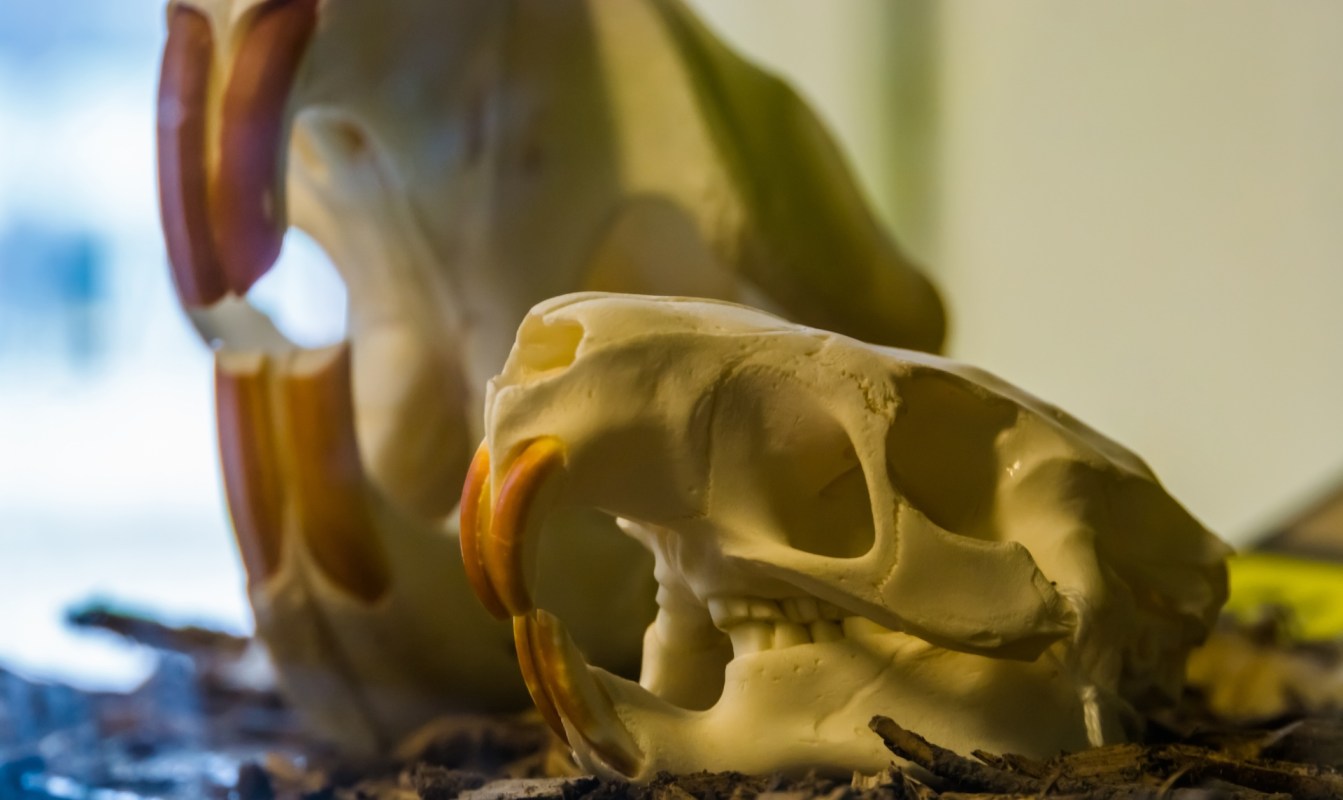
A fossil initially mistaken for a bone turned out to be a tooth belonging to a roughly 66-pound prehistoric rodent that lived in what is now southern Thailand 33 to 35 million years ago.
Here's what to know
Scientists identified the previously unknown species using two teeth — a molar and an incisor — found in 2004 in a coal mine in Thailand's southern Krabi province, according to CBS News. The findings appeared in the journal Scientific Reports.
The incisor's size puzzled its discoverer, Pannipa Tian, a geologist for Thailand's Department of Mineral Resources. She had noticed the fossil because its cream color contrasted with the dark coal, but she did not immediately recognize what she had found.
"At first, I thought it was a bone. I showed it to my supervisor, who told me it was a giant rat's tooth," Pannipa told AFP.
Identifying one of the Paleogene period's biggest known rodents ultimately depended on that incisor and a dark-colored molar. Another expedition member had discovered the molar on the same day.
More background
Ischyromyidae, one of the first major rodent groups, is now extinct; according to CBS News, the newly identified animal belonged to this family. Its estimated weight was about half that of a large capybara — the largest rodent alive today — which is native to South America.
TCD Picks » Quince Spotlight
💡These best-sellers from Quince deliver affordable, sustainable luxury for all




In 2020, scientists reported finding a human-sized prehistoric rat that inhabited the Amazon rainforest about 10 million years ago.
In 2008, Uruguayan scientists reported fossil evidence of a 1-ton rodent that inhabited wooded parts of South America roughly 4 million years ago. Another discovery, announced in 2003, revealed a 1,545-pound "Rat-zilla" from an ancient swampy South American forest.
Fossils previously recovered in the area also include primates, carnivores, and hoofed mammals.
What's being done?
Researchers from Thailand, France, and Canada identified the species more than two decades after discovering the teeth, CBS News reported. That identification had been beyond the evidence and technology available when the fossils first surfaced.
In their analysis published in Scientific Reports, the international team compared the lower molar's shape and size with those of other Paleogene members of the Ischyromyidae family.
Thailand's Princess Sirindhorn, a supporter of scientific and paleontological research, is the namesake of Yakamys sirindhornae. Researchers still do not know what the animal looked like, what it ate, or how it behaved.
In Pannipa's view, the spread of ancient rodents to other regions may have begun in what is now Thailand.
"It tells a lot about the diversity of life in the past," she told AFP.
Where can I learn more?
Fossil discoveries like the teeth found in Thailand continue to reveal surprises about long-vanished animals.
• In Ireland, 6,500-year-old bones mistaken for cattle remains belonged to bears and wild boar.
• In Wales, an amateur's fossil fish jaw helped resolve 200 years of classification confusion across Europe.
• In northeastern China, a fossil revealed a giant-clawed dinosaur that may have resembled a feathered bear.

Get TCD's free newsletters for easy tips, smart advice, and a chance to earn $5,000 toward home upgrades. To see more stories like this one, change your Google preferences here.
Cool Picks






