


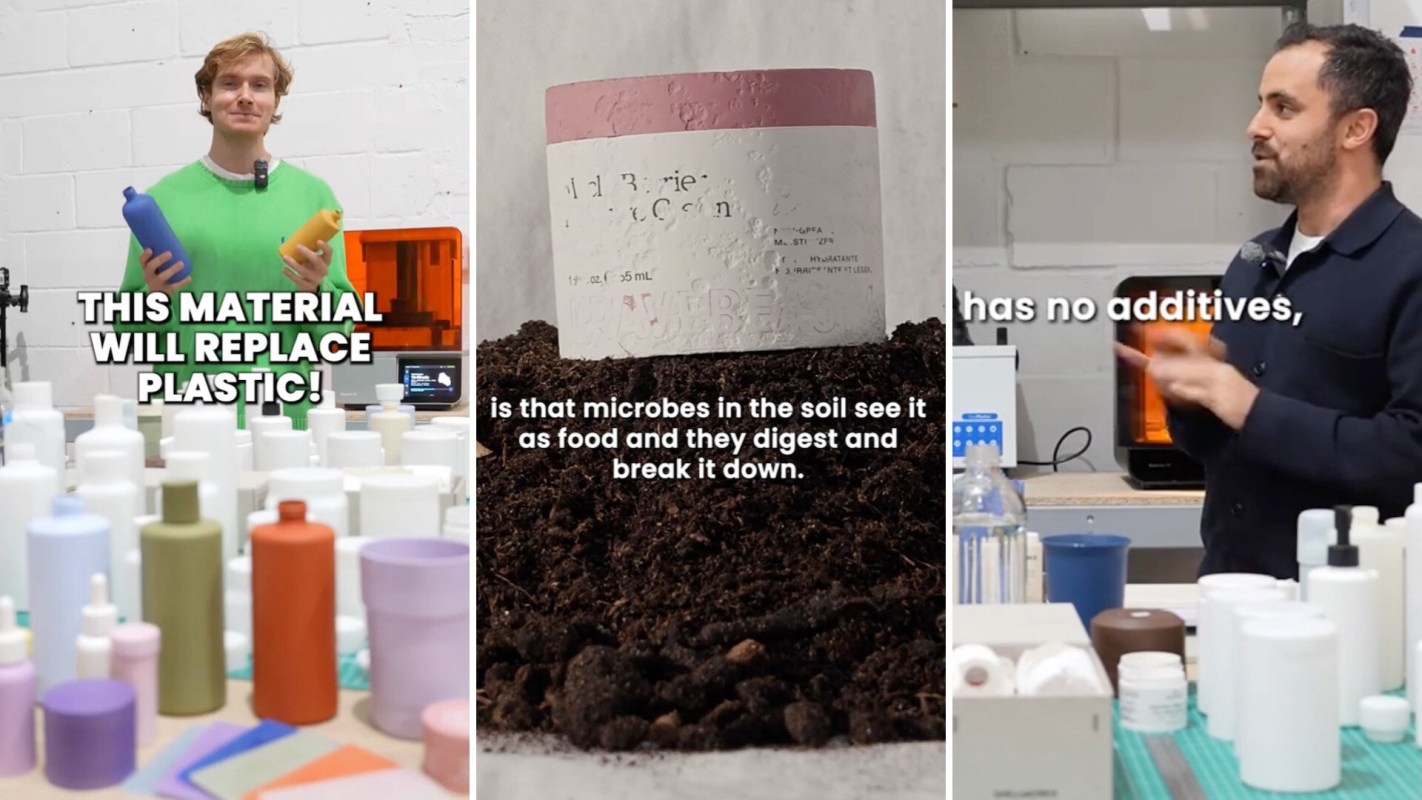
An alternative to everyday plastic could offer the durability needed to survive the dishwasher while eventually becoming food for soil microbes.
Here's what to know
In a TikTok video from Going Green Media (@GoingGreenMedia), the creator returned to Shellworks for a question-and-answer session with its co-founder, Amir Afshar. The Nov. 3 post followed a factory visit that left viewers curious about how the material works.
Soil microbes are the starting point for Vivomer, which Shellworks makes through fermentation. "Kind of like making beer," the creator explained.
The video suggests a range of uses is possible because Vivomer can take different shapes and colors, in either a rigid or flexible form.
Amir said the company expected to ship 15 million products made with the material in 2026, giving a sense of the scale of its efforts to replace plastic. Amir also said the material contains no additives and that its ingredients have applications in food products.
More background
Home compostability raised a question about Vivomer's durability. How could something designed to break down also tolerate shower use and last three years on a shelf, as described in the video?
TCD Picks » Quince Spotlight
💡These best-sellers from Quince deliver affordable, sustainable luxury for all




Microbes in the soil treat Vivomer as food, Amir explained. Exposure to those microbes is what makes the difference.
Dishwasher cycles haven't broken down the Vivomer he uses for drinking water every day, he said. Packaging and household products need to withstand water and washing before being discarded.
Vivomer's fate in the ocean was another concern raised in the discussion. Amir said third-party laboratory testing put its decomposition rate close to that of cellulose. The material would also break down in the ocean, with the time needed varying according to where it ended up.
What's being done?
More types of packaging could become possible if consumers can see the contents through Vivomer. The video says Shellworks is working on more translucent versions of the material.
A chopping board is set to become the first product the company has made for itself. For people hoping to avoid microplastics while keeping their kitchen-cleaning routine, the board could offer an alternative. Amir said it is dishwasher-safe and microplastic-free.
The chopping board could be an option for people looking for plastic-free everyday products. Still, some commenters wanted reassurance that the material would become a lasting option, not another short-lived promise. "Every year we always hear about a new alternative to plastic, and we never hear about it ever again," one commenter wrote.
Only time will tell if Vivomer is different.
Where can I learn more?
Vivomer is one of several materials being developed to replace conventional plastic. These stories explore several plastic alternatives.
• In Maine, a mother created dissolvable kelp film for laundry pods after concerns about microplastics.
• German biologists found a 'pac-man' enzyme that breaks down both bioplastics and antibiotics.
• In Australia, grocery and kitchen swaps cut plastic chemical levels by up to 60% in a week.
• The Department of Energy committed $3 million to polyester-eating enzymes for recycling textile waste.
• Maine researchers turned discarded lobster shells into golf tees, exploring a new revenue stream.

Get TCD's free newsletters for easy tips, smart advice, and a chance to earn $5,000 toward home upgrades. To see more stories like this one, change your Google preferences here.
Cool Picks






