


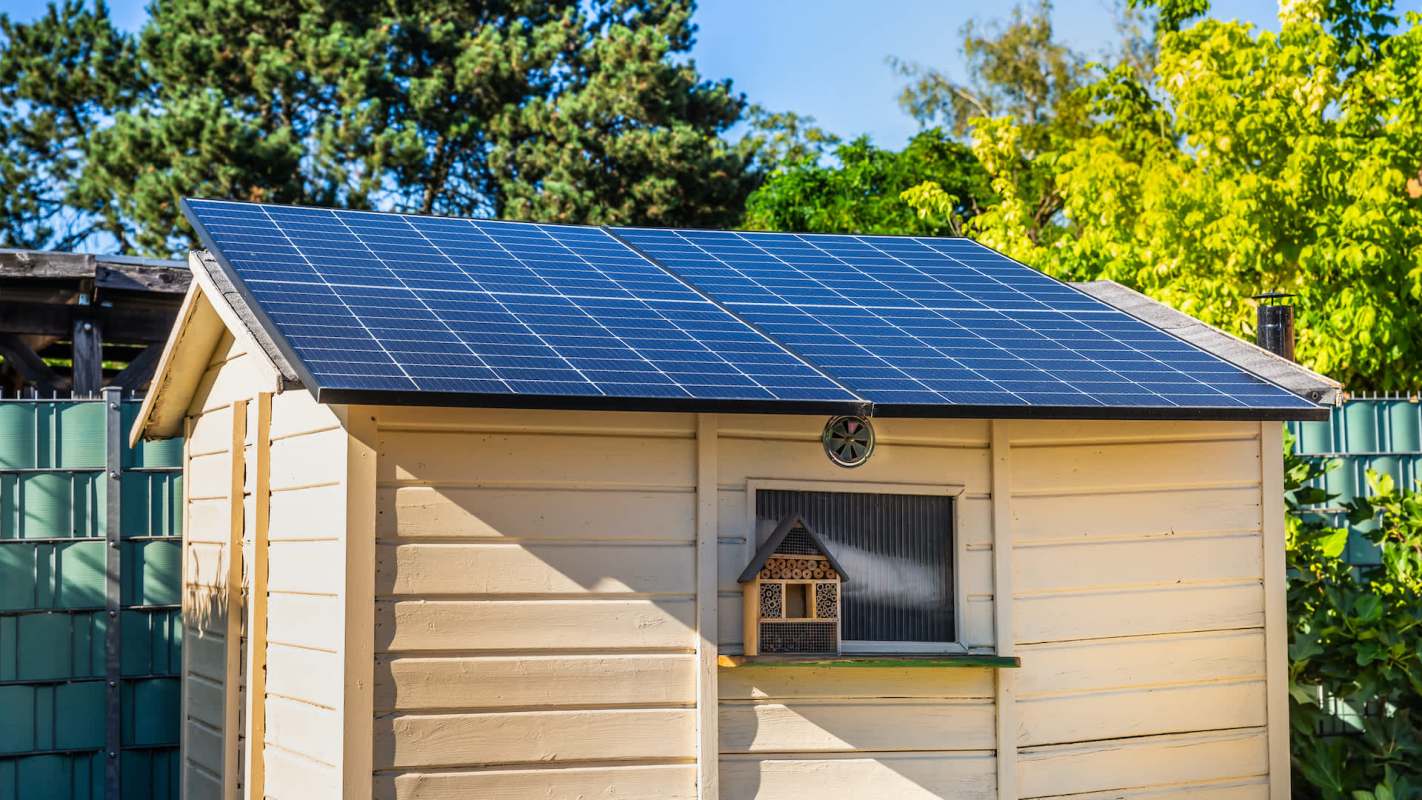
A homeowner is exploring whether a solar-powered shed could help keep essential appliances running during blackouts, since their leased rooftop system has no battery backup.
Here's what to know
Grid power currently runs the lights, outlets, and rarely used window air conditioner in the homeowner's finished, 12-by-14-foot shed. The homeowner outlined plans to expand the outbuilding's solar equipment in a post on Reddit's r/SolarDIY community.
"My primary goal is to eliminate all loads in the shed pulling from the grid," the original poster wrote.
Backup power for selected household circuits — not sending electricity to the grid — is the goal the homeowner clarified in an edit. Changes to the leased rooftop system would have to wait until a buyout.
Residential solar can lower electricity bills, and some $0-upfront leases may deliver savings of hundreds of dollars per month, depending on the household and agreement. EasyHome offers a free explorer tool to estimate potential savings and find vetted local installers.
More background
A 15-amp breaker connects the shed to the house for its remaining electricity needs. Only the pond pump draws power from the shed's existing solar equipment: four 100-watt panels, a 12-volt, 280-amp-hour battery, and a Victron MPPT charge controller.
About 7 feet by 16 feet of roof space faces south. The homeowner's expansion proposal calls for four additional 450-watt panels and a 5.12-kilowatt-hour battery. Expansion options for the proposed inverter/controller include adding units and supporting 240-volt operation. Its 120-volt output would be rated at 5-7 kilowatts.
What can be done?
Commenters recommended an off-grid inverter, along with a subpanel and manual transfer switch. Selected household circuits could receive backup electricity from the shed through a manual transfer switch, an option the homeowner had already been considering.
Crushed by your bills? See instant solar savings from vetted installers in just a few clicks With energy prices through the roof, there's never been a better time to go solar — and EasyHome can help you find the best prices from the best installers in your area. EasyHome takes the guesswork and headaches out of energy upgrades by showing you estimated savings from a network of vetted local partners. To get started, just enter your ZIP and share a few details about your home — seeing your estimate is really that easy. |

One question was where to install additional battery storage: in the main house or the shed. The homeowner also wanted a way to connect a gasoline generator.
For households weighing storage choices like these, EasyHome also offers battery-storage exploration options. Pairing solar with batteries can help manage electricity costs and provide backup during outages.
The homeowner wrote in their edit: "BUT, it would be ideal to have a couple circuits in the main house like the kitchen and garage fridge connected so I can power them during a power outage. My leased solar system has a grid-tire inverter and no battery backup, so when the power is out I have nothing even though my system is still producing electricity."

Get TCD's free newsletters for easy tips, smart advice, and a chance to earn $5,000 toward home upgrades. To see more stories like this one, change your Google preferences here.
Cool Picks






