


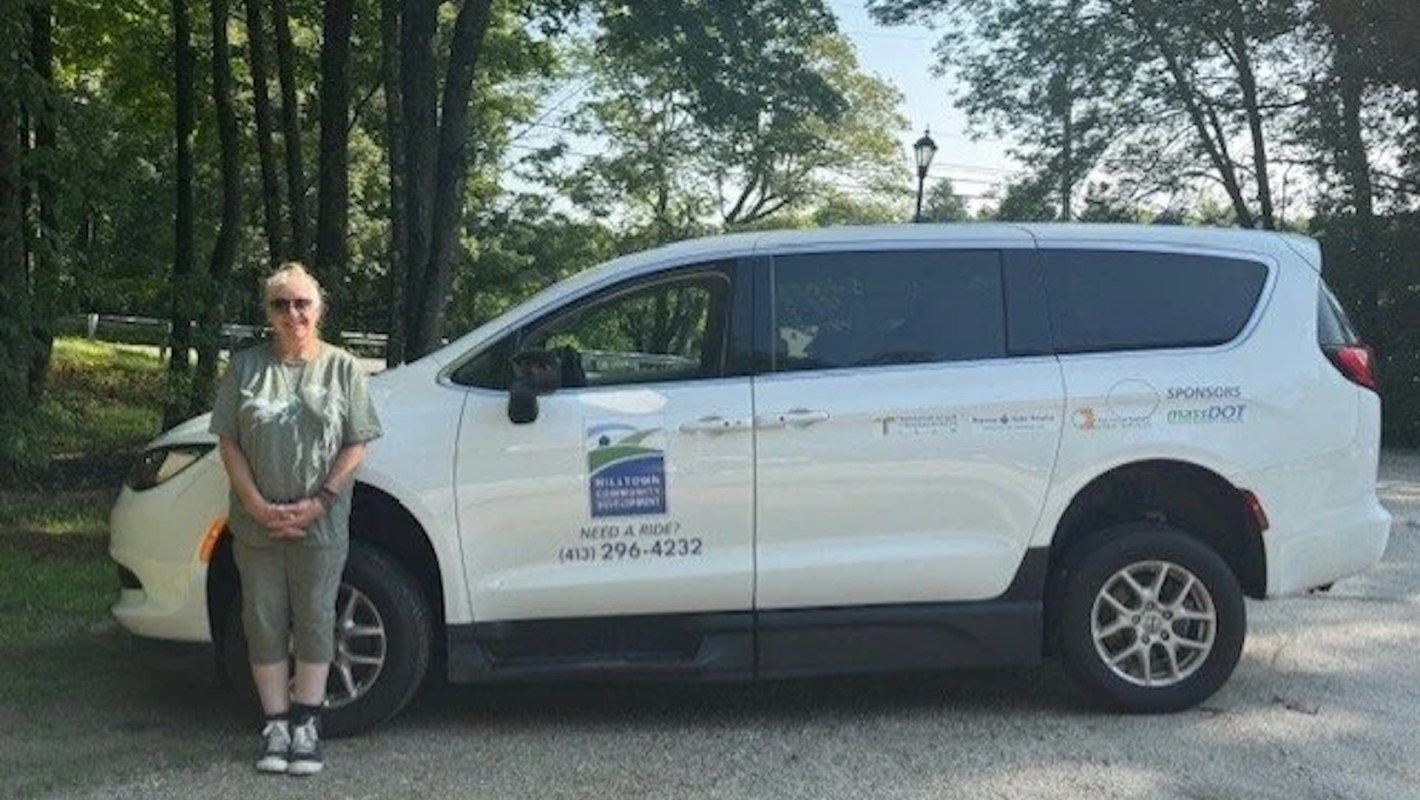
The UMass Amherst Donahue Institute calculated that three small, on-demand transportation programs in rural Massachusetts provided a combined economic benefit of $24.6 million for the 2022-2025 service period.
The institute found that state and local economic benefits were valued at $8 to $23 per dollar invested.
Here's what to know
Transportation for Massachusetts asked the UMass Amherst Donahue Institute to produce three reports examining community-based transportation programs, according to the CommonWealth Beacon. The organization's executive director, Reggie Ramos, and Helping Our Women executive director Gwynne Guzzeau outlined the findings in an opinion piece for the outlet.
Together, the three programs examined in the reports logged 26,887 one-way trips in 2025. They were the Outer Cape's Helping Our Women, transportation services offered by Hilltown Community Development Corporation in Western Massachusetts, and the South County Connector in the Berkshires.
The South County Connector accounted for 21,924 of those trips, including more than 6,000 work-related rides, Ramos and Guzzeau said. Its services produced approximately $16.5 million in economic benefits, they wrote.
Interviews with providers and local partners contributed to the institute's assessment, alongside its review of operations, trips, and the communities served. Hilltown CDC generated nearly $4 million in benefits, while Helping Our Women generated approximately $4.2 million.
TCD Picks » Quince Spotlight
💡These best-sellers from Quince deliver affordable, sustainable luxury for all




More background
Helping Our Women provided over 3,600 rides to women living with serious or chronic health conditions, according to Ramos and Guzzeau. They described how one client, Grace, used the service to travel daily between Truro and Hyannis during four weeks of cancer treatment.
Getting groceries can take 45 minutes in the Hilltowns, while a round-trip bus journey from Provincetown to Hyannis for medical care can require six hours, Ramos and Guzzeau wrote. They also noted that buying milk can mean a nine-mile trip in some rural Massachusetts communities.
Massachusetts' microtransit grant programs support technology-enabled, on-demand services using vehicles that carry multiple passengers. Riders can schedule trips through an app, over the phone, or online. These services complement existing fixed-route buses, rail, and paratransit services.
According to Ramos and Guzzeau, providers across the three regions described driver and vehicle shortages, scheduling constraints, and requests they could not accommodate. Limited volunteer capacity on the Outer Cape makes urgent rides more difficult to arrange, while eligibility rules in the Hilltowns exclude some younger residents who need transportation to work.
What's being done?
Massachusetts has allocated $15 million through two supplemental budgets for its Microtransit and Last-Mile Transit Grant Program, according to Ramos and Guzzeau. The funding supports services run by municipalities, community organizations, and regional transit authorities.
State Reps. Tricia Farley-Bouvier and Todd Smola, along with state Sens. Julian Cyr and Jo Comerford, have proposed a statewide commission to examine existing and emerging microtransit services and their funding.
The proposal could help identify gaps and improve coordination while preserving services designed around local needs.
Ramos and Guzzeau called for reliable, multiyear funding to help providers retain drivers, maintain vehicles, extend service hours, and accommodate more requests. They also urged stronger connections between community-based services and healthcare organizations, regional transit authorities, and existing transportation networks.
The two emphasized that success should be measured by more than ridership alone. Access to healthcare and employment, household transportation costs, and trips that would otherwise be unavailable should also help determine the programs' impact.
A separate 2025 Donahue Institute analysis assessed the potential benefits. The Quaboag Connector, serving 10 towns spread across Hampden, Hampshire, and Worcester counties, produced economic benefits of nearly $45 million — a return approaching $11 per dollar invested, according to the analysis.
Where can I learn more?
On-demand rides are one part of Massachusetts' efforts to connect residents with jobs, shops, and medical care.
• Massachusetts towns are launching free, on-demand electric rides connecting residents to transit, shops, and care.
• Boston neighborhoods with limited transit access will get five free shuttle routes to improve connections.
• A Massachusetts rail deal brings the Berkshire Flyer closer to permanent seasonal service to New York.

Get TCD's free newsletters for easy tips, smart advice, and a chance to earn $5,000 toward home upgrades. To see more stories like this one, change your Google preferences here.






