


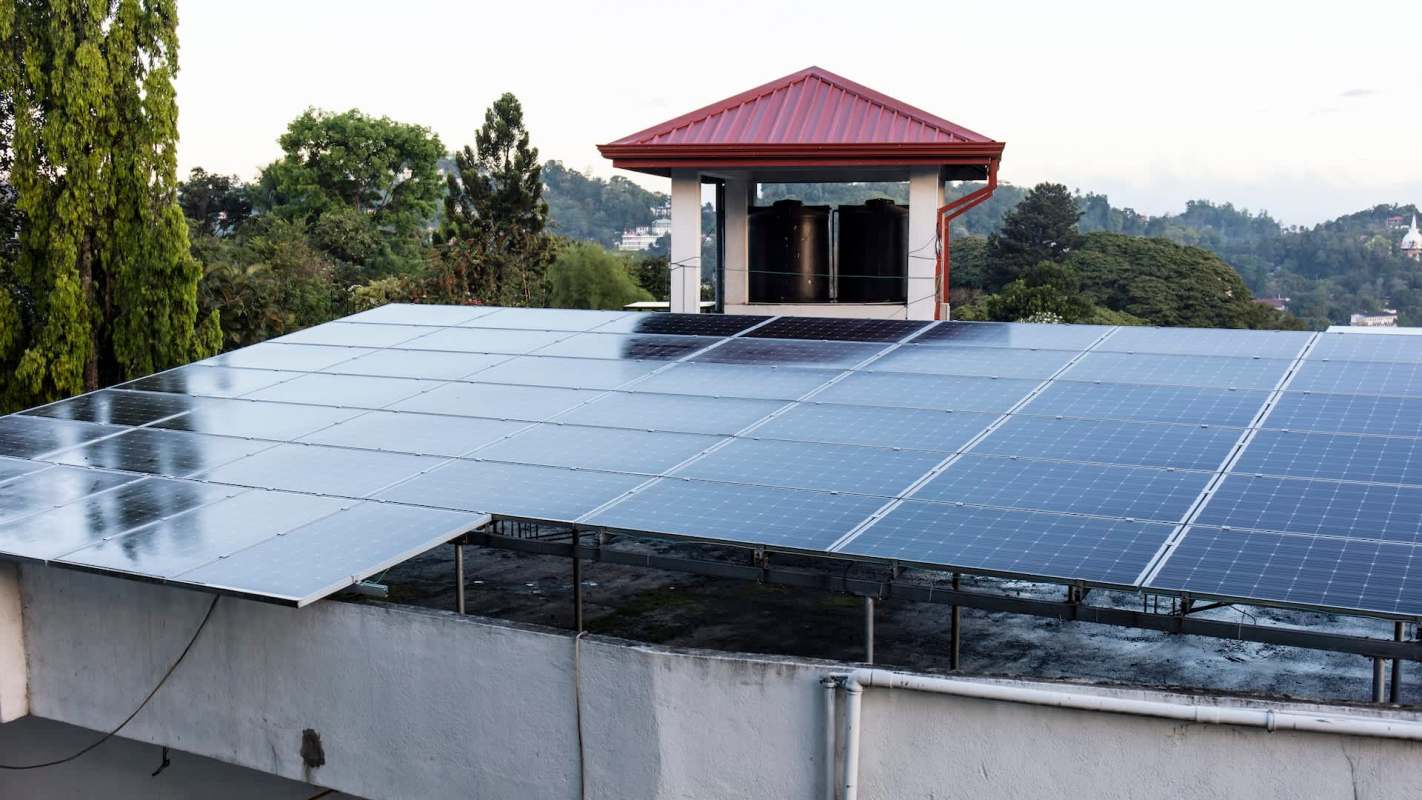
Sri Lanka is changing the way rooftop solar customers pay for electricity, prompting a debate over how to protect consumers while encouraging investment in renewable energy.
Here's what to know
Electricity costs and Sri Lanka's renewable energy goals were at the center of a parliamentary exchange over a new rooftop solar policy. According to News 1st, the government is replacing net metering and net accounting with a "Net Plus" system for rooftop solar users.
Minister of Energy Anura Karunatilaka explained that drawing electricity at night means rooftop solar customers rely on costlier generation than the relatively inexpensive power their panels produce during daylight.
The minister said Net Plus would protect solar investors and other electricity customers from unfair charges. Under the previous arrangements, he argued, the additional costs effectively landed on consumers with no rooftop panels.
For homeowners considering rooftop solar to lower electricity bills, $0-upfront leases may save hundreds of dollars per month, depending on their circumstances and available offers. EasyHome has a free explorer tool to estimate potential savings and help find vetted local installers.
More background
The rooftop solar arrangements being changed had helped households and businesses invest. News 1st reported that opposition lawmaker Rasamanickam Shanakkiyan challenged whether Sri Lanka's renewable energy targets were still achievable after the change.
For Shanakkiyan, the prospect of discouraging future solar investors compounded the unfairness he saw for customers who had already spent substantial sums on installations.
Some solar supply and installation businesses were reportedly facing serious uncertainty after the earlier net metering arrangements ended, according to the lawmaker. He said many businesses in the sector had become disillusioned.
Crushed by your bills? See instant solar savings from vetted installers in just a few clicks With energy prices through the roof, there's never been a better time to go solar — and EasyHome can help you find the best prices from the best installers in your area. EasyHome takes the guesswork and headaches out of energy upgrades by showing you estimated savings from a network of vetted local partners. To get started, just enter your ZIP and share a few details about your home — seeing your estimate is really that easy. |

What's being done?
Karunatilaka reaffirmed the government's commitment to increasing renewable generation. Officials had thoroughly examined the problems with net metering and net accounting, he said.
Sri Lanka plans to connect 642 megawatts of solar and 50 megawatts of wind capacity to the grid in 2027, according to News 1st.
For 2028, the minister outlined another 300 megawatts of solar capacity and 160 megawatts of wind capacity, News 1st reported.
The debate over daytime generation and nighttime costs also makes storage relevant to household planning. EasyHome offers battery-storage comparisons for homeowners considering how to pair batteries with solar. That combination can help households manage electricity costs by saving solar power for later use while providing backup power during outages.
The minister's timeline extends through 2029, when Sri Lanka expects to connect another 450 megawatts of solar and 160 megawatts of wind capacity to the national grid, according to News 1st.
Where can I learn more?
People outside Sri Lanka are asking similar questions about rooftop solar payments and grid reliability.
• In Sri Lanka, rooftop solar slowed a grid restart, and one-hour power cuts now begin.
• In the Dominican Republic, early rooftop solar adopters face new exported-power fees.
• Colorado Springs solar owners say a utility's $500-a-year credit shift makes their panels 'worthless.'
• A Connecticut homeowner says solar credits vanished despite higher output, as buyback worries mount.
• A California solar owner considering expansion faces vague utility guidance on retaining NEM 2.

Get TCD's free newsletters for easy tips, smart advice, and a chance to earn $5,000 toward home upgrades. To see more stories like this one, change your Google preferences here.






