


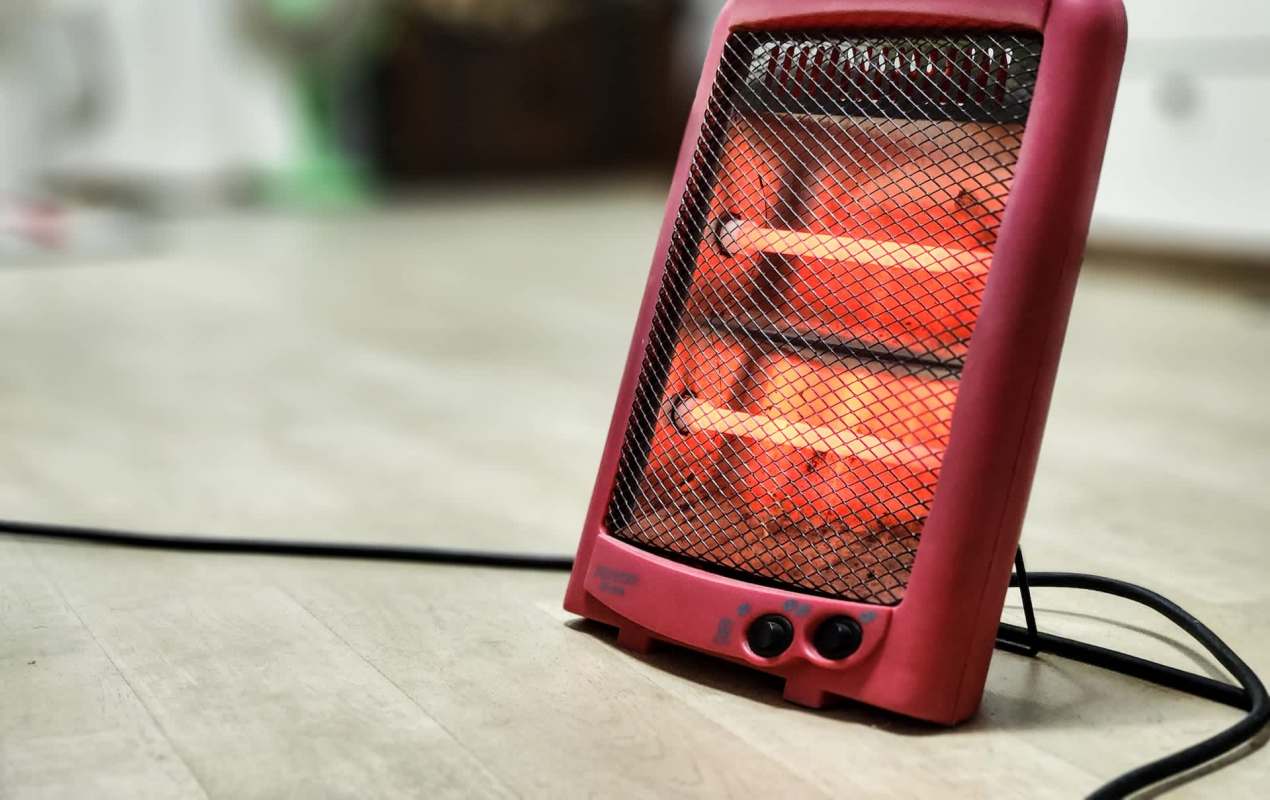
An extension cord may look like an easy way to give a space heater enough reach to sit far enough from flammable items. However, that added cord can introduce a fire hazard.
Here's what to know
Although the appliance can help warm a room, finding a safe location within reach of a wall outlet can be difficult.
Most space heaters tested by the Good Housekeeping Home Improvement & Outdoor Lab draw at least 1,500 watts. Because of that electrical demand, the outlet recommends plugging these appliances directly into a wall outlet rather than an extension cord or power strip.
A standard household outlet rated for 15 amps at 120 volts can handle that load. Many light-duty extension cords and power strips, however, are rated for only 10 to 13 amps and are intended for lower-power devices, including lighting and phone-charging equipment.
The fire hazard comes from the thin wiring inside these accessories. A connected space heater can make it overheat.
More background
Space heater cords are typically about 6 feet long, and the appliances need at least 3 feet of clearance from flammable objects.
TCD Picks » Quince Spotlight
💡These best-sellers from Quince deliver affordable, sustainable luxury for all




Meeting both requirements can be difficult in a room where a bedspread, curtain, or large piece of furniture limits the available space.
Good Housekeeping also recommends unplugging the appliance when it isn't in use, as electrical surges caused by lightning or wiring problems could make it begin heating unexpectedly.
What can be done?
An extension accessory may be unnecessary if the furniture and heater already in the home are rearranged. Shifting a bed or sofa out of the required clearance area can leave room for the heater close enough to plug directly into the wall. Reducing the risk of a tip-over also requires a flat, level surface for the heater.
For those already shopping for a replacement, Good Housekeeping recommends choosing a heater with effective room-wide heat distribution.
Areas beyond the heater's immediate location can still receive warmth while the appliance remains safely clear of flammable objects. An oscillating fan can help by spreading the heated air.
Where can I learn more?
The risks of using extension cords and power strips also come up with other high-power devices.
• A New York utility recommended a 65-degree thermostat setting while warning about space heaters.
• In Maine, a homeowner's water heater insulation question prompted a blunt space-heater warning.
• A Los Angeles renter's AC kept tripping a surge protector, prompting a plug-into-wall warning.
• A homeowner's mini-split ran on a spliced extension cord, and the outlet became warm.
• A power station owner found the charging plug fused to an extension cord.

Get TCD's free newsletters for easy tips, smart advice, and a chance to earn $5,000 toward home upgrades. To see more stories like this one, change your Google preferences here.






