


Discarded plastic supplies come from one waste stream while aluminum production supplies come from another — and scientists in China have brought the two together to create microscopic reinforcements for a concrete alternative.
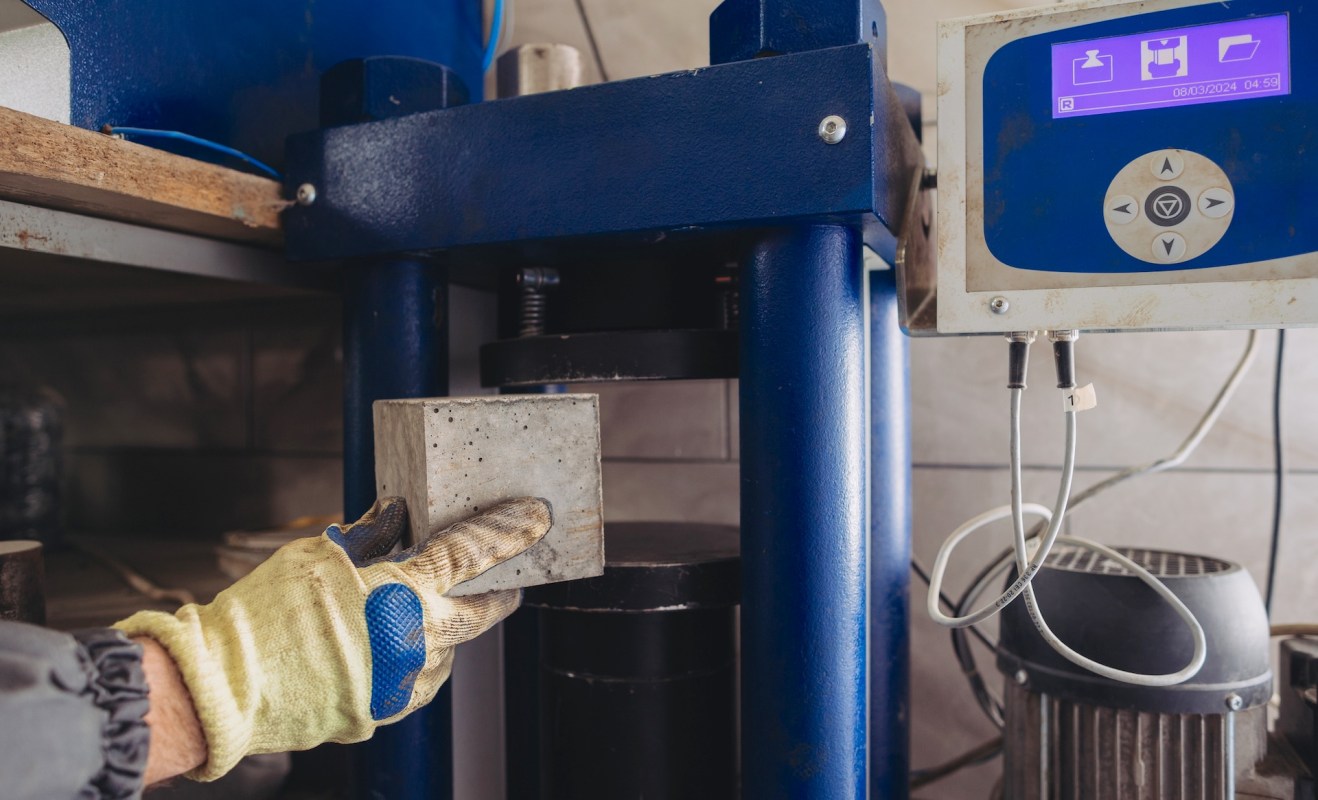
In laboratory tests, the reinforcements made the material 54.3% stronger against bending, offering both troublesome wastes a potentially valuable new use, The Debrief reported.
Here's what to know
Researchers at Zhejiang University developed the method using red mud, a highly alkaline residue left behind by aluminum production.
In the team's experiments, carbon nanotubes grew directly on that residue, as described in the journal Nature Communications.
The team first broke plastic into smaller chemical compounds by heating it to about 932 degrees Fahrenheit. The compounds next encountered red mud at about 1,562 degrees.
Iron compounds in the residue helped turn the plastic's carbon into nanotubes while generating hydrogen-rich gas.
TCD Picks » Quince Spotlight
💡These best-sellers from Quince deliver affordable, sustainable luxury for all




Researchers then mixed the resulting composite into an alkali-activated binder, a construction material made with industrial byproducts. A 1% nanotube dosage by weight raised compressive strength by 33.1% following a 28-day curing period.
The nanotubes remained attached to the red mud, allowing the team to use the composite without an expensive purification step.
More background
According to The Debrief, producing ordinary Portland cement is responsible for roughly 6% to 8% of global carbon dioxide emissions.
One way to lower that footprint is to replace traditional cement ingredients with industrial waste, as alkali-activated binders do. But these binders are prone to becoming brittle, contracting, and developing microscopic fractures.
In the Zhejiang team's tests, carbon nanotubes helped equalize pressure through the material: they bridged microscopic cracks, filled small voids, and promoted denser reaction products.
The extraordinarily thin cylinders of carbon offer a way to address the binders' shortcomings.
Beyond the strength improvements, laboratory durability tests showed less water absorption and drying shrinkage with the composite. These results suggest that it could better withstand some forms of deterioration.
Higher amounts caused the nanotubes to cluster, weakening their reinforcing effect.
The cost of high-quality nanotubes, along with the energy needed to produce them conventionally, remains a drawback.
What's being done?
The researchers tested several plastics to determine which were best suited to the process.
Under optimized conditions, polyethylene yielded 0.262 ounces of nanotubes per ounce of plastic (262 milligrams per gram). Polystyrene yielded 0.367 ounces per ounce (367 milligrams per gram), though its nanotubes generally had poorer structural quality.
Polyethylene terephthalate, a common beverage-bottle plastic, yielded just 0.009 ounces per ounce (9 milligrams per gram). PVC yielded few nanotubes while introducing substances that disrupted the process, making it necessary to select or sort feedstocks.
The team also tried the process with a discarded polyethylene detergent container.
Despite its additives and impurities, the container produced 0.206 ounces of nanotubes per ounce (206 milligrams per gram).
The researchers' environmental and economic assessments showed that producing the waste-derived additive could cut emissions by 65.8%, reduce energy requirements by 71.1%, and lower manufacturing costs by 13.6% compared to conventional nanotube manufacturing.
The researchers described their findings in Nature Communications:
"Plastic waste accumulation and cement industry decarbonization demand cross-sectoral solutions," they wrote.
"Here, we show that this scalable route converts wastes into low-carbon, cost-effective toughening additives."
Where can I learn more?
Waste-derived reinforcements are just one way to make construction materials stronger and reduce their environmental impact. These stories explore moss-coated buildings, waterless plastic recycling, and bamboo solar platforms.
• Buildings covered in moss-coated concrete could cool cities while helping clean the air.
• An MIT spinout uses waterless plastic recycling to turn discarded bottles into building materials.
• China has deployed its first bamboo offshore solar platform, exploring alternative materials at sea.

Get TCD's free newsletters for easy tips, smart advice, and a chance to earn $5,000 toward home upgrades. To see more stories like this one, change your Google preferences here.






