


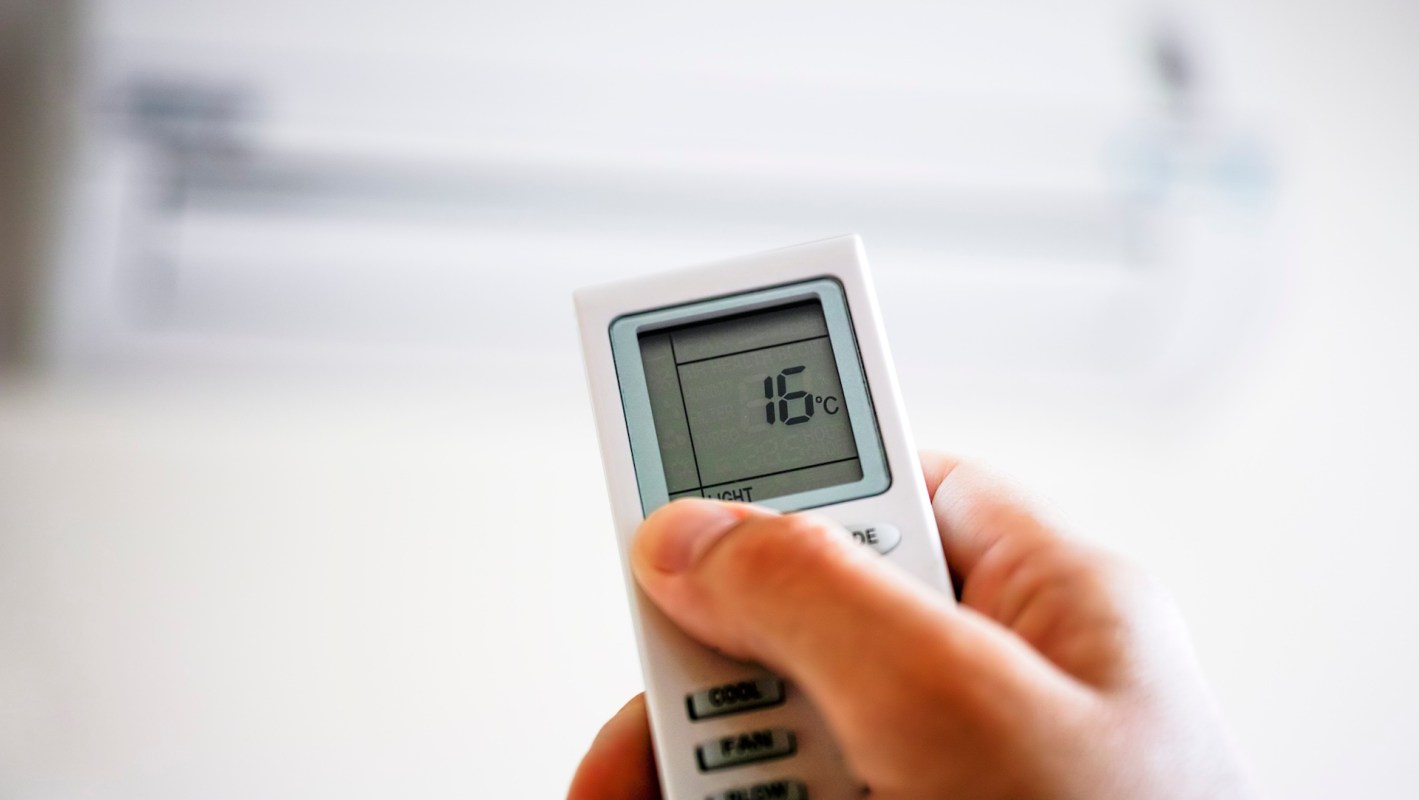
A heat pump owner frustrated by rooms getting warmer than requested found a surprisingly simple adjustment. They switched the thermostat's display from Fahrenheit to Celsius.
Here's what to know
According to their Reddit post, the owner's setup included a KSACN1701AAA thermostat, a 45MUHA indoor unit, and a 37MUHA outdoor unit.
Room temperatures could climb 2 degrees above the thermostat's target in Fahrenheit mode. Yet being 1 degree below the selected temperature did not always prompt the equipment to start.
Unlike the whole-degree Fahrenheit display, the Celsius readout included decimal places.
The owner reported, "The behavior is much more explainable and temp is never off by more than 1C (often maintained at +0.3C)."
For this homeowner, the discovery helped maximize equipment they already owned. For people considering replacement equipment, Palmetto helps homeowners compare efficient HVAC and heat-pump solutions and find vetted installers through its Comfort Plan network.
Efficient heating and cooling upgrades can help manage energy expenses and exposure to higher energy prices.
More background
Rounding during conversion could explain the readings, the homeowner suggested. Celsius might be the system's internal temperature scale, while the Fahrenheit display shows the converted values only in whole degrees.
Crushed by your bills? See instant solar savings from vetted installers in just a few clicks With energy prices through the roof, there's never been a better time to go solar — and EasyHome can help you find the best prices from the best installers in your area. EasyHome takes the guesswork and headaches out of energy upgrades by showing you estimated savings from a network of vetted local partners. To get started, just enter your ZIP and share a few details about your home — seeing your estimate is really that easy. |

According to the owner's example, a displayed reading of 74 degrees Fahrenheit could actually represent 73.76 degrees. With a target of 72 degrees Fahrenheit (about 22.2 degrees Celsius), heating would therefore stop about 1.8 degrees Fahrenheit (1 degree Celsius) above the requested temperature.
"This is true for all things you get in the US and globally, including electric kettles," a user asserted in the comments.
Whether the equipment needed restarting after switching temperature units was one question raised in the replies. The original poster said they hadn't had to do that to achieve the improvement.
What can be done?
The original poster disabled constant fan and enabled Follow-Me to get the results they described. Their thermostat was also set to Celsius, with the fan on Auto and in heating mode. They also clarified they didn't use schedule mode and instead left the settings as-is.
With those settings, the system maintained the room roughly 0.36 degrees Fahrenheit (0.2 degrees Celsius) above the target. The owner observed that heating stopped around 0.9 degrees Fahrenheit (0.5 degrees Celsius) above the target and started about 0.9 degrees Fahrenheit (0.5 degrees Celsius) below it.
For homeowners exploring an equipment upgrade, Palmetto's Comfort Plan offers $0-down options and states potential heating and cooling cost reductions of up to 50%. Palmetto Comfort Plans also include 12 years of free maintenance, bringing ongoing equipment care into the decision alongside installation costs.
Pairing efficient electric HVAC with solar can further help manage utility spending and make a home more self-reliant. EasyHome offers a solar comparison shopping tool to help homeowners compare installation offers and make sure they get the best deal.
Where can I learn more?
Other heat pump owners have had similar questions about thermostat settings and unexpected system behavior.
• In Toronto, a heat pump owner's home reached 25C despite a 23C thermostat setting.
• A technician reset a heat pump to 45 F after repairs, prompting homeowner concerns.
• Heat pump owners say expecting furnace-hot air can make normal operation seem like a problem.

Get TCD's free newsletters for easy tips, smart advice, and a chance to earn $5,000 toward home upgrades. To see more stories like this one, change your Google preferences here.






