


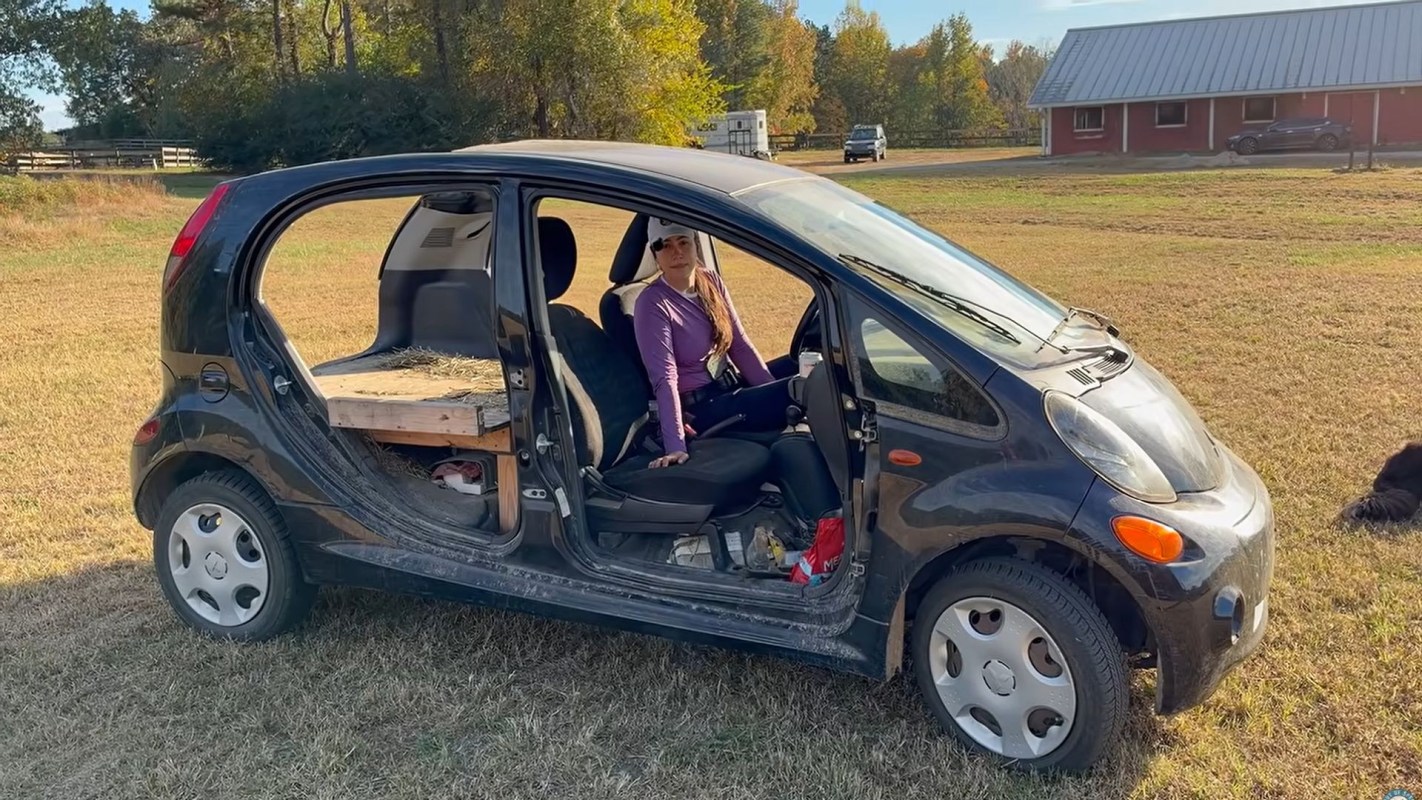
An aging electric hatchback has found a new purpose on a 70-acre North Carolina farm, hauling supplies its owners once considered buying a $40,000 side-by-side to carry.
Here's what to know
In an Out of Spec Bits video, content creator and farm operator Scot showed how the modified 2012 Mitsubishi carries everything from hay and heavy rubber feed pans to horse blankets and riding jumps.
A wooden cargo platform occupies space freed up by removing the rear seats and doors of the car, now nicknamed the "iMoo."
The farm conversion was another project for Alex, the Out of Spec Renew team member who repaired the vehicles. The team already owned two aging i-MiEVs, purchased through Facebook Marketplace for roughly $750 each.
Kyle, Scot's collaborator behind the camera, said the electric side-by-side configuration he wanted would have cost about $40,000.
Scot charges the Mitsubishi about once a week using an ordinary wall outlet. Farm staff also use the vehicle to help care for the horses.
TCD Picks » Quince Spotlight
💡These best-sellers from Quince deliver affordable, sustainable luxury for all




More background
Sustained high-speed driving at Out of Spec's track had exposed the limits of the Mitsubishi's worn battery before it became a farm vehicle.
Alex replaced some cells and modules and balanced the battery pack, which Kyle estimated had about 7 kilowatt-hours of usable capacity remaining.
Scot and Kyle reported no power-limiting problems during farm use, and the odometer showed 54,317 miles at the six-month update. Brief drives connecting the house, barn, and pastures have been a better match for the car.
Scraping at one barn entrance explains Scot's main complaint: ground clearance. Otherwise, she praised the car's comfort, and it retains air conditioning, heat, and a heated driver's seat despite the modifications.
"I have two Nissan Leafs and use one as you do yours to feed the wildlife on our farm and swamp land. I bought it for $1,500 and it only has 55 thousand miles. I haven't taken the doors off yet because there is a large black bear in the area and I don't want him to climb in and drive off," one YouTube user said.
What can be done?
A lift kit and ATV wheels that could accommodate all-terrain tires are among the upgrades the team is exploring. For winter farm use, Out of Spec plans to keep its second i-MiEV enclosed while adding the same wooden platform.
For drivers considering making their next car an EV, potential everyday benefits include saving money on fuel and reduced routine maintenance, including avoiding oil changes.
Scot's wall outlet setup meets this farm's modest driving needs. Charging an EV at home often costs half as much as using public chargers, but basic Level 1 charging tends to be slow. Qmerit provides free, instant installation estimates for faster Level 2 home charger installations.
After six months of hauling supplies, carrying staff, and sharing its seats with farm dogs, Scot was asked whether she'd prefer a fancy side-by-side.
"No, I'm an Imu lover for life. I don't want anything more than this. As long as it runs and gets the horses' food where I need it to go, I'm happy," she said.
Where can I learn more?
The iMoo shows how an older EV can handle farm chores without the cost of a new side-by-side. These stories explore farm electrification, a DIY pickup conversion, home charging savings, and used electric truck prices.
• A homestead farmer says Slate's electric truck could replace his costly Toyota Tundra.
• One farmer's all-electric fleet ambitions face a tractor challenge requiring 3,000 kilowatt-hours daily.
• A Washington builder converted a Toyota pickup to electric for $7,785 using mostly secondhand parts.
• An F-150 Lightning owner says 9,000 miles of charging cost one former monthly gas bill.

Get TCD's free newsletters for easy tips, smart advice, and a chance to earn $5,000 toward home upgrades. To see more stories like this one, change your Google preferences here.






