


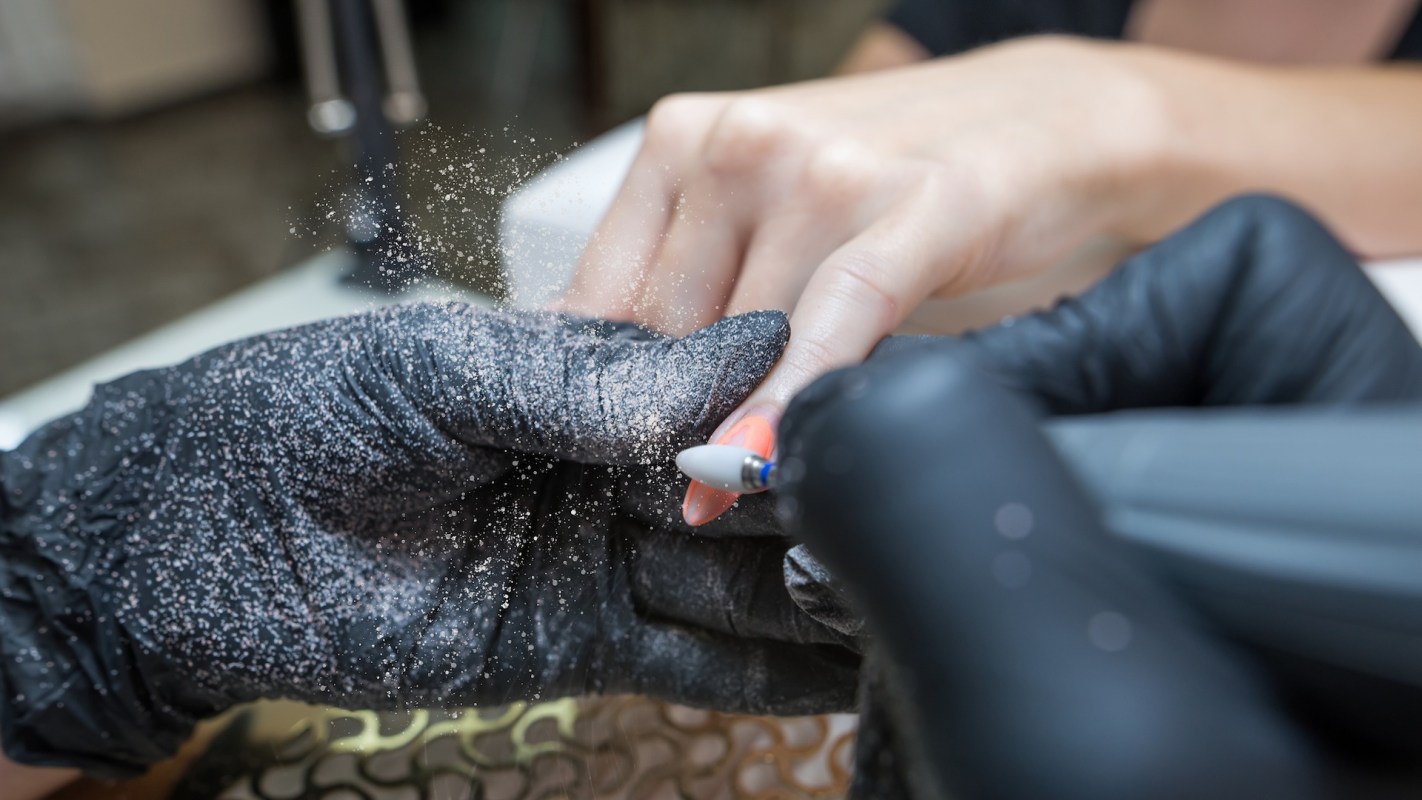
A study of five New York City nail salons found that a nail salon's daily air quality can be similar to that of a chemical plant. The big difference is that chemical plant workers wear respirators and face shields, and nail salon workers can get scrutinized for a simple face mask.
"Customers have an important role to play in advocating for nail salon workers' health and safety," said one researcher.
Here's what to know
ScienceAlert reported that a detector logged one reading per minute while employees worked, with monitoring lasting about a week at each location. Researchers measured total volatile organic compounds in the salons from April 2023 through March 2024. The findings were published in the journal Risk Analysis.
Typical concentrations were 15.1 parts per million. However, the median peak concentration over 15-minute periods was 31.4 parts per million, with one salon reaching 113 parts per million.
Industrial chemical manufacturing facilities were the lead researcher's point of comparison for some of the airborne chemical concentrations recorded in the salons.
"Nail technicians and other salon employees may be exposed to high, intermittent peaks of airborne chemicals throughout the workday, yet the health impacts of those exposures have been underestimated," said Anthony Ierardi, a researcher in occupational and environmental health and safety at CUNY's School of Public Health.
TCD Picks » Quince Spotlight
💡These best-sellers from Quince deliver affordable, sustainable luxury for all




More background
Annual spending at nail salons in the United States exceeds $8 billion, according to ScienceAlert.
Technicians may be exposed to acrylic dust and fumes from liquid monomers, glued-on plastic tips, and acetone polish removal for hours every day; a customer's visit, by contrast, may last only 30 minutes for a single service.
The main chemicals found in salon air included acetone, ethyl acetate, methyl acetate, and n-butyl acetate, along with traces of benzene. The researchers' risk assessment indicated a possible increase in cancer risk from prolonged benzene exposure in some circumstances.
Ierardi told ScienceAlert that industrial workplaces generally receive closer oversight of worker health and safety. They also tend to have greater access to qualified specialists who track exposure and put safeguards in place.
Nail salon employees often have less access to such protections, even when chemical concentrations may resemble those in industrial workplaces.
What can be done?
Ventilation is an essential way to reduce salon workers' exposure, but equipment costs, noise, and limited space can make these systems difficult for salon owners to install and operate.
Practical steps salons can take include letting fresh air in through doors and windows when feasible, keeping product containers closed, and disposing of chemical-soaked materials in lidded bins.
According to ScienceAlert, surgical and cloth masks worn by many workers do not protect against chemical fumes.
Ierardi pointed to prior research suggesting that customers may discourage workers from wearing certain protective equipment or react negatively to employees' efforts to protect themselves.
"As customers, we should support workers who use PPE, encourage safer workplace practices, and recognize that protecting worker health should never come at the expense of customer satisfaction."
Where can I learn more?
The salon study raises questions about how chemical exposure is measured and how workers are protected.
• Counting low PFAS readings as zero may hide half the contamination in US drinking water.
• Revere, Massachusetts, plans to monitor ultrafine airplane pollution near Logan Airport with new equipment.
• The EPA's missing cancer risk estimates have hampered US communities' efforts to challenge polluters.
• Near a Lancashire chemical plant, 69% of tested residents had high-risk forever chemical levels.
• Louisiana families who fought for chemical-plant pollution safeguards now face those protections unraveling.

Get TCD's free newsletters for easy tips, smart advice, and a chance to earn $5,000 toward home upgrades. To see more stories like this one, change your Google preferences here.






